Species · genus Hatiora · Cactaceae
Dancing Bones
Hatiora salicornoides (Haw.) Britton & Rose
Also known as: Drunkard's Dream · Bottle Cactus · Spice Cactus · Drunkard's Bones
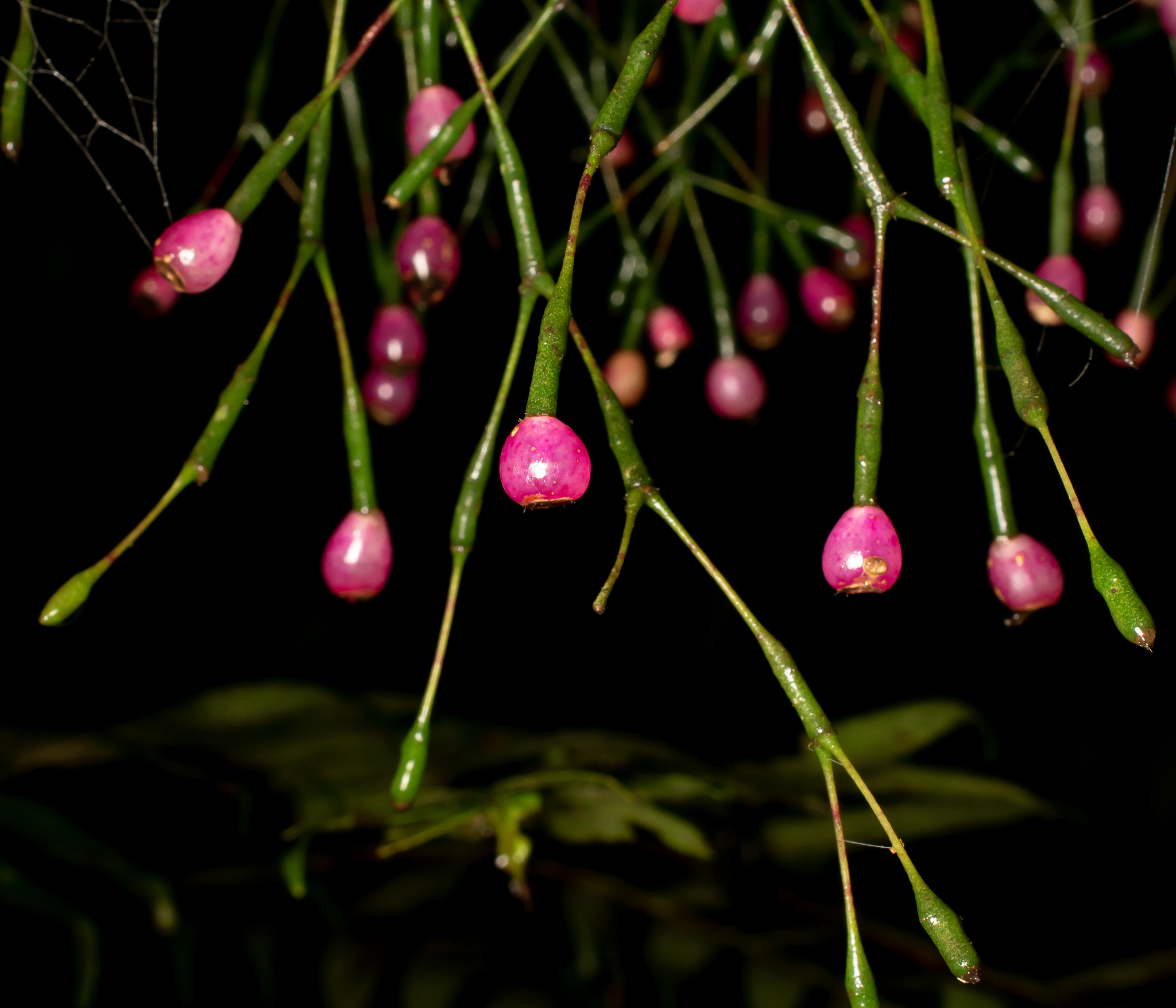
Cultivars of H. salicornoides
The named forms growers keep — each with its own page, each honest about how much we know.
No named cultivars catalogued under H. salicornoides yet. When growers document a stable, named form, it earns its own page here.
Guide
The species-level account. Cultivar pages build on this and say where they differ.
Meet the Dancing Bones Cactus
Dancing bones cactus, botanically Hatiora salicornioides, is a bushy shrub-like member of the Cactaceae family, best known by its whimsical nicknames: drunkard's dream, spice cactus, and bottle cactus. It is grown chiefly as a houseplant, and it's one of those plants many people find they've simply always had without recalling how it arrived.
Source: Epic Gardening
A Brazilian Cloud-Forest Native
This species comes from eastern and southern Brazil, where it grows as a succulent epiphyte or lithophyte, most often rooted in the nooks of tree trunks but occasionally anchored to rocky cliffs. It is found in high-elevation forests and grasslands roughly 600 to 5,700 feet above sea level, a habitat far removed from the arid ground its desert cousins prefer.
Source: Epic Gardening
A Rhythm of Bright Light and Humidity
Give this cactus bright, indirect light such as a southern or western-facing room, shielding it from strong direct afternoon sun outdoors. Water when the top inch of soil dries out, since the stems will shrivel if left too dry for too long, and feed monthly with a diluted balanced or low-nitrogen fertilizer during summer and fall, pausing over winter. Despite its cactus name, it wants real humidity, so a steamy bathroom or regular misting suits it well, and indoor plants should stay above 50°F (10°C) away from cold drafts.
Source: Epic Gardening
Cuttings Root Quickly
New plants are most easily started from stem cuttings, which take root almost immediately once potted. Choose a healthy mature stem, cut just below a segment, let the cutting callus for a day or two, then plant it in a fast-draining cactus mix and keep the soil moist in bright, indirect light until roots form. Growing from seed is possible too, but cacti are slow to germinate, often taking weeks or months.
Source: Epic Gardening
Bottle-Shaped Stems and Flowers
Its defining trait is the knobby, bottle-shaped stem segments that branch densely and, given good conditions, arch downward as the plant matures, sometimes reaching stems up to three feet long. In late winter or early spring, young stems produce tubular, golden-yellow flowers; this is a short-day plant, meaning it needs long uninterrupted stretches of darkness, at least twelve hours, to bloom. The RHS describes those blooms as funnel-shaped and orange-yellow, about 12mm long, appearing at the segment tips of a densely branched bush that can reach around 40cm.
Source: RHS
Watch for Mealybugs and Aphids
The two pests most likely to bother this plant are mealybugs and aphids, both drawn to its sap-filled stems. Mealybugs are common in warm, humid conditions and often arrive on commercially grown plants; wipe them off with alcohol-soaked cotton and follow with neem oil. Aphids leave a sticky honeydew that attracts ants and encourages mold, and can be knocked off with a strong water spray followed by neem oil or a rubbing alcohol solution.
Source: Epic Gardening
Overwatering and Dry Air
Very few diseases trouble this hardy cactus, but overwatering and low humidity are its two recurring environmental issues. Wet, compacted soil leads to root rot, shown by mushy, yellow-brown stems, and any partly affected plant can often be saved by taking healthy cuttings into fresh mix. On the opposite end, dry air causes the stems to shrivel or pucker, since this jungle cactus is adapted to humid conditions and needs misting or a humidifier if the air is too dry.
Source: Epic Gardening
Care recipe
The species record — the baseline every cultivar inherits unless it says otherwise.
Care notes are early — not yet verified
- Light
- ai:claude-opus-4-8
- Water
- ai:claude-opus-4-8 (range 10-18d)
- Humidity
- ai:claude-opus-4-8
- Soil
- ai:claude-fable-5
- Care
- ai:claude-fable-5
Bright, indirect
≈ every 18 days
Medium
13–27 °C
Airy, well-draining epiphytic or cactus mix
Stem segments broken off and rooted
Dilute feed monthly in spring and summer
Moderate
Small yellow flowers at stem tips in late winter
Not yet documented
This is where toxicity lives — every cultivar of this species inherits it and none can override it.
Reference images
Every image credited. Licenses link to their deeds.
Sources: ai:claude-opus-4-8 · ai:claude-opus-4-8 (range 10-18d) · ai:claude-fable-5
Kept true by its growers
Every fact here carries its source. Grow Dancing Bones yourself? What you’ve observed — how it drinks, how it holds its color, a name that’s off — and a clear photo of your plant are exactly what keep this page honest. Contributions are reviewed before anything changes.
Sign in to add what you know →