Species · genus Gymnocalycium · Cactaceae
Red-cap
Gymnocalycium mihanovichii (Fric & Gürke) Britton & Rose
Also known as: Moon Cactus
Cultivars of G. mihanovichii
The named forms growers keep — each with its own page, each honest about how much we know.
No named cultivars catalogued under G. mihanovichii yet. When growers document a stable, named form, it earns its own page here.
Guide
The species-level account. Cultivar pages build on this and say where they differ.
A Grafted Curiosity
The moon cactus is the common name for Gymnocalycium mihanovichii, a small cactus best known for its neon-colored top rather than the plain green form it takes in nature. What reaches most homes is actually two cacti joined together, a colorful cap grafted onto a hardier green rootstock. It is a strange but genuine plant, not a dyed or artificial novelty.
Source: Epic Gardening
From Paraguay to the Windowsill
Gymnocalycium mihanovichii originates in South America, concentrated around Paraguay and Argentina, where the wild species grows green like most other cacti. The vivid orange, red, yellow, and pink forms familiar today emerged as mutations during cultivation. Those colors come from a total absence of chlorophyll, which lets the plant's other pigments dominate, but also strips it of the ability to photosynthesize and survive unaided.
Source: Epic Gardening
Balancing Two Needs at Once
Caring for a moon cactus means managing the conflicting needs of its two halves: the rootstock wants a few hours of direct sun to photosynthesize, while the sensitive colored top can scorch in that same light, so a spot with some morning sun and otherwise bright indirect light suits both. Water sparingly, letting the soil dry out completely between waterings, roughly every couple of weeks, and hold off entirely through winter when the plant's needs drop further. It prefers warm, fairly dry indoor conditions without cold drafts, and needs little to no feeding, since it comes from nutrient-poor soils; a light annual dose of succulent fertilizer in spring can encourage flowering if light levels are also sufficient.
Source: Epic Gardening
Grafting a Pup
Propagation isn't as simple as rooting a cutting, since the colorful top cannot grow on its own. Instead, a pup is twisted off the base of the parent plant, and a horizontal cut is made at the base of that pup and at the top of a new rootstock to expose fresh tissue. The pup is centered on the rootstock and taped in place until the wounds heal and fuse together, after which the tape is gently removed and the graft can be cared for like any other moon cactus.
Source: Epic Gardening
Two Plants, One Body
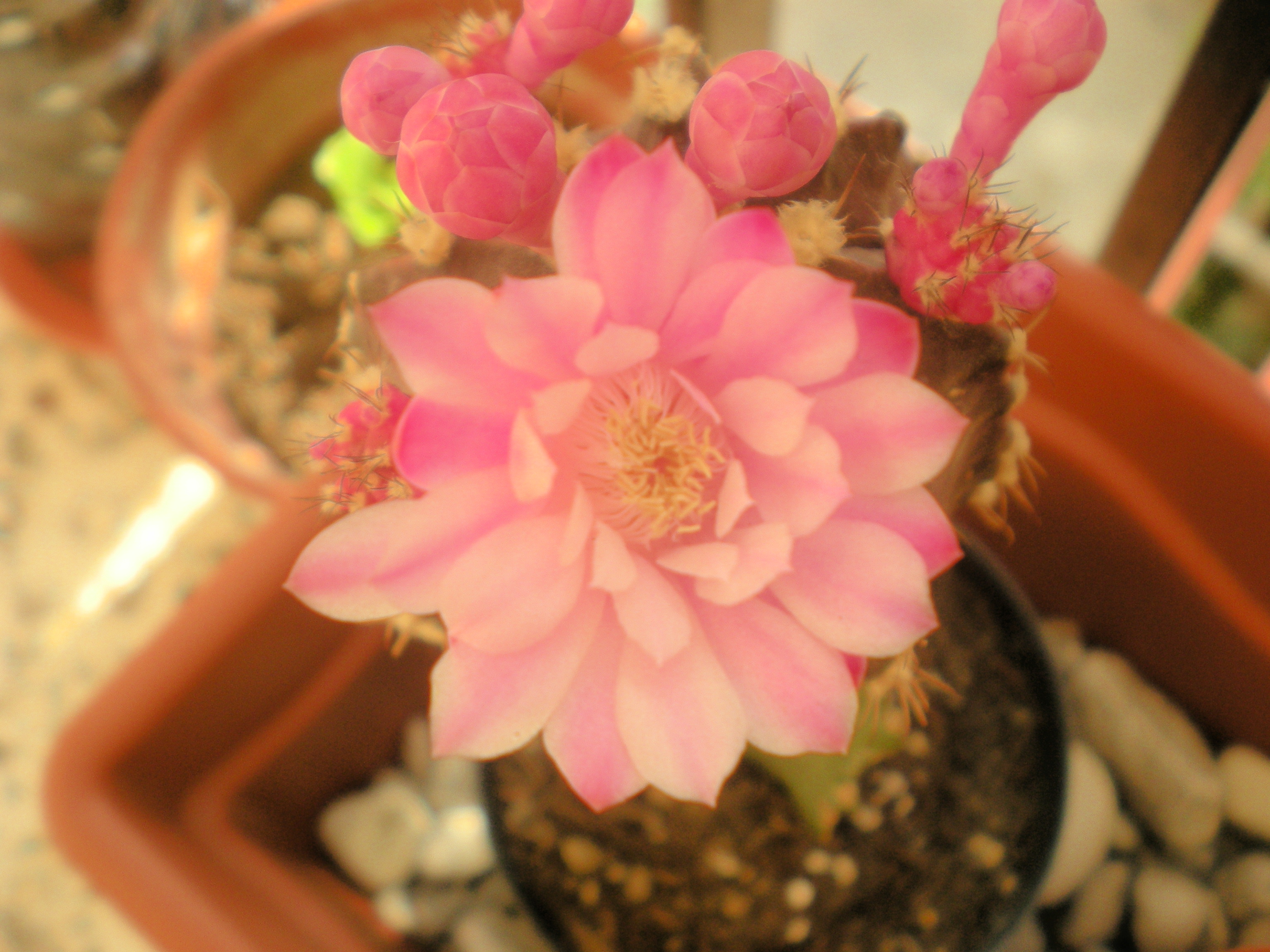
Because the colorful top lacks chlorophyll, it cannot sustain itself and must be grafted onto a green rootstock, typically a Hylocereus or Myrtillocactus species, which does the work of photosynthesis for both. The result is a bulbous, spiny, brightly colored cap sitting atop an upright green base. In the right conditions the plant may also produce small flowers that complement its color.
Source: Epic Gardening
Mealybugs and Mites
Moon cacti can attract mealybugs and spider mites, particularly on plants that have been recently grafted. These are usually manageable by washing them off and spot-treating with neem oil, repeated as needed until the infestation clears.
Source: Epic Gardening
Rot and Sun Scorch
Root rot is the most common issue, usually from overwatering, poor drainage, or the wrong soil mix, and it shows up as a soft, yellowing base that can spread up to the graft and beyond saving. If that happens, the only recourse is to trim off the colorful top and graft it onto a fresh, healthy rootstock. Irregular brown patches, by contrast, point to sunburn from too much direct light, and while those marks won't heal, moving the plant to a gentler spot will stop further damage.
Source: Epic Gardening
Slow, Short-Lived, Low-Fuss
This is a slow grower with a short life, often lasting around a year and rarely much longer even with good care, so decline isn't always a sign of a mistake. It rarely needs repotting, being happiest snug in its container for several years, and should only be moved to fresh succulent mix when drainage or nutrients need replenishing. When repotting, keep the plant at its original depth and wait a couple of days before watering to let the roots settle.
Source: Epic Gardening
Care recipe
The species record — the baseline every cultivar inherits unless it says otherwise.
Care notes are early — not yet verified
- Light
- ai:claude-opus-4-8
- Water
- ai:claude-opus-4-8 (range 14-28d)
- Humidity
- ai:claude-opus-4-8
- Soil
- ai:claude-fable-5
- Care
- ai:claude-fable-5
Bright, indirect
≈ every 28 days
Low — average room
10–30 °C
Sharp, mineral-rich cactus mix with extra grit
Offsets removed and rooted after callusing
Dilute cactus feed a few times in summer
Slow
Pink or greenish flowers readily in bright light
Not yet documented
This is where toxicity lives — every cultivar of this species inherits it and none can override it.
Reference images
Every image credited. Licenses link to their deeds.
PrimarySources: ai:claude-opus-4-8 · ai:claude-opus-4-8 (range 14-28d) · ai:claude-fable-5
Kept true by its growers
Every fact here carries its source. Grow Red-cap yourself? What you’ve observed — how it drinks, how it holds its color, a name that’s off — and a clear photo of your plant are exactly what keep this page honest. Contributions are reviewed before anything changes.
Sign in to add what you know →