Species · genus Guzmania · Bromeliaceae
Droophead Tufted Airplant
Guzmania lingulata (L.) Mez
Also known as: Scarlet-star
Cultivars of G. lingulata
The named forms growers keep — each with its own page, each honest about how much we know.
No named cultivars catalogued under G. lingulata yet. When growers document a stable, named form, it earns its own page here.
Guide
The species-level account. Cultivar pages build on this and say where they differ.
A Bromeliad in Bloom
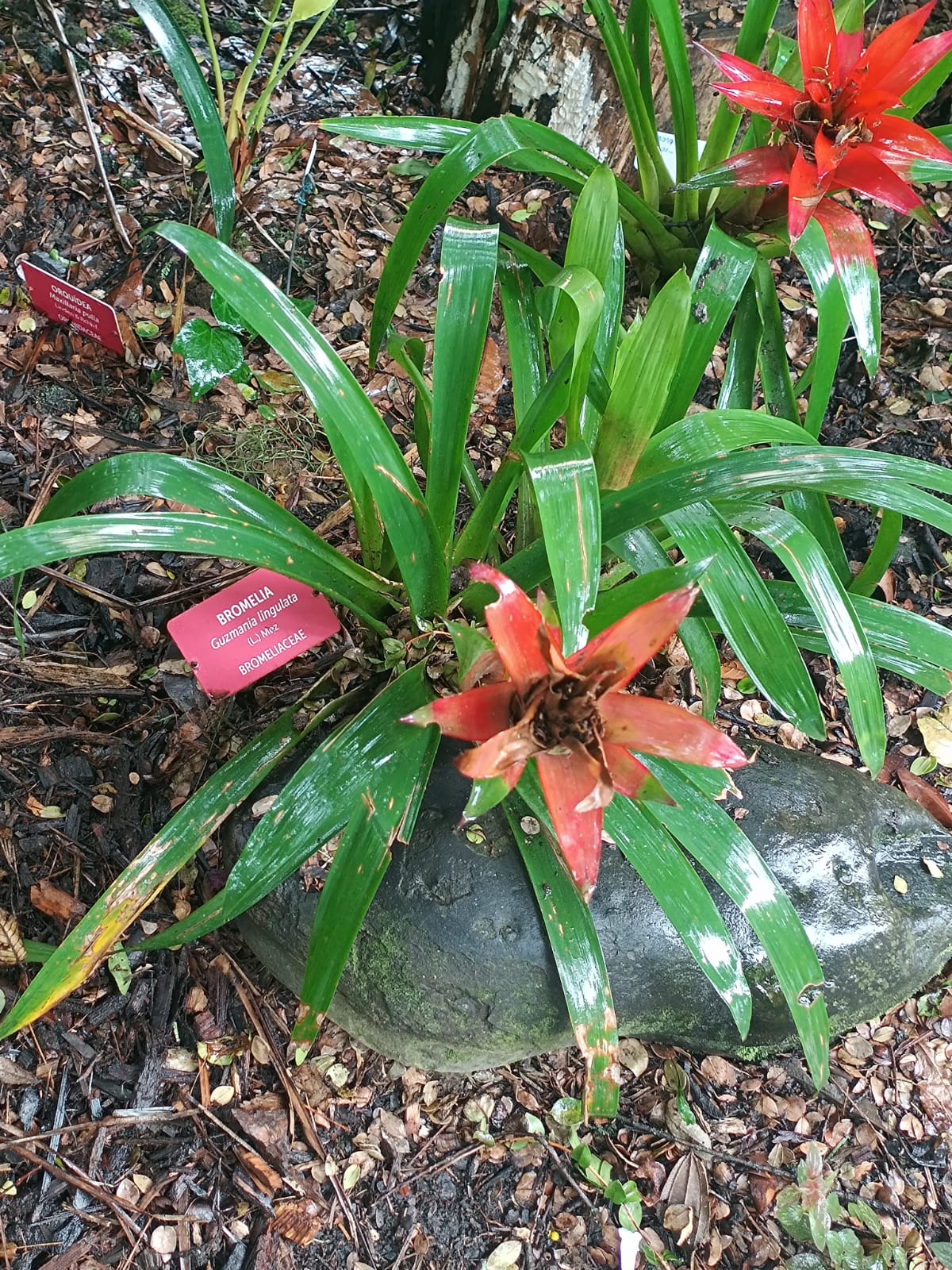
Guzmania is a genus of well over a hundred flowering bromeliads, kin to the pineapple, grown mostly as a houseplant for its long-lasting central flower spike. The bloom rises from a rosette of glossy, strap-shaped leaves and comes dressed in bracts of red, yellow, orange, or white.
Source: Epic Gardening
Tropical American Roots
This plant traces back to Florida, the West Indies, southern Mexico, Central America, and northern and western South America, where it grows as an understory epiphyte in tropical forest. The genus carries the name of the Spanish pharmacist and naturalist Anastasio Guzman.
Source: Epic Gardening
Light, Water, and a Watchful Cup
Guzmania wants bright, indirect light, tolerating more shade than many bromeliads, though a lack of bloom often points to too little light. As an epiphyte it draws much of its moisture through leaf trichomes rather than roots, so its central cup should be kept about a quarter full and flushed every few weeks to avoid stagnation. It prefers moderate to high humidity and temperatures between 70-80°F, never dropping below 60°F, and needs no fertilizer, though a diluted liquid feed every two weeks in spring and summer can support larger blooms.
Source: Epic Gardening
From Pups to New Plants
Once the mother plant finishes flowering and begins to die back, it produces pups at its base that can be separated once they reach a few inches tall. Cut the parent back to soil level, lift the pups without damaging their roots, and pot each into a four to six inch container of fresh mix, where it will grow on to flower and eventually produce pups of its own. The RHS notes propagation can also be done from seed at 27°C, or by removing offsets in mid spring.
Source: Epic Gardening
Rosette, Bracts, and Pups
Guzmania forms a stemless, clump-forming rosette of leathery, strap-shaped leaves, evergreen year round. From its center rises a short-stemmed spike of small yellow or white flowers set off by showy, spreading orange or red bracts, appearing in summer. It is an evergreen perennial that flowers once and then declines, leaving behind offshoot pups to carry the plant forward.
Source: RHS
Spider Mites and Mealybugs
Spider mites favor warm, dry, low-humidity conditions and show themselves first as tiny holes or yellowish spots on the foliage, sometimes with fine webbing; keeping air humid and soil moist helps prevent them, and light infestations can often be washed off with a forceful spray or a damp cloth. The RHS notes mealybugs as another possible visitor, while otherwise considering the plant generally disease-free.
Source: Epic Gardening
Loved a Little Too Much
Guzmania tends to suffer more from overcare than neglect, with too much water, fertilizer, or direct sun the usual culprits behind damage. Overwatering is the main driver of root rot, seen as soft mushy stems and rotten roots, and is treatable if some fresh white roots remain by trimming away the rot and repotting into dry soil. Powdery mildew can also appear as a white, flour-like coating on the leaves, and hard tap water can leave salt residue on foliage, making distilled water the safer choice.
Source: Epic Gardening
After the Bloom Fades
Once the flower has finished its display and begins to fade, it should be cut back at its base near the cup, which directs the plant's remaining energy into producing pups. The RHS notes no pruning is otherwise required beyond this.
Source: Epic Gardening
Care recipe
The species record — the baseline every cultivar inherits unless it says otherwise.
Care notes are early — not yet verified
- Light
- ai:claude-opus-4-8
- Water
- ai:claude-opus-4-8 (range 7-12d)
- Humidity
- ai:claude-opus-4-8
- Soil
- ai:claude-fable-5
- Care
- ai:claude-fable-5
Bright, indirect
≈ every 12 days
High
15–27 °C
Loose, bark-based epiphyte or orchid-style mix
Offsets (pups) separated after flowering
Weak feed to soil and central cup during growth
Slow
Long-lasting scarlet bracts; blooms once, then offsets
Not yet documented
This is where toxicity lives — every cultivar of this species inherits it and none can override it.
Reference images
Every image credited. Licenses link to their deeds.
PrimarySources: ai:claude-opus-4-8 · ai:claude-opus-4-8 (range 7-12d) · ai:claude-fable-5
Kept true by its growers
Every fact here carries its source. Grow Droophead Tufted Airplant yourself? What you’ve observed — how it drinks, how it holds its color, a name that’s off — and a clear photo of your plant are exactly what keep this page honest. Contributions are reviewed before anything changes.
Sign in to add what you know →