Species · genus Goeppertia · Marantaceae
Rose Painted Calathea
Goeppertia roseopicta (Linden ex Lem.) Borchs. & S.Suárez
Also known as: Calathea roseopicta · Rosy Calathea · Medallion Calathea · Rose Painted Prayer Plant · Calathea Medallion · Calathea Dottie · Calathea Corona · Calathea Rosy
Cultivars of G. roseopicta
The named forms growers keep — each with its own page, each honest about how much we know.
No named cultivars catalogued under G. roseopicta yet. When growers document a stable, named form, it earns its own page here.
Guide
The species-level account. Cultivar pages build on this and say where they differ.
A Patterned Prayer Plant
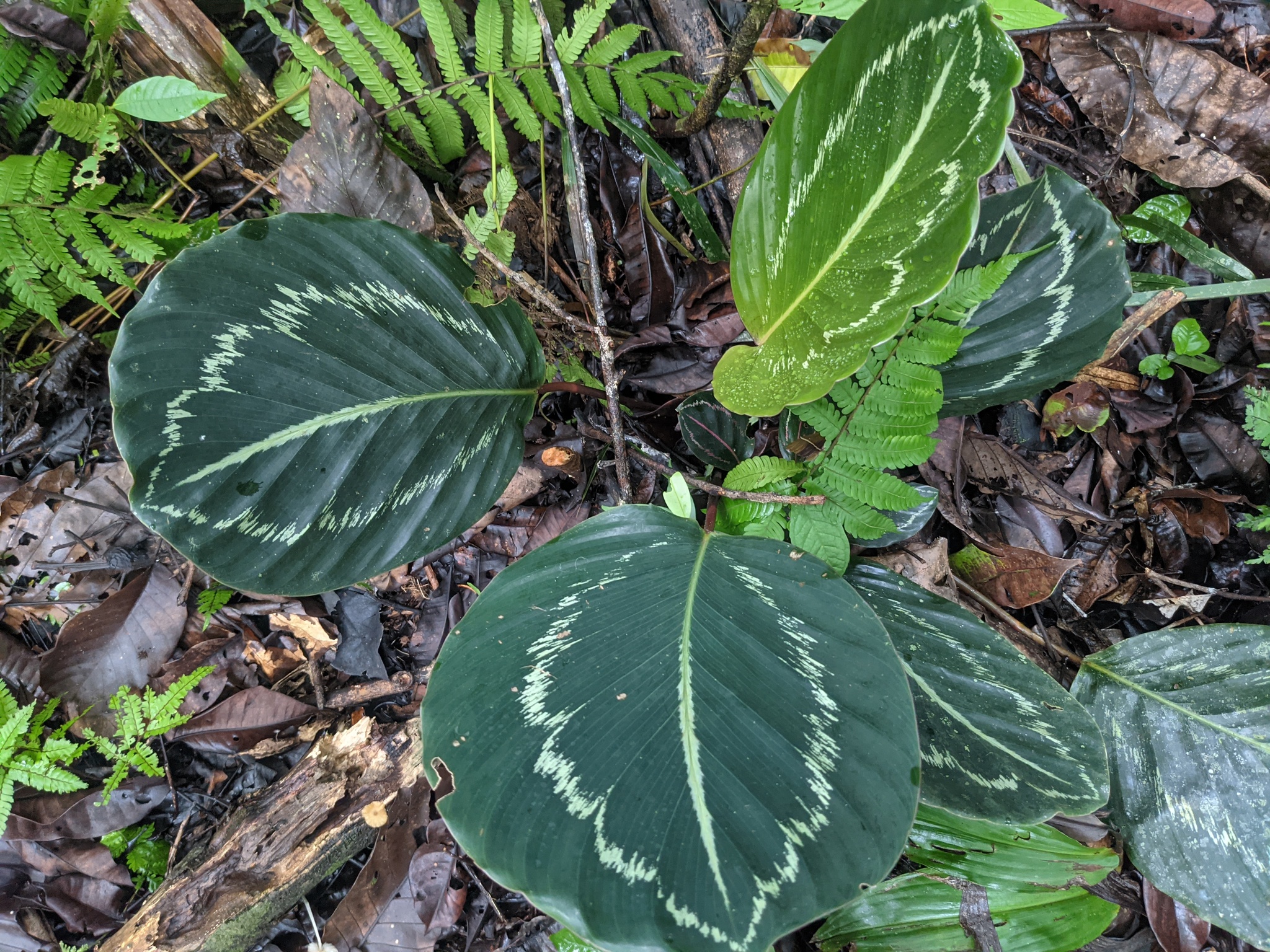
Calathea 'Medallion', botanically Goeppertia roseopicta, is a clump-forming tropical foliage plant grown for the intricate green patterning on its oval leaves and the deep burgundy undersides. It belongs to the prayer plant family, so named for its habit of folding its leaves upward at night. It is a popular houseplant, valued as much for its behavior as for its looks.
Source: Epic Gardening
Rainforest Roots
This plant comes from the tropical rainforests of northwest Brazil, as well as parts of West-Central Brazil, Colombia, Ecuador, and Peru, where it grows sheltered beneath the forest canopy. That native setting of warmth, shade, and humidity is what an indoor grower is really trying to recreate. The straight species has also earned the Royal Horticultural Society's Award of Garden Merit.
Source: Epic Gardening
Light, Water, Warmth
Give it bright, indirect or filtered light rather than low or harsh direct sun, since patterning washes out at either extreme. Keep the soil evenly moist through the growing season, letting the top couple of inches dry slightly between waterings, and ease off in winter to avoid waterlogging. It wants steady warmth, ideally in the 65 to 80°F range, high humidity away from drafts and heat sources, and a monthly dose of liquid fertilizer from spring through autumn.
Source: Epic Gardening
Dividing the Clump
Because this plant grows as a clump, division is the recommended way to make more of it, best done in late spring. Stem or leaf cuttings are not effective for this species. Lift the plant, gently separate natural divisions or cut them apart with a sharp knife ensuring each piece keeps a fair share of roots, then pot up in a well-draining mix.
Source: Epic Gardening
Leaves That Move
The leaves are oblong to oval, dark green above with pink midribs and stripes running parallel to the margins, and it forms into a low clump rather than climbing or trailing. Its most distinctive trait is nyctinasty, the folding of leaves at night and their spreading by day, a rhythm thought to help the plant conserve water and possibly avoid drawing the attention of predators. Small white and purple flowers may appear in summer, though flowering indoors is not the norm.
Source: RHS
Sucking Insects to Watch
This plant is largely trouble-free, but whiteflies and red spider mites can show up, often carried in on drafts or other plants. Mealybugs are another occasional visitor. Catching an infestation early and washing pests off, or wiping them away with an alcohol-soaked cotton swab, keeps things from getting out of hand.
Source: Epic Gardening
Reading the Leaves
Yellowing leaves usually point to overwatering, or sometimes too little light. Curling leaves suggest thirst or temperatures that have dropped too low, while drooping can simply be the plant's natural nighttime movement or a sign it needs water. Brown, dry edges tend to trace back to low humidity, harsh direct sun, or hard water, and grey mold can take hold on damaged tissue in poorly ventilated, overly humid spots.
Source: Epic Gardening
Little Fuss Required
This is a low-maintenance plant that needs no routine pruning, though old, crisp, or browned leaves can be trimmed away at the base to keep it tidy. Repot roughly every one to two years, moving up a size when roots begin to escape the drainage holes, and time the job for spring or summer to limit transplant stress.
Source: Epic Gardening
Care recipe
The species record — the baseline every cultivar inherits unless it says otherwise.
Care notes are early — not yet verified
- Light
- ai:claude-opus-4-8
- Water
- ai:claude-opus-4-8 (range 5-10d)
- Humidity
- ai:claude-opus-4-8
- Soil
- ai:claude-fable-5
- Care
- ai:claude-fable-5
Bright, indirect
≈ every 10 days
High
18–27 °C
Airy, moisture-retentive mix of peat/coir with perlite
Division of the rootball at repotting
Diluted balanced feed monthly through the growing season
Moderate
Rarely flowers indoors; grown for its rose-painted leaves
Non-toxic to cats & dogs
Prayer-plant family (Marantaceae). ASPCA lists Calathea insignis (= Goeppertia insignis) non-toxic; the genus is uniformly safe. This is where toxicity lives: every cultivar of this species inherits it and none can override it.
Reference images
Every image credited. Licenses link to their deeds.
PrimarySources: ai:claude-opus-4-8 · ai:claude-opus-4-8 (range 5-10d) · ai:claude-fable-5 · ASPCA
Kept true by its growers
Every fact here carries its source. Grow Rose Painted Calathea yourself? What you’ve observed — how it drinks, how it holds its color, a name that’s off — and a clear photo of your plant are exactly what keep this page honest. Contributions are reviewed before anything changes.
Sign in to add what you know →