Species · genus Goeppertia · Marantaceae
Calathea picturata
Goeppertia picturata (K.Koch & Linden) Borchs. & S.Suárez
Also known as: Calathea Argentea · Silver Calathea · Calathea Vandenheckei
Cultivars of G. picturata
The named forms growers keep — each with its own page, each honest about how much we know.
No named cultivars catalogued under G. picturata yet. When growers document a stable, named form, it earns its own page here.
Guide
The species-level account. Cultivar pages build on this and say where they differ.
A Patterned Prayer Plant
Goeppertia picturata, once classed as a Calathea, is a tender evergreen perennial grown for its patterned foliage rather than its flowers. It forms a low clump, generally topping out well under half a metre, and is known in cultivation as the variegated prayer plant.
Source: RHS
A Brazilian Understorey Plant
This species comes from Brazil, and belongs to the Marantaceae family alongside its Goeppertia relatives, a genus that was formerly grouped under Calathea. It has been brought into cultivation mainly for glasshouse and houseplant use rather than outdoor planting, given its need for warmth.
Source: RHS
Warmth, Shade, Moisture
Best kept under glass or indoors, this plant asks for a constant temperature of at least 16°C and dislikes draughts. Give it bright indirect or filtered light in peat-free compost, along with high humidity. Water moderately while it is growing and let it stay just moist through winter, feeding monthly with a balanced liquid fertiliser during the growing season.
Source: RHS
Division In Late Spring
Propagation is done by division, and late spring is the recommended time to split the clump.
Source: RHS
Silver Stripes On Purple
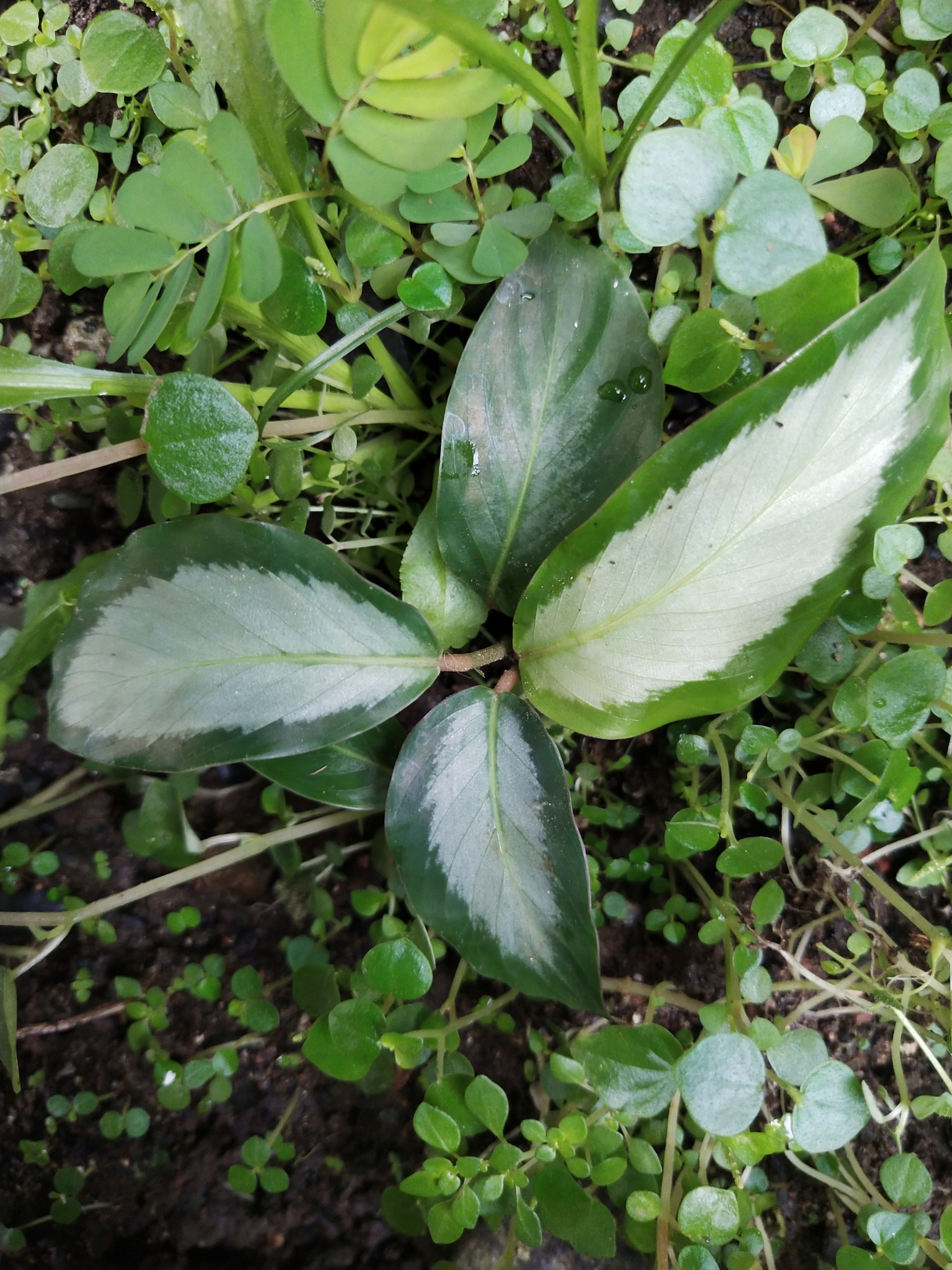
The oval leaves sit on long purple stems and carry silvery white stripes running along the midrib and parallel to the margins, set against dark green. Turn a leaf over and the underside is deep purple. It sometimes produces white flowers with purple-tinted bracts in summer, though this is a rare event indoors. The cultivar Argentea takes the pattern further, with leaves that read almost entirely silvery white, edged in dark green and reddish-purple beneath.
Source: RHS
Whitefly, Mites, Aphids
Under glass or indoors, this plant may draw glasshouse whitefly and glasshouse red spider mite, and the species form can also attract aphids. Otherwise it is generally free of disease.
Source: RHS
Little Pruning Needed
No pruning is required for this plant. Left to its own clump-forming habit, it reaches maturity in one to two years for the species, though the Argentea cultivar takes considerably longer, five to ten years, to reach the same modest size.
Source: RHS
Care recipe
The species record — the baseline every cultivar inherits unless it says otherwise.
Care notes are early — not yet verified
- Light
- ai:claude-opus-4-8
- Water
- ai:claude-opus-4-8 (range 5-10d)
- Humidity
- ai:claude-opus-4-8
- Soil
- ai:claude-fable-5
- Care
- ai:claude-fable-5
Bright, indirect
≈ every 10 days
High
18–27 °C
Airy, moisture-retentive mix of peat/coir with perlite
Division of the rootball at repotting
Diluted balanced feed monthly through the growing season
Moderate
Rarely flowers indoors; grown for its foliage
Non-toxic to cats & dogs
Prayer-plant family (Marantaceae). ASPCA lists Calathea insignis (= Goeppertia insignis) non-toxic; the genus is uniformly safe. This is where toxicity lives: every cultivar of this species inherits it and none can override it.
Reference images
Every image credited. Licenses link to their deeds.
Sources: ai:claude-opus-4-8 · ai:claude-opus-4-8 (range 5-10d) · ai:claude-fable-5 · ASPCA
Kept true by its growers
Every fact here carries its source. Grow Calathea picturata yourself? What you’ve observed — how it drinks, how it holds its color, a name that’s off — and a clear photo of your plant are exactly what keep this page honest. Contributions are reviewed before anything changes.
Sign in to add what you know →