Species · genus Goeppertia · Marantaceae
Calathea Orbifolia
Goeppertia orbifolia (Linden) Borchs. & S.Suárez
Also known as: Round-Leaf Calathea · Prayer Plant
Cultivars of G. orbifolia
The named forms growers keep — each with its own page, each honest about how much we know.
No named cultivars catalogued under G. orbifolia yet. When growers document a stable, named form, it earns its own page here.
Guide
The species-level account. Cultivar pages build on this and say where they differ.
A Striped Prayer Plant
Goeppertia orbifolia, still widely sold under its old name Calathea orbifolia, is a clump-forming evergreen grown for its foliage rather than any flower show. The RHS notes it as a foliage plant reaching around 75cm, with large round leaves banded in pale silvery-green, and it is often listed among houseplants valued for helping purify indoor air.
Source: RHS
Out of Brazil's Understorey
This calathea traces back to Brazil, where it grows on the shaded jungle floor beneath taller trees. In that native setting its leaves can spread far wider than anything seen indoors, sometimes reaching close to three feet across, though a potted specimen kept in a home will stay considerably more modest and slower to grow.
Source: Epic Gardening
A Balancing Act
The RHS calls for bright indirect or filtered light, high humidity, and shelter from draughts, alongside a constant temperature of at least 16°C, since this plant is really suited to being grown under glass. Water should be moderate while it is in growth and reduced to just moist through winter, with a balanced liquid feed applied monthly. Epic Gardening echoes the humidity demand, suggesting 50 percent or higher, and recommends letting the top one to two inches of soil dry before watering again, using distilled or filtered water rather than tap water because the plant is sensitive to the chemicals often found in it.
Source: RHS
Dividing the Clump
Both sources point to division as the reliable method: the RHS advises dividing the rhizomes in summer, while Epic Gardening notes that new pups tend to appear in spring and can be separated from the mother plant with sterile, sharp shears once large enough. Seed and cuttings are not realistic options here, since flowers are rare in cultivation and cuttings do not reliably take.
Source: Epic Gardening
Broad, Striped, Slow
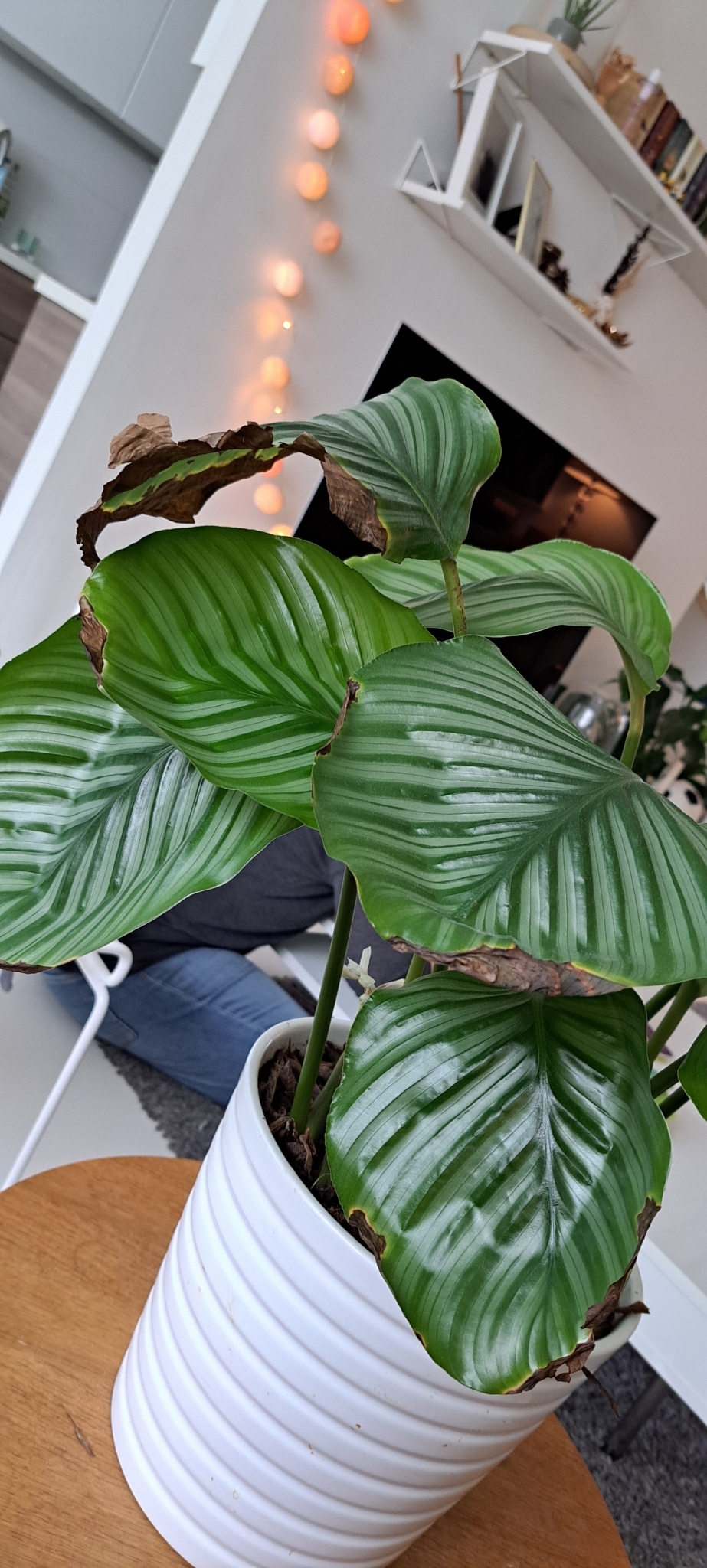
The plant's calling card is its wide, rounded leaf marked with pale silvery-white stripes against green, with a silvery underside noted by the RHS as well. Epic Gardening adds that it belongs to the prayer plant family, so named because the leaves lift and fold at night as if in prayer and reopen by day. Indoors it tends to stay a slow grower, rarely exceeding the size it had when purchased except over several years.
Source: Epic Gardening
Sap-Suckers to Watch
The RHS flags glasshouse whitefly and glasshouse red spider mite as the likely troublemakers. Epic Gardening broadens the list to include aphids, mealybugs, and thrips as well, all of which feed by sucking sap from leaves and stems, and suggests wiping leaves down or using neem oil or insecticidal soap if a plain water spray does not clear them.
Source: Epic Gardening
Reading the Leaves
Curling leaves usually point to insufficient humidity, while yellowing often signals too little water or too little fertiliser, according to Epic Gardening. Pale leaves can likewise mean the plant is short on nitrogen. Root rot is a particular risk if soil stays soggy, showing up as yellow leaves with browned tips and soft, blackened roots, and the fix is to wash the roots clean, trim away damage, and repot into fresh, well-draining soil.
Source: Epic Gardening
Trim and Repot Rhythm
The RHS keeps pruning simple: cut away dead leaves as they appear, and otherwise the plant is considered generally disease-free and low maintenance. Epic Gardening adds that repotting every couple of years is worth planning for, though this calathea actually prefers a slightly snug pot, so size up by only an inch or two in diameter rather than moving it into something roomy.
Source: Epic Gardening
Care recipe
The species record — the baseline every cultivar inherits unless it says otherwise.
Care notes are early — not yet verified
- Light
- ai:claude-opus-4-8
- Water
- ai:claude-opus-4-8 (range 5-10d)
- Humidity
- ai:claude-opus-4-8
- Soil
- ai:claude-fable-5
- Care
- ai:claude-fable-5
Bright, indirect
≈ every 10 days
High
18–27 °C
Airy, moisture-retentive mix of peat/coir with perlite
Division of the rootball at repotting
Diluted balanced feed monthly through the growing season
Moderate
Rarely flowers indoors; grown for its large striped leaves
Non-toxic to cats & dogs
Prayer-plant family (Marantaceae). ASPCA lists Calathea insignis (= Goeppertia insignis) non-toxic; the genus is uniformly safe. This is where toxicity lives: every cultivar of this species inherits it and none can override it.
Reference images
Every image credited. Licenses link to their deeds.
PrimarySources: ai:claude-opus-4-8 · ai:claude-opus-4-8 (range 5-10d) · ai:claude-fable-5 · ASPCA
Kept true by its growers
Every fact here carries its source. Grow Calathea Orbifolia yourself? What you’ve observed — how it drinks, how it holds its color, a name that’s off — and a clear photo of your plant are exactly what keep this page honest. Contributions are reviewed before anything changes.
Sign in to add what you know →