Species · genus Goeppertia · Marantaceae
Brainplant
Goeppertia makoyana (É.Morren) Borchs. & S.Suárez
Also known as: Cathedral-windows · Peacockplant
Cultivars of G. makoyana
The named forms growers keep — each with its own page, each honest about how much we know.
No named cultivars catalogued under G. makoyana yet. When growers document a stable, named form, it earns its own page here.
Guide
The species-level account. Cultivar pages build on this and say where they differ.
The peacock plant
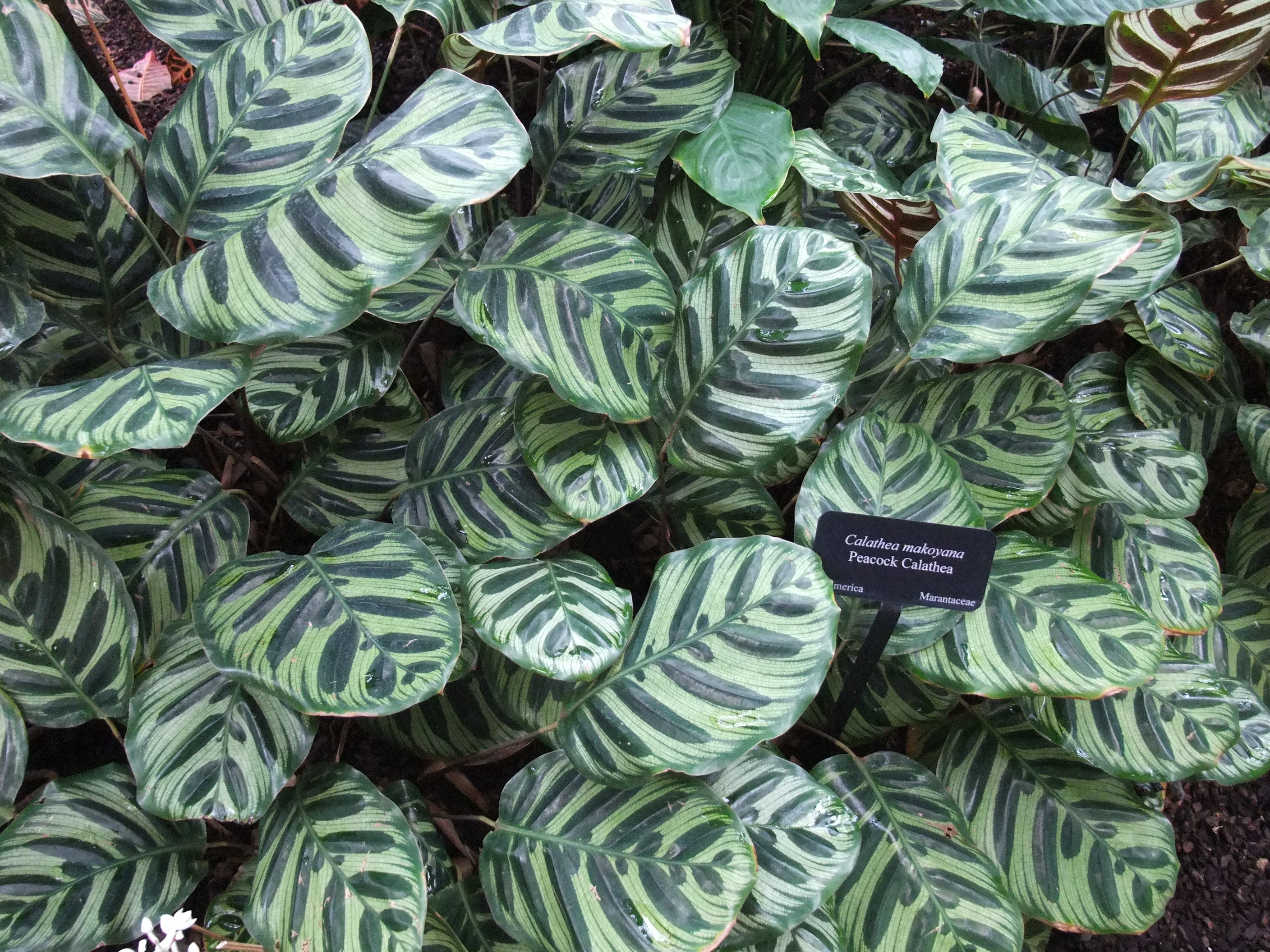
Goeppertia makoyana, still often sold under its old name Calathea makoyana, is a clump-forming evergreen perennial grown for its patterned foliage. Its long-stalked leaves and bushy habit have earned it the common names peacock plant, brain plant, and cathedral windows.
Source: RHS
A native of Brazil
This species comes from the wet tropical forests of southeastern Brazil, in the state of Espírito Santo. It belongs to the family Marantaceae, and was long classified within Calathea before being placed in the genus Goeppertia.
Source: Kew
Light, moisture, shelter
Grow it in partial shade with indirect or filtered light, since strong sun will scorch the leaves, though it will also tolerate fairly low light levels. Keep the soil or compost moist but well-drained, and give it a sheltered, draught-free spot, as it is only reliably hardy under glass in the UK. Outdoors it needs warm, frost-free conditions.
Source: RHS
Dividing the clumps
Propagate by division in late spring, splitting the clump-forming rhizomes into new sections.
Source: RHS
Silvery, blotched leaves
The ovate leaves are silvery-green above, marked with darker veins and regular dark blotches on either side of the midrib, and flushed purple beneath. Occasionally it produces small spikes of purple and white flowers, though this is uncommon in cultivation. It stays compact, generally reaching no more than half a metre in height and spread.
Source: RHS
Aphids and red spider mite
Watch for aphids and glasshouse red spider mite, both of which can trouble this plant. Otherwise it is generally free of disease.
Source: RHS
Little pruning needed
This plant asks for no routine pruning. It is a slow grower, taking around five to ten years to reach its mature size.
Source: RHS
Care recipe
The species record — the baseline every cultivar inherits unless it says otherwise.
Care notes are early — not yet verified
- Light
- ai:claude-opus-4-8
- Water
- ai:claude-opus-4-8 (range 5-10d)
- Humidity
- ai:claude-opus-4-8
- Soil
- ai:claude-fable-5
- Care
- ai:claude-fable-5
Bright, indirect
≈ every 10 days
High
18–27 °C
Airy, moisture-retentive mix of peat/coir with perlite
Division of the rootball at repotting
Diluted balanced feed monthly through the growing season
Moderate
Rarely flowers indoors; grown for its patterned foliage
Non-toxic to cats & dogs
Prayer-plant family (Marantaceae). ASPCA lists Calathea insignis (= Goeppertia insignis) non-toxic; the genus is uniformly safe. This is where toxicity lives: every cultivar of this species inherits it and none can override it.
Reference images
Every image credited. Licenses link to their deeds.
Sources: ai:claude-opus-4-8 · ai:claude-opus-4-8 (range 5-10d) · ai:claude-fable-5 · ASPCA
Kept true by its growers
Every fact here carries its source. Grow Brainplant yourself? What you’ve observed — how it drinks, how it holds its color, a name that’s off — and a clear photo of your plant are exactly what keep this page honest. Contributions are reviewed before anything changes.
Sign in to add what you know →