Species · genus Goeppertia · Marantaceae
Calathea majestica
Goeppertia majestica (Linden) Borchs. & S.Suárez
Also known as: Calathea ornata · Pinstripe Calathea · Pinstripe Plant · Royal Calathea
Cultivars of G. majestica
The named forms growers keep — each with its own page, each honest about how much we know.
No named cultivars catalogued under G. majestica yet. When growers document a stable, named form, it earns its own page here.
Guide
The species-level account. Cultivar pages build on this and say where they differ.
The Majestic Prayer Plant
Goeppertia majestica, still sold under its old name Calathea majestica, is a tender evergreen perennial grown as a houseplant for its patterned foliage. It belongs to the prayer-plant family Marantaceae and carries the RHS Award of Garden Merit.
Source: RHS
A South American Native
This species comes from the wet tropical forests of western South America into northern Brazil, with a native range spanning Bolivia, Brazil, Colombia, Ecuador, Guyana and Peru, and it has also become established in Venezuela. It was first described from material collected by Linden and has since passed through several names, having once been classified in Calathea before its move into Goeppertia.
Source: Kew
Warmth, Shade and Steady Moisture
Grow this plant in houseplant compost in bright indirect or filtered light, in a spot that is partial shade rather than full sun, sheltered from draughts, and given high humidity. Water moderately while it is in growth and feed monthly with a balanced liquid fertiliser, cutting back to keeping the compost just moist over winter. It suits an east, north, south or west aspect indoors so long as exposure is sheltered, and it is rated for growing under glass year-round in UK conditions.
Source: RHS
Dividing the Clump
This clump-forming perennial is propagated by division, carried out in late spring.
Source: RHS
Glossy, Veined Leaves
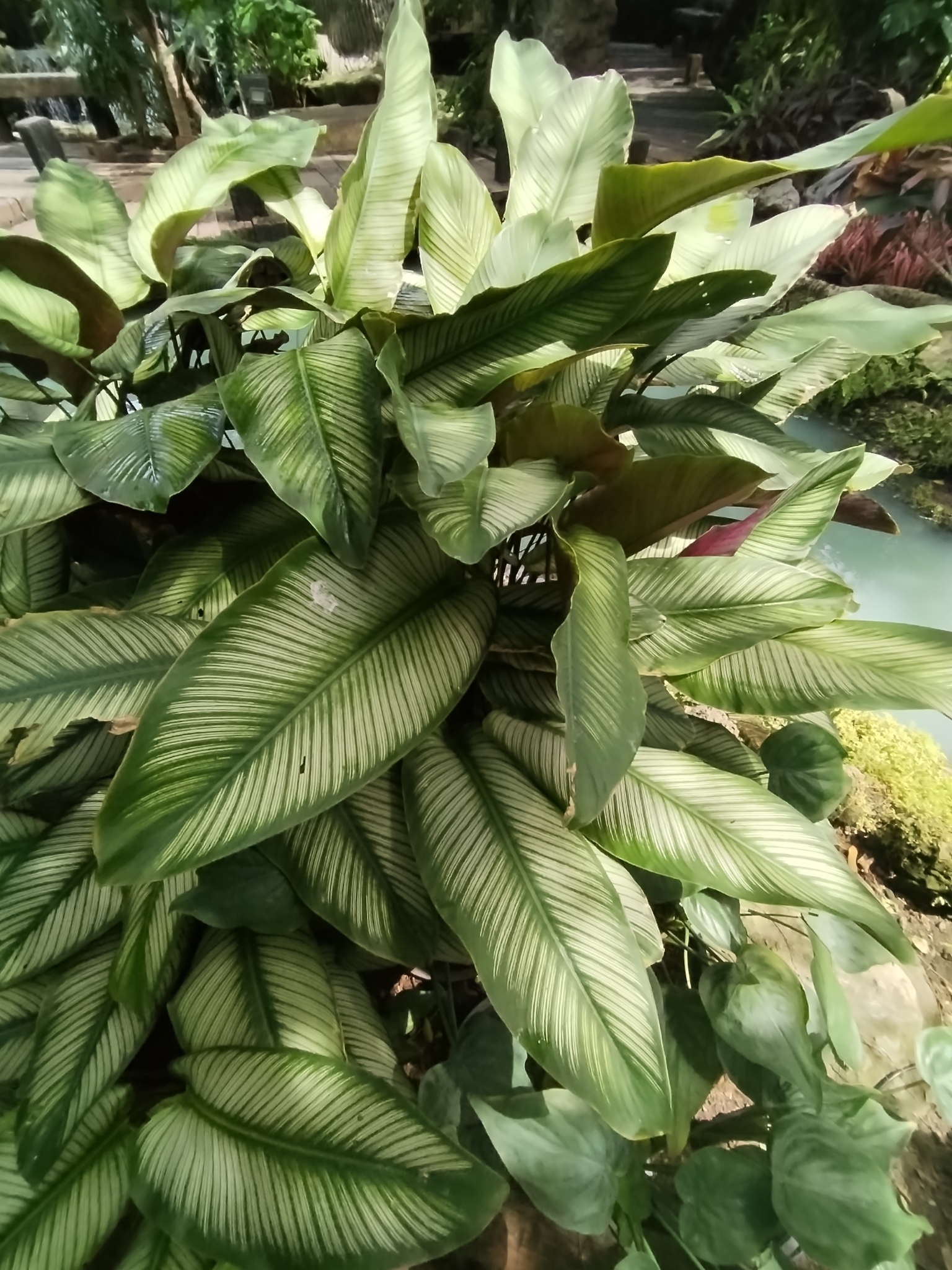
The plant forms clumps of glossy green leaves reaching up to 30cm long, held on stalks up to 40cm tall. Fine white lines trace the lateral veins across the leaf surface, while the underside of each leaf shows a contrasting purple. A cultivar known as 'Sanderiana' is grown under the same species, also familiar to many by its older name Calathea sanderiana.
Source: RHS
Whitefly and Red Spider Mite
Under glass or indoors, watch for glasshouse whitefly and glasshouse red spider mite, both of which can trouble this plant.
Source: RHS
Topdressing and Repotting
No pruning is required for this plant. Topdress the compost annually and repot every two to three years, and note that it generally stays free of disease.
Source: RHS
Care recipe
The species record — the baseline every cultivar inherits unless it says otherwise.
Care notes are early — not yet verified
- Light
- ai:claude-opus-4-8
- Water
- ai:claude-opus-4-8 (range 5-10d)
- Humidity
- ai:claude-opus-4-8
- Soil
- ai:claude-fable-5
- Care
- ai:claude-fable-5
Bright, indirect
≈ every 10 days
High
18–27 °C
Airy, moisture-retentive mix of peat/coir with perlite
Division of the rootball at repotting
Diluted balanced feed monthly through the growing season
Moderate
Rarely flowers indoors; grown for its foliage
Non-toxic to cats & dogs
Prayer-plant family (Marantaceae). ASPCA lists Calathea insignis (= Goeppertia insignis) non-toxic; the genus is uniformly safe. This is where toxicity lives: every cultivar of this species inherits it and none can override it.
Reference images
Every image credited. Licenses link to their deeds.
PrimarySources: ai:claude-opus-4-8 · ai:claude-opus-4-8 (range 5-10d) · ai:claude-fable-5 · ASPCA
Kept true by its growers
Every fact here carries its source. Grow Calathea majestica yourself? What you’ve observed — how it drinks, how it holds its color, a name that’s off — and a clear photo of your plant are exactly what keep this page honest. Contributions are reviewed before anything changes.
Sign in to add what you know →