Species · genus Goeppertia · Marantaceae
Calathea loeseneri
Goeppertia loeseneri (J.F.Macbr.) Borchs. & S.Suárez
Also known as: Brazilian Star Calathea · Brazilian Star
Cultivars of G. loeseneri
The named forms growers keep — each with its own page, each honest about how much we know.
No named cultivars catalogued under G. loeseneri yet. When growers document a stable, named form, it earns its own page here.
Guide
The species-level account. Cultivar pages build on this and say where they differ.
A Lotus-Flowered Goeppertia
Goeppertia loeseneri, once known as Calathea loeseneri, is a rhizomatous evergreen perennial in the Marantaceae family, grown chiefly for its patterned foliage. In cultivation it is sometimes sold under the name Lotus Pink, a nod to its soft pink blooms.
Source: RHS
Roots in South America
This species is native to a broad swath of western South America into northern Brazil, with confirmed populations in Brazil, Colombia, Ecuador, and Peru. It is a perennial of the wet tropical biome, and it has also found use locally as a medicine.
Source: Kew
Lotus-Pink Blooms and Foliage
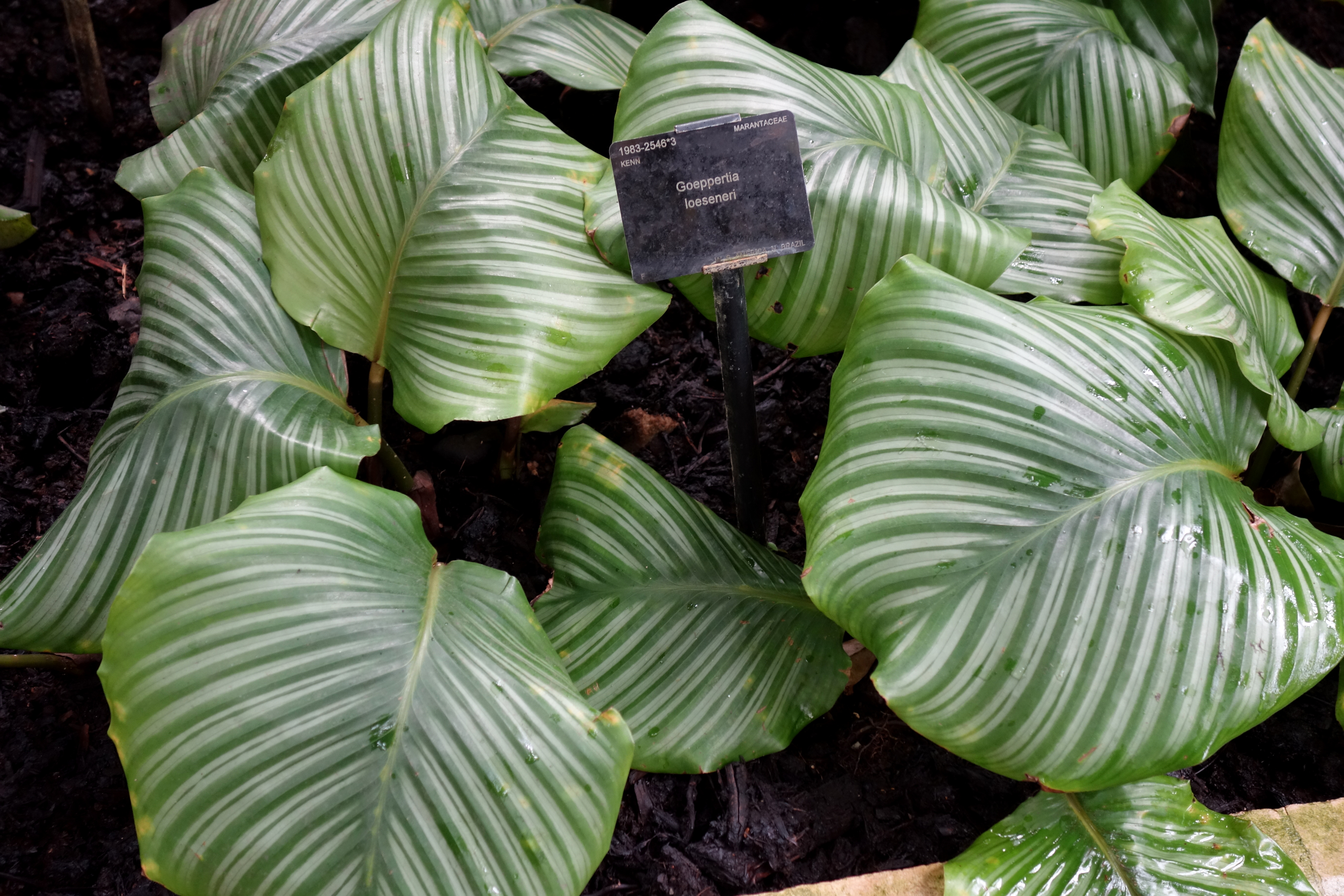
The plant takes its common name, Lotus Pink, from its soft, lotus-shaped pink flowers, a rare sight in many Calathea relatives grown indoors. Its leaves are a vibrant light green, marked by a midrib that runs pale green to white.
Source: Epic Gardening
Care recipe
The species record — the baseline every cultivar inherits unless it says otherwise.
Care notes are early — not yet verified
- Light
- ai:claude-opus-4-8
- Water
- ai:claude-opus-4-8 (range 5-10d)
- Humidity
- ai:claude-opus-4-8
- Soil
- ai:claude-fable-5
- Care
- ai:claude-fable-5
Bright, indirect
≈ every 10 days
High
18–27 °C
Airy, moisture-retentive mix of peat/coir with perlite
Division of the rootball at repotting
Diluted balanced feed monthly through the growing season
Moderate
Can produce orange-and-yellow flower spikes indoors in good conditions
Non-toxic to cats & dogs
Prayer-plant family (Marantaceae). ASPCA lists Calathea insignis (= Goeppertia insignis) non-toxic; the genus is uniformly safe. This is where toxicity lives: every cultivar of this species inherits it and none can override it.
Reference images
Every image credited. Licenses link to their deeds.
PrimarySources: ai:claude-opus-4-8 · ai:claude-opus-4-8 (range 5-10d) · ai:claude-fable-5 · ASPCA
Kept true by its growers
Every fact here carries its source. Grow Calathea loeseneri yourself? What you’ve observed — how it drinks, how it holds its color, a name that’s off — and a clear photo of your plant are exactly what keep this page honest. Contributions are reviewed before anything changes.
Sign in to add what you know →