Species · genus Gibasis · Commelinaceae
Dotted Bridalveil
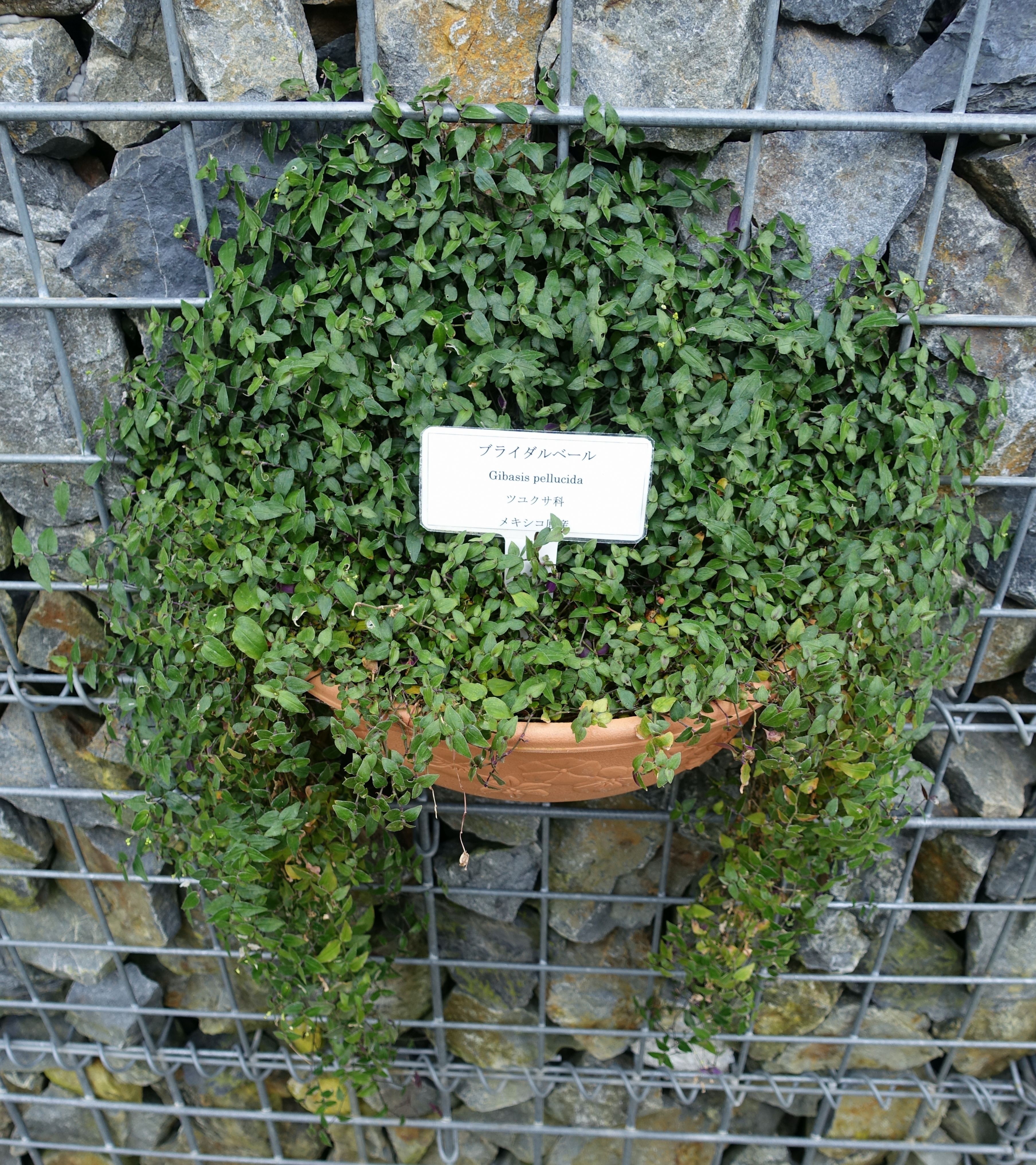
Gibasis pellucida (M.Martens & Galeotti) D.R.Hunt
Also known as: Bridalveil · Tahitian Bridalveil
Cultivars of G. pellucida
The named forms growers keep — each with its own page, each honest about how much we know.
No named cultivars catalogued under G. pellucida yet. When growers document a stable, named form, it earns its own page here.
Guide
The species-level account. Cultivar pages build on this and say where they differ.
A Small Trailing Commelinad
Gibasis pellucida, sold under the name Tahitian Bridal Veil, is a member of the Commelinaceae, the same family as the tradescantias it is often confused with. It has in fact been classified at times as Tradescantia (Andersoniana Group) 'Bridal Veil', a sign of how closely the two groups sit together botanically.
Source: RHS
Mexican and Central American Roots
This species is native to a stretch running from Mexico down to El Salvador, including Guatemala, where it grows as a subshrub in seasonally dry tropical habitat. It has since been introduced beyond that native range, turning up in Alabama, Florida, Texas, and South Africa's Free State province.
Source: Kew
A Subshrub With Many Names
In its natural growth form Gibasis pellucida is a subshrub rather than a true herb, and it carries a long list of botanical synonyms, having once been placed under Tradescantia, Tripogandra, and even a separate Gibasis species name. It is also noted for having environmental uses, though the sources here do not spell out what those are.
Source: Kew
Care recipe
The species record — the baseline every cultivar inherits unless it says otherwise.
Care notes are early — not yet verified
- Light
- ai:claude-opus-4-8
- Water
- ai:claude-opus-4-8 (range 5-10d)
- Humidity
- ai:claude-opus-4-8
- Soil
- ai:claude-fable-5
- Care
- ai:claude-fable-5
Bright, indirect
≈ every 10 days
Medium
13–27 °C
Light, well-draining peat or coir-based potting mix
Stem cuttings root readily in water or moist soil
Balanced liquid feed at half strength monthly in spring and summer
Fast
Freely produces tiny white flowers, even indoors
Not yet documented
This is where toxicity lives — every cultivar of this species inherits it and none can override it.
Reference images
Every image credited. Licenses link to their deeds.
PrimarySources: ai:claude-opus-4-8 · ai:claude-opus-4-8 (range 5-10d) · ai:claude-fable-5
Kept true by its growers
Every fact here carries its source. Grow Dotted Bridalveil yourself? What you’ve observed — how it drinks, how it holds its color, a name that’s off — and a clear photo of your plant are exactly what keep this page honest. Contributions are reviewed before anything changes.
Sign in to add what you know →