Species · genus Gardenia · Rubiaceae
Tahitian Gardenia
Gardenia taitensis DC.
Also known as: Tiaré Flower
Cultivars of G. taitensis
The named forms growers keep — each with its own page, each honest about how much we know.
No named cultivars catalogued under G. taitensis yet. When growers document a stable, named form, it earns its own page here.
Guide
The species-level account. Cultivar pages build on this and say where they differ.
A Fragrant Pacific Shrub
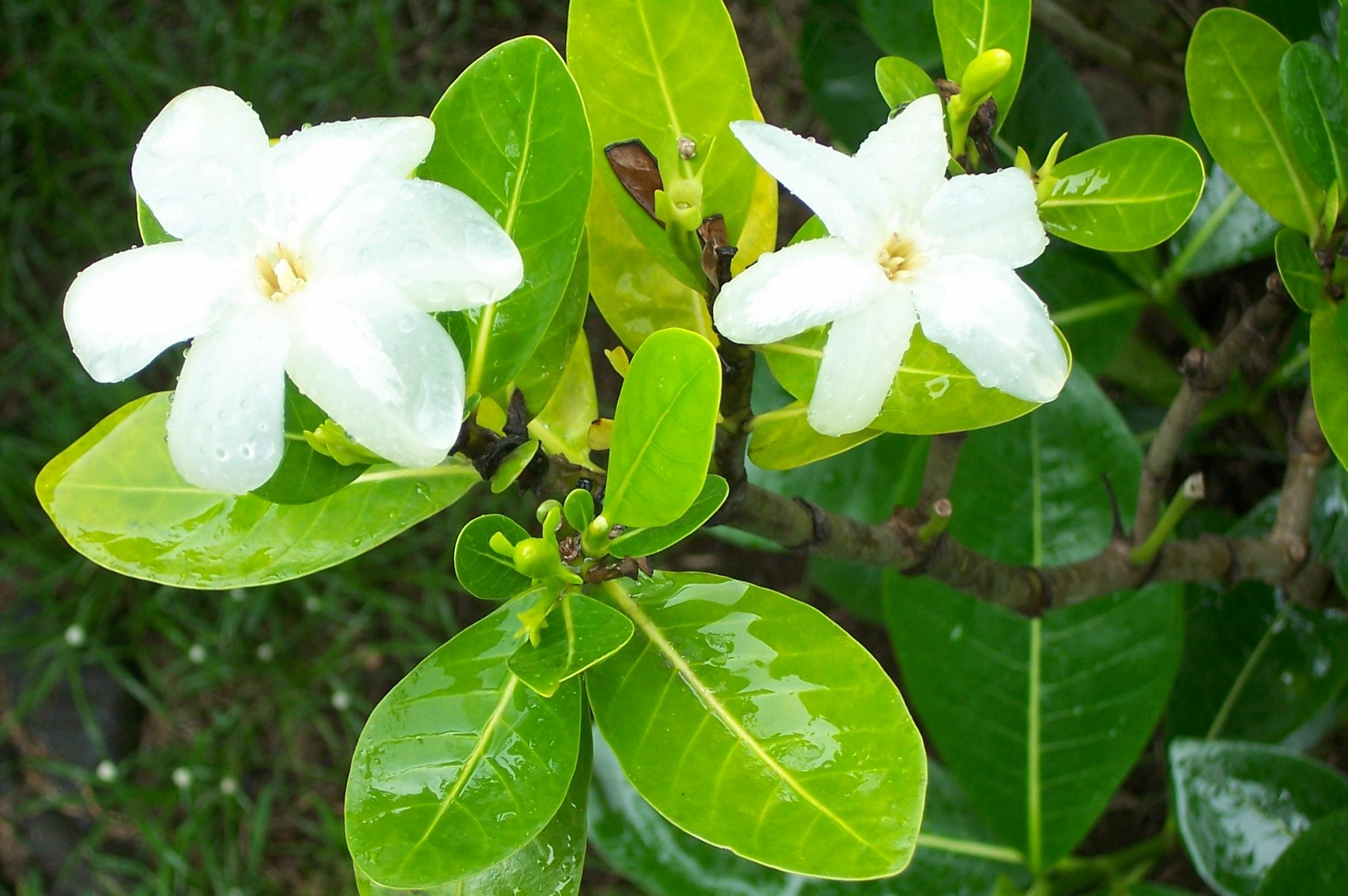
Gardenia taitensis, the Tahitian gardenia or tiare flower, is a large tropical evergreen shrub grown for its pinwheel-shaped white blooms. It belongs to the Rubiaceae family alongside its better-known cousin Gardenia jasminoides, and it can reach up to ten feet, making it one of the larger gardenias.
Source: Epic Gardening
Native to the SW Pacific
Despite its common name pointing to Tahiti, this species is native to the southwest Pacific, including Fiji, Niue, Samoa, Tonga, Vanuatu, and Wallis-Futuna, and it has since been introduced across many other Pacific island groups such as Hawaii, the Cook Islands, and the Marquesas. It grows primarily as a shrub or tree within the wet tropical biome. The flowers of this plant are the source of monoi oil, and they are traditionally woven into necklaces called ei in the Cook Islands and lei in Hawaii.
Source: Kew
Sun, Warmth, Humidity
This gardenia does best with several hours of morning sun, tolerating full sun in cooler climates but appreciating some shelter from harsh midday sun where conditions run hot. It wants moderate, consistent moisture, roughly two to four inches of water a week, in soil that drains well and sits on the acidic side. Reflecting its tropical habitat, it favors high humidity above sixty percent and daytime warmth at or above seventy degrees Fahrenheit, with fertilizing during the growing months using a formula suited to acid-loving plants.
Source: Epic Gardening
Pinwheel Blooms, Glossy Leaves
Like other gardenias, this species carries a whorl of shiny, dark green, ovate leaves that stay evergreen through the year. Its flowers stand apart from the more familiar rose-form gardenia blossoms, opening flat in a distinctive pinwheel shape with a warm yellow glow at the center. The plant holds its foliage well even through a hard freeze, though it is markedly less cold-hardy than other gardenia species given its tropical origin.
Source: Epic Gardening
Sap-Sucking Troublemakers
Whiteflies and aphids both feed on plant sap and leave behind sticky honeydew that invites sooty mold, with aphids also causing curled, shriveled leaves and often clustering under foliage. Japanese wax scales feed similarly but hide beneath a waxy coating that resists most treatments, though horticultural oil can dissolve it and suffocate them. Watering well before applying any horticultural oil or insecticidal soap helps avoid added stress to an already struggling plant.
Source: Epic Gardening
Bud Drop and Root Rot
Bud drop is the plant's general stress response, triggered by fungal or bacterial disease, insect infestation, or over-fertilizing. Root rot, most often caused by the fungus Phytophthora, tends to follow poor drainage or overwatering, showing up as yellowing that starts with the oldest leaves, leaf drop, and wilting, with the surest sign being brown, weakened feeder roots when the plant is dug up.
Source: Epic Gardening
Pruning After Bloom
Deadheading spent flowers regularly encourages a gardenia to set more buds and directs its energy toward fresh growth. Pruning is best done once flowering finishes, generally around midsummer, trimming back only two to three inches from the branch tips and never removing more than a third of the plant. Cutting too late in the season risks frost damage to the tender new shoots that follow a trim.
Source: Epic Gardening
Care recipe
The species record — the baseline every cultivar inherits unless it says otherwise.
Care notes are early — not yet verified
- Light
- ai:claude-opus-4-8
- Water
- ai:claude-opus-4-8 (range 5-10d)
- Humidity
- ai:claude-opus-4-8
- Soil
- ai:claude-fable-5
- Care
- ai:claude-fable-5
Bright, indirect
≈ every 10 days
High
18–29 °C
Acidic, well-draining organic mix
Semi-hardwood cuttings
Acid-formula feed monthly in the growing season
Moderate
Fragrant white flowers in warm, bright conditions
Not yet documented
This is where toxicity lives — every cultivar of this species inherits it and none can override it.
Reference images
Every image credited. Licenses link to their deeds.
PrimarySources: ai:claude-opus-4-8 · ai:claude-opus-4-8 (range 5-10d) · ai:claude-fable-5
Kept true by its growers
Every fact here carries its source. Grow Tahitian Gardenia yourself? What you’ve observed — how it drinks, how it holds its color, a name that’s off — and a clear photo of your plant are exactly what keep this page honest. Contributions are reviewed before anything changes.
Sign in to add what you know →