Species · genus Gardenia · Rubiaceae
Cape Jasmine
Gardenia jasminoides J.Ellis
Also known as: Cape-jessamine · Danh-danh · Jasmin · Common Gardenia · Gardenia
Cultivars of G. jasminoides
The named forms growers keep — each with its own page, each honest about how much we know.
No named cultivars catalogued under G. jasminoides yet. When growers document a stable, named form, it earns its own page here.
Guide
The species-level account. Cultivar pages build on this and say where they differ.
A Fragrant Houseplant
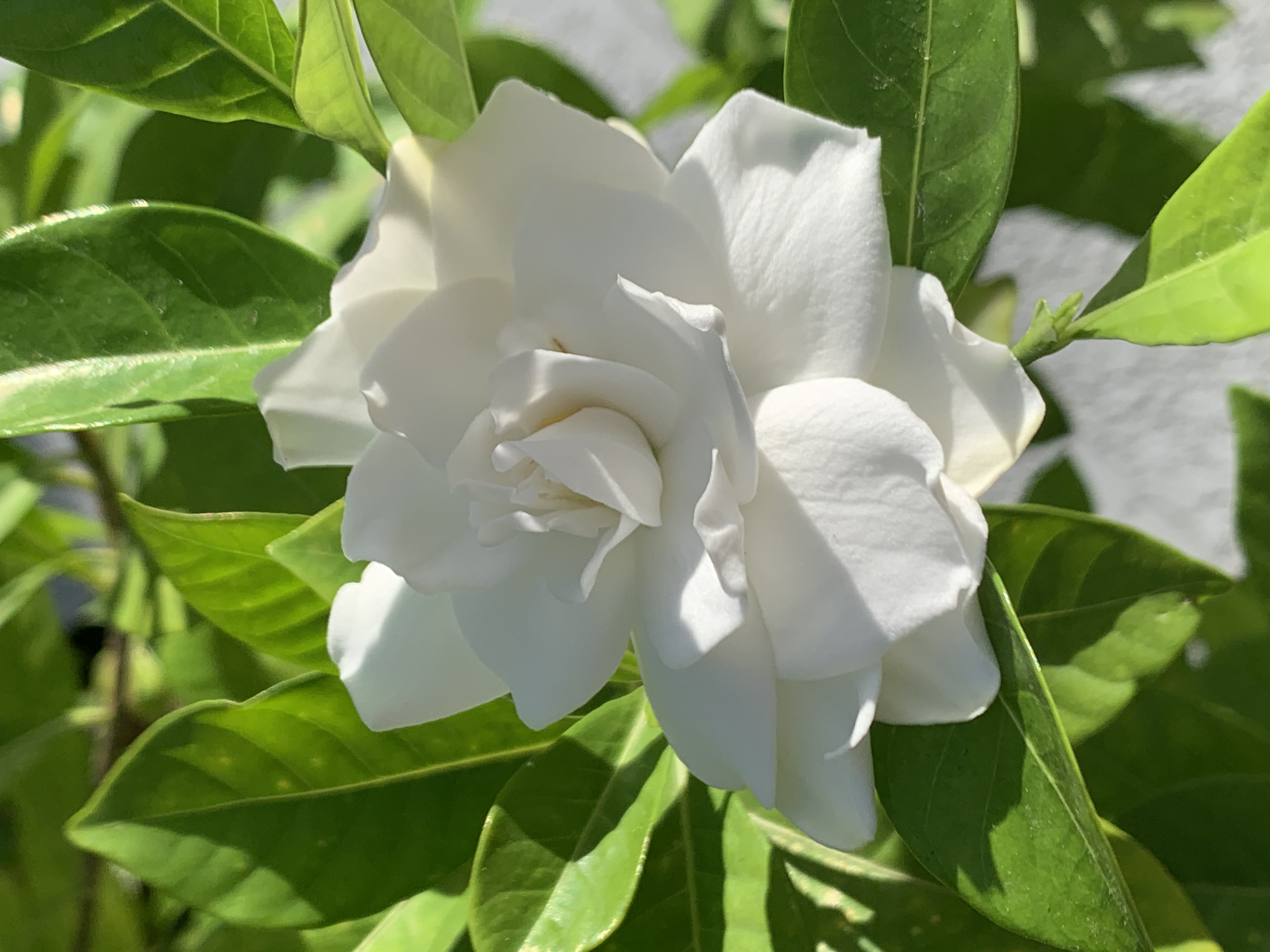
The gardenia grown indoors is usually Gardenia jasminoides, a tender shrub valued for its richly scented, creamy-white flowers set against glossy, dark green evergreen leaves. In the UK it is kept as a houseplant year-round, sometimes moved outside for the warmest months.
Source: RHS
A Short-Lived Favourite
Gardenia jasminoides, which carries the RHS Award of Garden Merit, is the most familiar species sold as a houseplant, with cultivars such as 'Kleim's Hardy' and 'Crown Jewel' also available. Because getting the growing conditions right can be tricky, gardenias are often treated as short-lived plants, with flowering declining after a few years.
Source: RHS
Warmth, Light And Feeding
Gardenias want a warm, bright spot away from direct sun, such as a west-facing windowsill, shifting to a south-facing one in winter for extra light. Days around 21–24°C and nights a touch cooler suit them best, and sudden swings in temperature can knock buds off. Keep the compost constantly moist through spring and summer, easing off in winter without letting it dry out, ideally using rainwater to keep things acidic. They are hungry plants too, so a weekly high-nitrogen feed in spring and summer, dropping to a balanced feed every five to six weeks in winter, keeps them going.
Source: RHS
Cuttings, Taken Yearly
Gardenias root readily from cuttings, and since flowering tends to fade after a few years, it is worth taking cuttings annually to raise replacements. Softwood cuttings can be taken in late winter or early spring, and semi-ripe cuttings, heel cuttings especially, in summer. Once rooted, pot them individually into peat-free ericaceous compost and repot annually as they grow so the roots do not become congested.
Source: RHS
Glossy Leaves, Heady Bloom
What marks this plant out is its heavy, jasmine-like fragrance carried by large, creamy-white summer flowers, set off by glossy evergreen foliage. It is this scent and bloom, more than anything else, that has kept gardenias popular as houseplants.
Source: RHS
Sap-Feeding Insects
Check gardenias regularly for sap-feeding pests, namely red spider mites, mealybugs, scale insects and aphids.
Source: RHS
Reading The Symptoms
Yellowing leaves, especially on new growth, usually point to overwatering or, particularly in hard water areas, iron deficiency treatable with chelated iron. Browning at the leaf tips and edges suggests too little water, while yellow shoots and slow growth generally trace back to poor light and low temperatures. A lack of flowers can follow hot nights and dry air, and bud drop is typically down to fluctuating temperatures or inconsistent watering; wilting despite moist compost means the plant is losing water faster than its roots can replace it, calling for shade and extra misting.
Source: RHS
Repotting And Light Pruning
Gardenias dislike congested roots, so repot each spring into a pot only slightly larger, using peat-free ericaceous compost, or top-dress if repotting isn't possible. A light prune in February or March keeps the shape in good order, and deadheading spent flowers regularly encourages more to form.
Source: RHS
Care recipe
The species record — the baseline every cultivar inherits unless it says otherwise.
Care notes are early — not yet verified
- Light
- ai:claude-opus-4-8
- Water
- ai:claude-opus-4-8 (range 5-10d)
- Humidity
- ai:claude-opus-4-8
- Soil
- ai:claude-fable-5
- Care
- ai:claude-fable-5
Bright, indirect
≈ every 10 days
High
16–24 °C
Acidic, moisture-retentive well-draining mix
Semi-hardwood cuttings under warmth
Acid-formula feed every 2-4 weeks in the growing season
Moderate
Fragrant white flowers with careful conditions
Toxic to cats & dogs
Gardenia — mildly toxic; vomiting, diarrhoea, hives. This is where toxicity lives: every cultivar of this species inherits it and none can override it.
Reference images
Every image credited. Licenses link to their deeds.
PrimarySources: ai:claude-opus-4-8 · ai:claude-opus-4-8 (range 5-10d) · ai:claude-fable-5 · ASPCA
Kept true by its growers
Every fact here carries its source. Grow Cape Jasmine yourself? What you’ve observed — how it drinks, how it holds its color, a name that’s off — and a clear photo of your plant are exactly what keep this page honest. Contributions are reviewed before anything changes.
Sign in to add what you know →