Species · genus Fittonia · Acanthaceae
Mosaic-plant
Fittonia albivenis (Lindl. ex Veitch) Brummitt
Also known as: Nerveplant · Silver Fittonia · Silver Netleaf · Silver Netplant · Silver-nerve
Cultivars of F. albivenis
The named forms growers keep — each with its own page, each honest about how much we know.
No named cultivars catalogued under F. albivenis yet. When growers document a stable, named form, it earns its own page here.
Guide
The species-level account. Cultivar pages build on this and say where they differ.
A Small, Veined Tropical
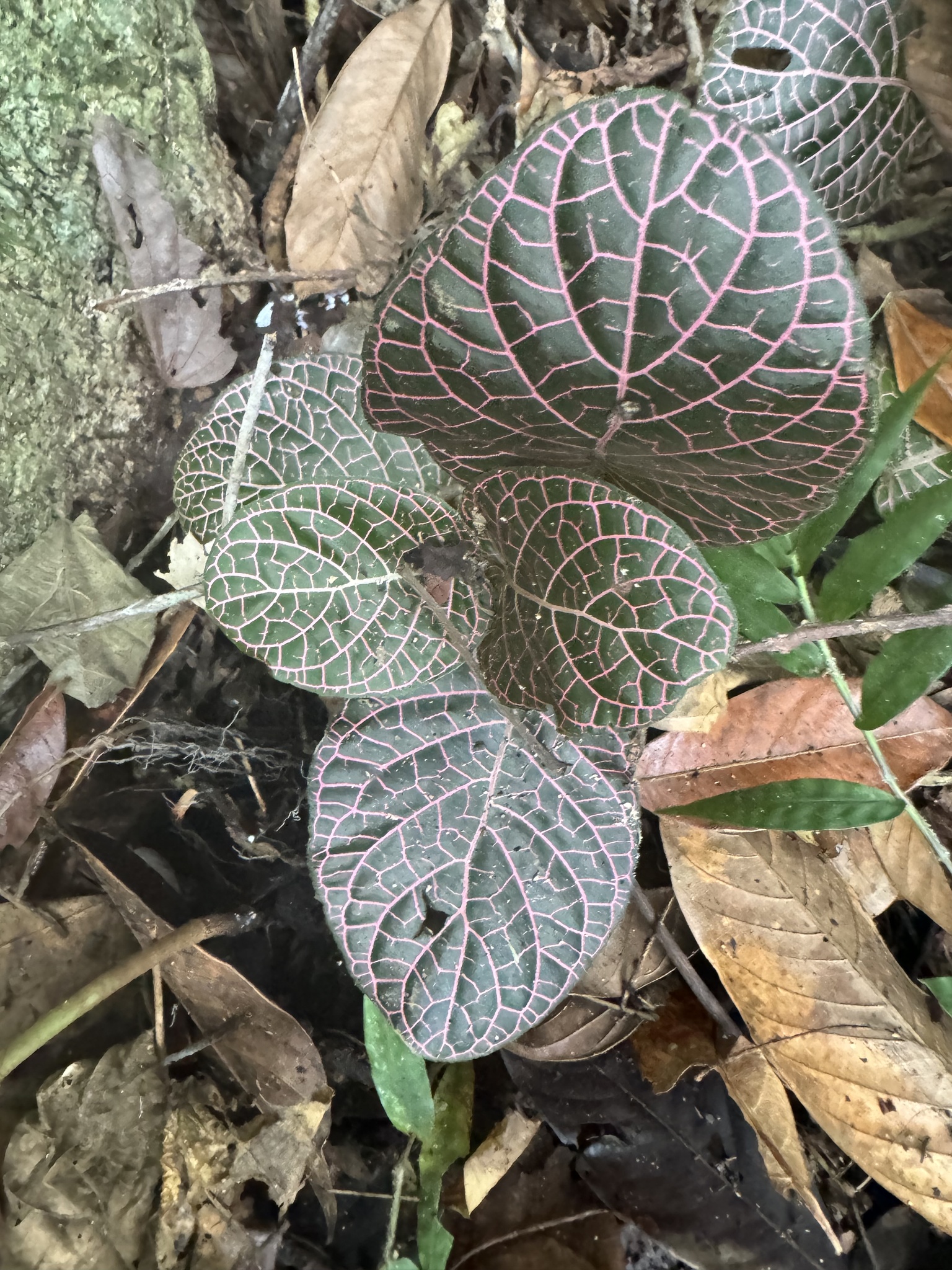
Nerve plant, botanically Fittonia albivenis, is a compact tropical grown for its foliage rather than its flowers, which rarely appear indoors. Its dark green leaves come netted in white, pink, or red veining, making it a favorite for tabletops, hanging baskets, and terrariums.
Source: Costa Farms
Rainforest Understory Native
This herbaceous evergreen perennial hails from the rainforests of Colombia, Peru, Bolivia, Ecuador, and northern Brazil. There it grows beneath the canopy of taller trees, in the warm, humid, shaded conditions of the forest floor, which explains its preference for filtered light and moist air as a houseplant.
Source: Epic Gardening
Warmth, Shade, Steady Moisture
Nerve plant does best in bright, indirect light and resents direct sun, which can scorch or fade its leaf color; it also wants steady warmth, ideally kept above 17°C (63°F) and away from cold drafts. Water enough to keep the compost moisture-retentive but never waterlogged, and treat humid air as essential rather than optional, since dry conditions show up quickly in drooping or wilting leaves. Feeding can be modest, just a couple of times a year at minimum, or monthly with a general houseplant fertilizer for more active growth.
Source: RHS
Easy From Stem Cuttings
Nerve plant propagates readily from stem cuttings taken at a leaf node, ideally several inches long. Strip the lower leaves and set the cut end in a glass of water, where roots will develop over the following weeks before the cutting is potted into fresh soil.
Source: Epic Gardening
Foliage Is the Point
Fittonia is a low, slowly spreading plant with softly hairy, oval leaves, and its whole appeal lies in the boldly patterned veining that runs across them, usually in red, white, or pink against green. Cultivars vary widely in leaf size and vein color, from the near-white leaves of some selections to the deep purple-red stripes of others, with mature size typically staying in the range of a few inches to about eight inches across.
Source: RHS
Aphids and Thrips
Aphids are the most frequent visitor, drawn especially to new growth on young plants, and are often managed with a strong blast of water or, if needed, neem oil or insecticidal soap. Thrips are harder to spot but leave a telltale silvery, dusty sheen on leaves and stems as they feed, and respond to the same outdoor-exposure and neem oil approach.
Source: Epic Gardening
Moisture and Light Missteps
Most nerve plant troubles trace back to too much direct sun, too little humidity, or soggy soil. Sun exposure shows up as browning, dropping leaves and a loss of that deep green color, while low humidity brings on wilting or a generally lackluster plant, often eased with a pebble tray. Root rot, from fungi in overly wet soil, presents as mushy stems and rotten roots, and is only recoverable if some firm white roots remain to replant into dry fresh soil; the plant can also fall to a mosaic virus, which causes blotchy, distorted foliage and has no cure.
Source: Epic Gardening
Pruning and Repotting Rhythm
Left alone, nerve plant tends toward tall, leggy growth, so it benefits from an occasional haircut cut back to a leaf node, which also encourages bushier habit and yields stem tips for propagation. Repotting every two to three years is generally enough, though yellow, limp leaves signal waterlogged soil and call for an earlier repot into fresher, better-draining mix with any soggy roots trimmed away.
Source: Epic Gardening
Care recipe
The species record — the baseline every cultivar inherits unless it says otherwise.
Care notes are early — not yet verified
- Light
- ai:claude-opus-4-8
- Water
- ai:claude-opus-4-8 (range 3-7d)
- Humidity
- ai:claude-opus-4-8
- Soil
- ai:claude-fable-5
- Care
- ai:claude-fable-5
Bright, indirect
≈ every 7 days
High
18–27 °C
Light, moisture-retentive peat-based mix
Stem cuttings rooted in water or moist soil
Dilute balanced feed every 2-4 weeks while growing
Moderate
Insignificant flowers, grown for foliage
Not yet documented
This is where toxicity lives — every cultivar of this species inherits it and none can override it.
Reference images
Every image credited. Licenses link to their deeds.
PrimarySources: ai:claude-opus-4-8 · ai:claude-opus-4-8 (range 3-7d) · ai:claude-fable-5
Kept true by its growers
Every fact here carries its source. Grow Mosaic-plant yourself? What you’ve observed — how it drinks, how it holds its color, a name that’s off — and a clear photo of your plant are exactly what keep this page honest. Contributions are reviewed before anything changes.
Sign in to add what you know →