Species · genus Ficus · Moraceae
Broom Cluster Fig
Ficus sur Forssk.
Also known as: Cape Fig · Bush Fig · Cape Wild Fig · Fire Sticks · Kooman
Cultivars of F. sur
The named forms growers keep — each with its own page, each honest about how much we know.
No named cultivars catalogued under F. sur yet. When growers document a stable, named form, it earns its own page here.
Guide
The species-level account. Cultivar pages build on this and say where they differ.
The Ficus Family
Ficus, or figs, are among the most familiar houseplants, spanning everything from low creeping groundcovers to substantial indoor trees. Within the genus you find a real range of textures and forms, from the arching branches of weeping fig to the bold, violin-shaped leaves of fiddle leaf fig, so there is one suited to nearly any style of room.
Source: Costa Farms
A Wild African Relative
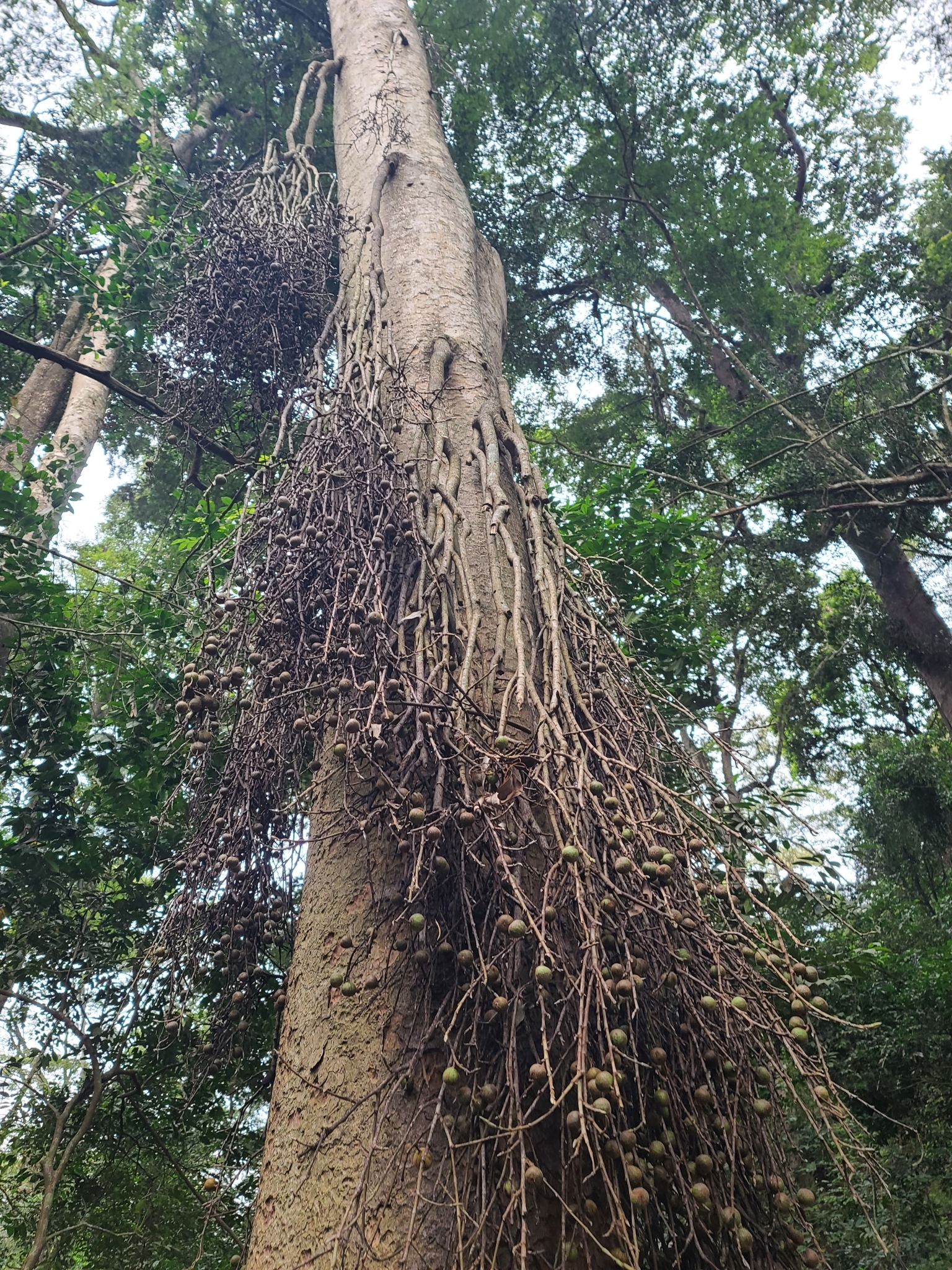
Not every fig is a houseplant. Ficus sur, first described in 1775, is native across a wide swath of Africa and into the southwestern Arabian Peninsula, growing as a tree in seasonally dry tropical habitats. It carries dozens of historical synonyms, a sign of how often it was independently named across its broad range.
Source: Kew
Light, Water, and Feeding
Most ficus want medium to bright light and will tolerate some direct sun, while fiddle leaf fig specifically does best in bright, indirect light and is not suited to low-light rooms. Water when the top inch or so of mix feels dry, checking with a stick or finger rather than a calendar, and don't let the plant sit in standing water. Feed in spring and summer while growth is active, and hold off once cooler months slow things down. Fiddle leaf figs also do best above 60°F, away from drafts and heating or cooling vents.
Source: Costa Farms
Shapes, Leaves, and Habit
What sets ficus apart from one another is largely leaf shape and growth habit. Rubber trees carry large leaves often flushed red or purple, creeping figs stay small-leaved and low for baskets or terrariums, and fiddle leaf fig is prized for its dramatic, glossy, violin-shaped foliage.
Source: Costa Farms
Leaf Drop and Discoloration
Weeping ficus has a reputation for dropping leaves when conditions change, but this is usually temporary and new growth follows once the plant settles in. On fiddle leaf fig, yellow leaves or brown spots with yellow halos point to too much moisture or poor drainage, while dry crispy edges suggest underwatering, dry air, or too much direct sun. Leaves that stretch or lean are asking for more light, and soft stems with consistently wet mix signal overwatering, so the potting mix is the first thing worth checking before changing your routine.
Source: Costa Farms
Pruning and Repotting
Ficus take pruning well and tend to branch out thicker and bushier after a cutback, though the milky sap that weeps from cut tips is worth wiping up with a cloth before it drips on the floor. Fiddle leaf fig in particular doesn't need frequent repotting; wait until roots emerge from the drainage holes, water runs through too quickly, or the plant becomes top-heavy, then move up just one pot size with a well-draining mix.
Source: Costa Farms
Care recipe
The species record — the baseline every cultivar inherits unless it says otherwise.
Care notes are early — not yet verified
- Light
- ai:claude-opus-4-8
- Water
- ai:claude-opus-4-8 (range 7-14d)
- Humidity
- ai:claude-opus-4-8
- Soil
- ai:claude-fable-5
- Care
- ai:claude-fable-5
Bright, indirect
≈ every 14 days
Medium
16–30 °C
Rich, well-draining potting mix
Cuttings or seed
Balanced liquid feed monthly while actively growing
Fast
Does not flower indoors
Toxic to cats & dogs
Fig / rubber plant — irritant latex (ficin); GI upset, dermatitis. This is where toxicity lives: every cultivar of this species inherits it and none can override it.
Reference images
Every image credited. Licenses link to their deeds.
PrimarySources: ai:claude-opus-4-8 · ai:claude-opus-4-8 (range 7-14d) · ai:claude-fable-5 · ASPCA
Kept true by its growers
Every fact here carries its source. Grow Broom Cluster Fig yourself? What you’ve observed — how it drinks, how it holds its color, a name that’s off — and a clear photo of your plant are exactly what keep this page honest. Contributions are reviewed before anything changes.
Sign in to add what you know →