Species · genus Ficus · Moraceae
Climbingfig
Ficus pumila L.
Also known as: Creeping Fig · Climbing Fig · Creeping Rubberplant · Figvine
Cultivars of F. pumila
The named forms growers keep — each with its own page, each honest about how much we know.
No named cultivars catalogued under F. pumila yet. When growers document a stable, named form, it earns its own page here.
Guide
The species-level account. Cultivar pages build on this and say where they differ.
A Small, Clinging Fig
Creeping fig, Ficus pumila, is one of the smallest members of the fig family, and it barely resembles its tree-form relatives. Rather than growing upright, it behaves as a groundcover or climbing vine, depending on how it is trained. It is also sold under the older name Ficus repens.
Source: Costa Farms
Origins in Eastern Asia
This species is native to eastern Asia. Its genus name borrows the old Latin word for the edible fig, while its species name, pumila, simply means dwarf, a nod to its diminutive juvenile leaves compared to fig-family relatives.
Source: Missouri Botanical Garden
Light, Water, and Humidity
Give this plant medium to bright light, enough that it casts a visible shadow for much of the day, and either natural or artificial light will do. Water as the top inch or so of the mix dries, since creeping fig tolerates drying out less well than its larger fig cousins and will drop leaves prematurely if kept too dry. It appreciates average to above-average humidity, as crisp, dry air can brown its leaf edges, and it is best kept away from cold or hot drafts near doors, windows, or vents. Feed with a water-soluble fertilizer through spring and summer, or apply a time-release granular feed once in spring.
Source: Costa Farms
Cuttings and Seed
Creeping fig can be grown from seed, from leaf-bud cuttings, or from semi-hardwood cuttings.
Source: RHS
Two Very Different Leaf Forms
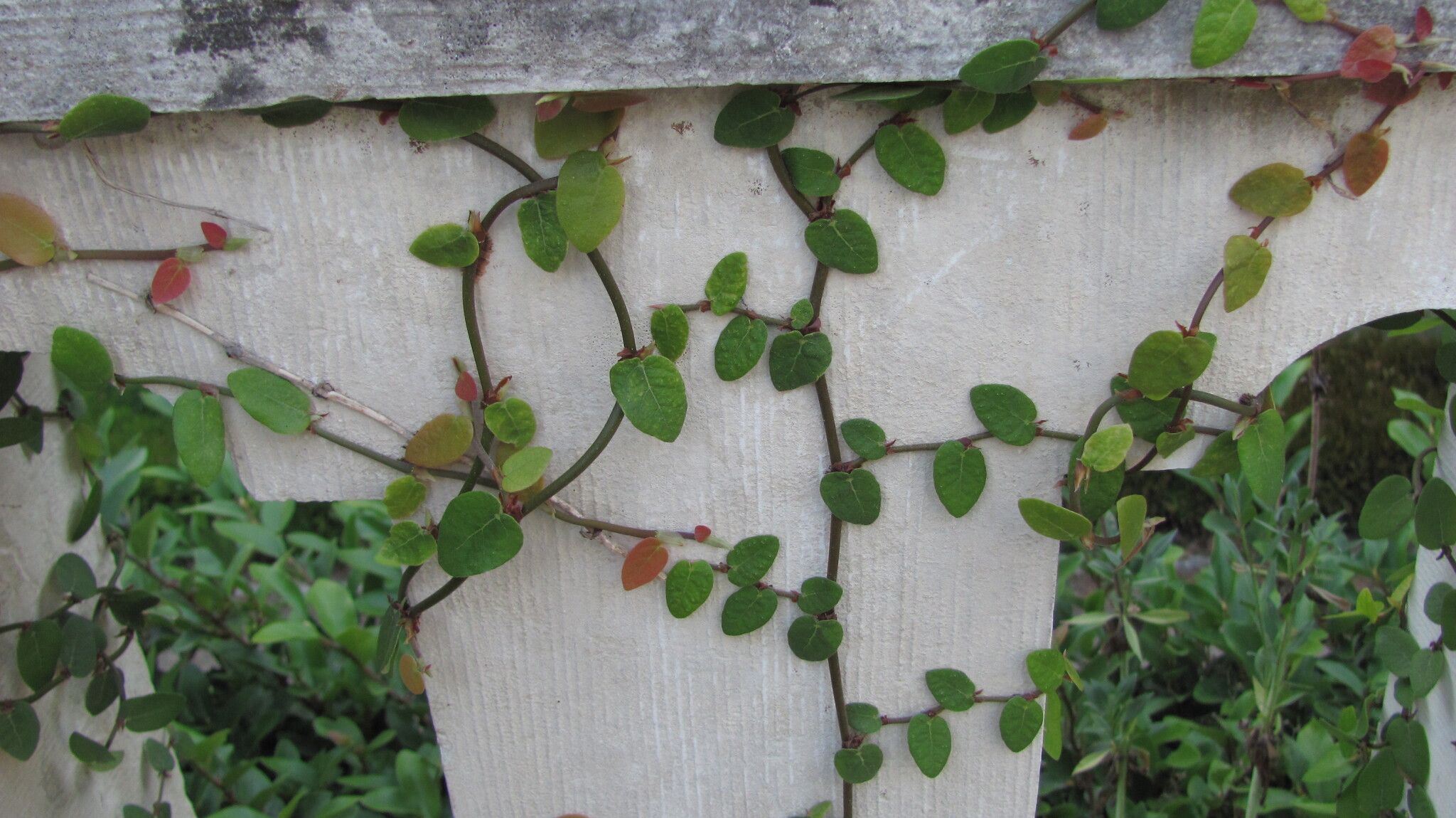
On climbing stems the foliage stays small, heart-shaped, and under an inch long, while stems that go on to bear fruit carry leaves that are larger, thicker, and glossier, reaching up to four inches. Outdoors it clings to walls and trellises using adhesive aerial rootlets, and it can produce hairy, pear-shaped fruit that ripens from green to purple, though flowers and fruit rarely appear on indoor plants. All parts carry a milky sap. Variegated forms and types with oak-like lobed leaves are also grown.
Source: Missouri Botanical Garden
Watch for Sap-Suckers
Under glass or indoors, keep an eye out for scale, mealybugs, thrips, and spider mites, along with aphids on more exposed growth. These sap-feeding pests tend to show up first as sticky residue, stippled leaves, or fine webbing.
Source: RHS
Drafts, Dryness, and Spread
Exposure to drafts noticeably warmer or cooler than the surrounding air, including gusts from doors, windows, or heating and cooling vents, can turn leaves yellow or brown and cause them to drop. Letting the potting mix dry out too far leads to premature leaf loss, and dry air will crisp the leaf edges. Outdoors, this vine can also spread more rapidly than intended.
Source: Costa Farms
Pruning and Repotting
Prune or pinch creeping fig back at any time of year without concern for harming the plant, since it takes trimming well. It tolerates being somewhat rootbound, but grows best when repotted as its roots fill the container. Outdoors it is winter hardy only in USDA zones 9 to 11, so in cooler climates it is grown as a houseplant or as an annual.
Source: Costa Farms
Care recipe
The species record — the baseline every cultivar inherits unless it says otherwise.
Care notes are early — not yet verified
- Light
- ai:claude-opus-4-8
- Water
- ai:claude-opus-4-8 (range 5-10d)
- Humidity
- ai:claude-opus-4-8
- Soil
- ai:claude-fable-5
- Care
- ai:claude-fable-5
Bright, indirect
≈ every 10 days
Medium
13–27 °C
Moisture-retentive but well-draining mix
Stem cuttings rooted in soil or water
Dilute balanced feed monthly while growing
Fast
Rarely flowers indoors
Toxic to cats & dogs
Fig / rubber plant — irritant latex (ficin); GI upset, dermatitis. This is where toxicity lives: every cultivar of this species inherits it and none can override it.
Reference images
Every image credited. Licenses link to their deeds.
Sources: ai:claude-opus-4-8 · ai:claude-opus-4-8 (range 5-10d) · ai:claude-fable-5 · ASPCA
Kept true by its growers
Every fact here carries its source. Grow Climbingfig yourself? What you’ve observed — how it drinks, how it holds its color, a name that’s off — and a clear photo of your plant are exactly what keep this page honest. Contributions are reviewed before anything changes.
Sign in to add what you know →