Species · genus Ficus · Moraceae
Chinese Banyan
Ficus microcarpa L.fil.
Also known as: Laurel Fig · Indian Laurel · Curtain Fig · Hill's Weeping Fig · Indian Laurel Fig
Cultivars of F. microcarpa
The named forms growers keep — each with its own page, each honest about how much we know.
No named cultivars catalogued under F. microcarpa yet. When growers document a stable, named form, it earns its own page here.
Guide
The species-level account. Cultivar pages build on this and say where they differ.
A Fig for Living Rooms
Ficus microcarpa, known as curtain fig, Chinese banyan, or Indian laurel, is a bushy evergreen from the fig family grown both as a container specimen and as a foliage houseplant. Its glossy, leathery, ovate to lance-shaped leaves and tidy bushy habit make it a familiar presence indoors, though in the wild it grows into a large tree hung with aerial roots.
Source: RHS
Native Range and Spread
This fig is native across tropical and subtropical Asia into the western Pacific, from India, China, and Japan down through Malaysia, the Philippines, and Melanesia to Queensland and New Caledonia. It has since naturalised widely beyond that range, turning up from the Canary Islands and Mediterranean to Florida, Hawaii, and parts of the Caribbean and South America. It grows chiefly in wet tropical conditions and has long served local uses as animal fodder, medicine, and fuel.
Source: Kew
Light, Water, and Feeding
Grown under glass or as a houseplant, this fig wants a peat-free, loam-based compost with added bark chippings, set in full or filtered light. Water moderately and feed with a high-nitrogen fertiliser roughly every four weeks while it is in growth, then stop feeding and keep the compost just moist over winter. Outdoors, where climate allows, it prefers humus-rich, moist but well-drained soil in full sun or partial shade with shelter from wind.
Source: RHS
Cuttings, Seed, or Layering
The species can be raised from seed, leaf-bud cuttings, or semi-hardwood cuttings. The named cultivar 'Moclame' is instead propagated by air layering, done in spring or late summer.
Source: RHS
Leaves, Habit, and Roots
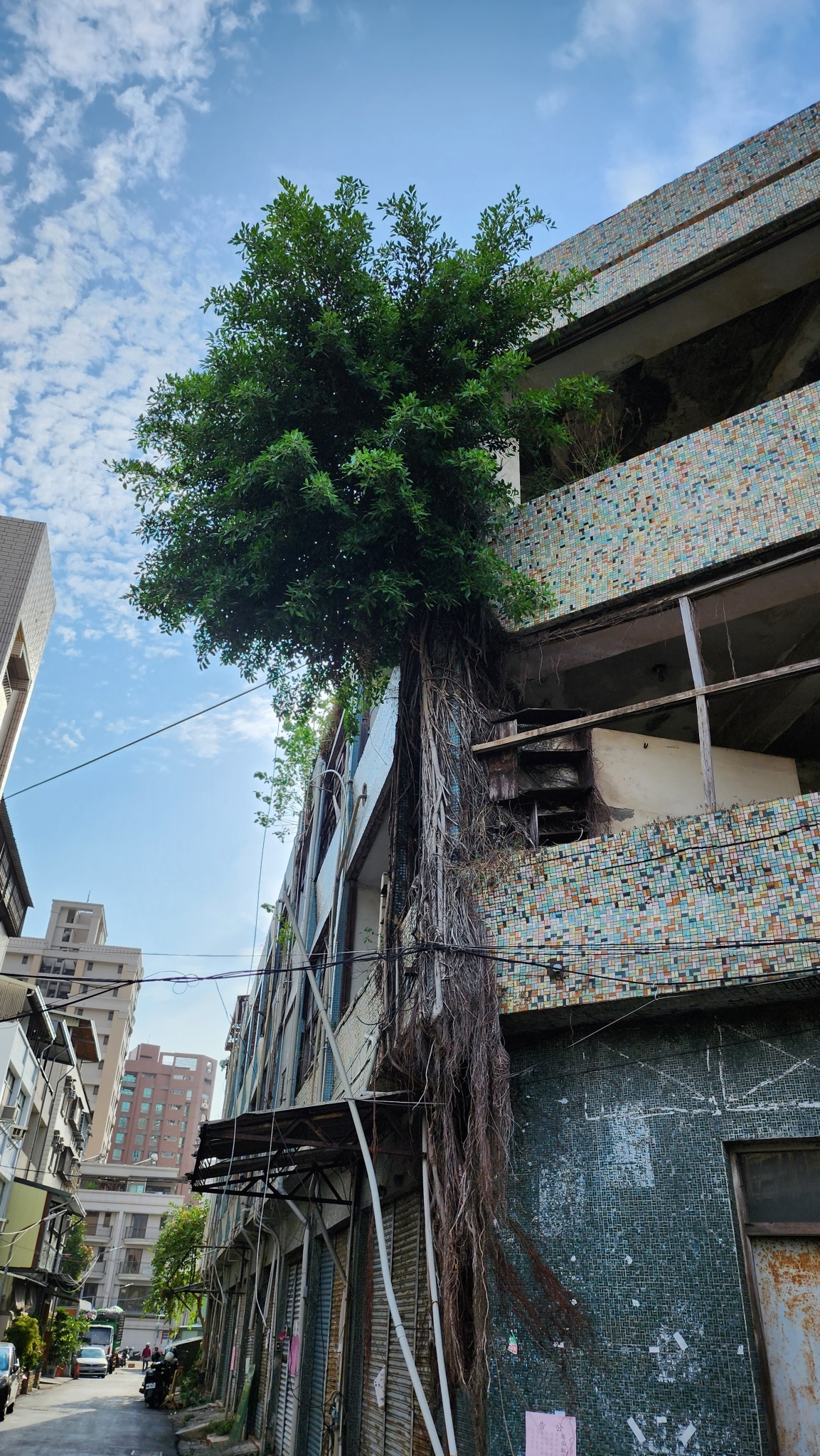
In cultivation this fig forms a bushy shrub reaching up to about 4 metres in a container, with glossy, dark green, ovate leaves. The cultivar 'Moclame' shows a more upright, compact bushiness with leathery, lance-shaped leaves around 5 to 6 centimetres long in a vibrant green, and can reach roughly 3 metres in a pot. Left to its own devices in warm climates, the species matures into a large tree draped in abundant aerial roots, the trait behind the common name curtain fig.
Source: RHS
Familiar Glasshouse Pests
Under glass or indoors, this fig can attract glasshouse red spider mite, thrips, mealybugs, and scale insects. Watch for the usual early signs of each: stippled or dull leaves, distorted growth, sticky residue, or small raised bumps along stems and leaf undersides.
Source: RHS
A Plant That Dislikes Disruption
This fig resents being moved once it has settled into a spot, and it can respond to relocation or disturbance by dropping its leaves. It may also be susceptible to honey fungus, and note that its sap is a skin allergen, so gloves are worth wearing when handling or pruning it.
Source: RHS
Light Pruning, Steady Position
This fig falls into the light pruning group, so trimming needs are modest and mainly about shaping rather than hard cutting back. Beyond that, the main maintenance task is simply choosing a good spot and leaving it there, since the plant settles best when left undisturbed.
Source: RHS
Care recipe
The species record — the baseline every cultivar inherits unless it says otherwise.
Care notes are early — not yet verified
- Light
- ai:claude-opus-4-8
- Water
- ai:claude-opus-4-8 (range 7-12d)
- Humidity
- ai:claude-opus-4-8
- Soil
- ai:claude-fable-5
- Care
- ai:claude-fable-5
Bright, indirect
≈ every 12 days
Medium
16–30 °C
Well-draining potting mix with added grit or bark
Stem cuttings or air-layering
Balanced liquid feed monthly in spring and summer
Moderate
Rarely flowers indoors
Toxic to cats & dogs
Fig / rubber plant — irritant latex (ficin); GI upset, dermatitis. This is where toxicity lives: every cultivar of this species inherits it and none can override it.
Reference images
Every image credited. Licenses link to their deeds.
PrimarySources: ai:claude-opus-4-8 · ai:claude-opus-4-8 (range 7-12d) · ai:claude-fable-5 · ASPCA
Kept true by its growers
Every fact here carries its source. Grow Chinese Banyan yourself? What you’ve observed — how it drinks, how it holds its color, a name that’s off — and a clear photo of your plant are exactly what keep this page honest. Contributions are reviewed before anything changes.
Sign in to add what you know →