Species · genus Ficus · Moraceae
Weeping Fig
Ficus benjamina L.
Also known as: Benjamin Fig · Benjamin-tree · Ficus · Java Fig · Javatree
Cultivars of F. benjamina
The named forms growers keep — each with its own page, each honest about how much we know.
No named cultivars catalogued under F. benjamina yet. When growers document a stable, named form, it earns its own page here.
Guide
The species-level account. Cultivar pages build on this and say where they differ.
The Weeping Fig
Ficus benjamina, known as the weeping fig, is an evergreen shrub or tree grown both as a houseplant and, in warm climates, as a landscape tree. It carries pendulous branches and glossy, slender-pointed leaves, and it is common enough as an indoor tree to be called the official tree of Bangkok.
Source: Epic Gardening
Southeast Asia to Australia
This tree is native to a broad range running from southern Asia through Malesia to northern Australia. In the wild it can grow enormous, with the tallest specimens reported over one hundred feet, though the version kept indoors is a far more modest tabletop-to-ceiling affair.
Source: Epic Gardening
Light, Warmth, Water
Give it bright but filtered light, the kind that has passed through a canopy rather than struck it directly, for at least six hours a day near an east, west, or south-facing window. Keep it warm and away from drafts, ideally in the 75-85°F range, since anything below 65°F starts to show as cold damage on the leaves. Water when the top layer of soil has dried, roughly once a week in a well-draining mix, and lean into humidity during winter heating season with misting, a humidifier, or a pebble tray.
Source: Epic Gardening
Cuttings and Cloning
Weeping figs are usually propagated from cuttings, which gives you a plant genetically identical to its parent. Take cuttings in early spring, root them in water for about a week, then move them into a mix of peat moss or coco coir, perlite, and coarse sand. Roots are generally well established within two to four weeks, checked with a gentle tug, and the RHS also lists seed and semi-hardwood cuttings as options.
Source: Epic Gardening
Glossy Leaves, Fig Flowers
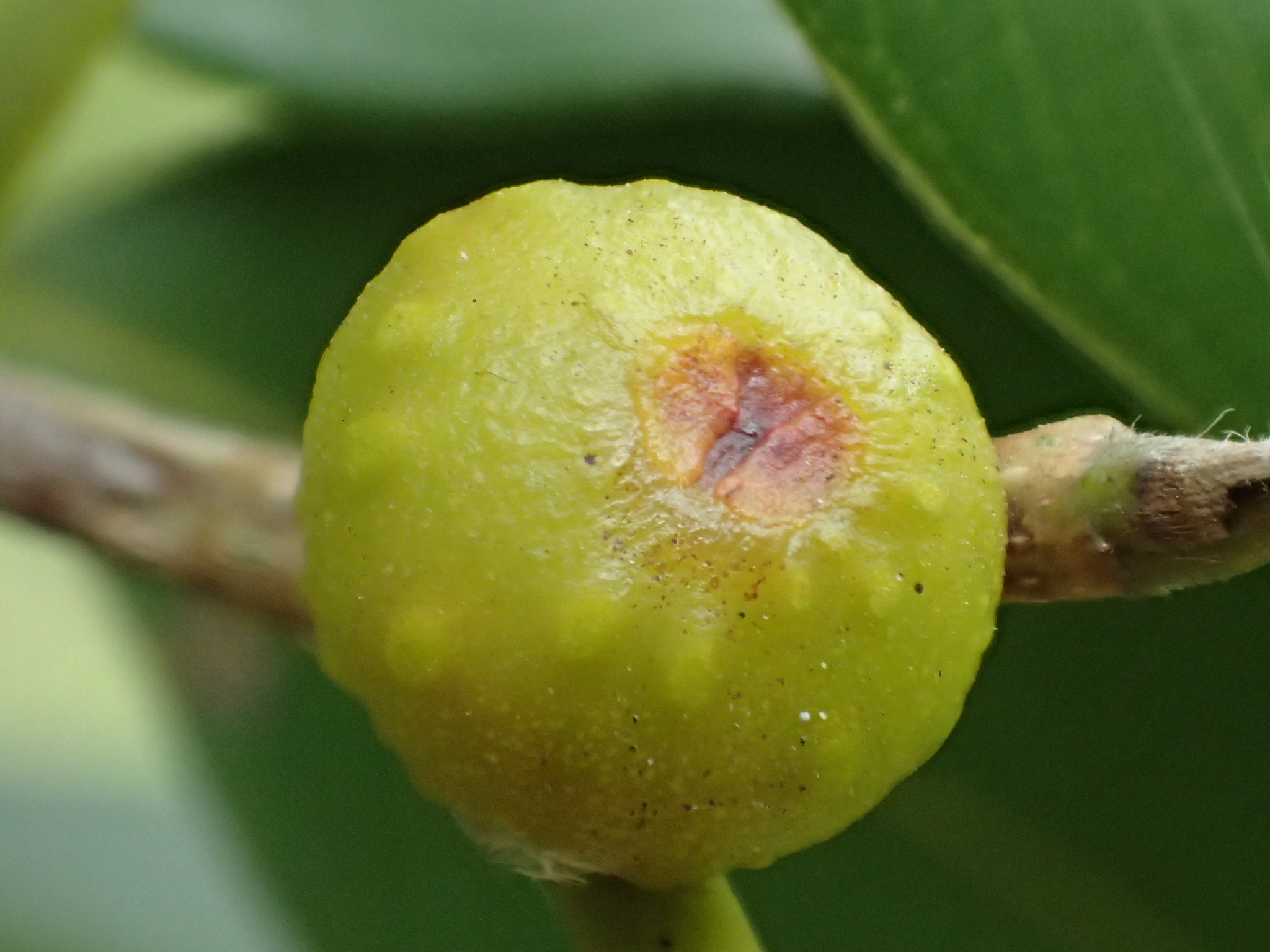
The leaves darken and take on a polished sheen as the plant matures, and the whole habit is bushy with weeping branches, growing to a few metres in a container or conservatory setting. It flowers, though the blooms are insignificant, in male, fertile, and sterile female forms, and pollinated flowers can go on to form small reddish-orange fruits that ripen to black. Its skin-borne latex sap is a known irritant, so this is one to handle with a little care.
Source: RHS
The Usual Sap-Suckers
Aphids, mealybugs, scale, spider mites, thrips, and whiteflies are the recurring visitors on an indoor ficus, and the RHS notes glasshouse red spider mite, thrips, mealybugs, and scale as particular risks under glass. Aphids cluster on new growth and cause wilting even in moist soil; mealybugs show as cottony clumps and leave sticky honeydew behind; scale hides as small bumps that blend into bark; spider mites announce themselves with fine webbing and prefer dry air. Acting quickly matters, since a stressed tree is more likely to draw pests in the first place.
Source: Epic Gardening
Leaf Drop and Root Rot
Weeping figs are notorious for dropping leaves at the slightest disruption, whether that is a house move, a cold draft, or simply adjusting to new light. Yellowing or singed leaves usually trace back to too much direct sun or a temperature swing, while soggy, poorly draining soil leads to root rot, the plant's most serious recurring ailment. Rare troubles like tip blight from excess humidity or Phomopsis canker from unsterilized pruning tools can also appear, both manageable by cutting back to clean tissue.
Source: Epic Gardening
Slow Growth, Light Hands
Because it grows slowly, a weeping fig only needs repotting about once every three to four years, and its root system should be disturbed as little as possible when you do. It tolerates heavy pruning surprisingly well, even down to the main stem if it has been neglected, and is best trimmed in early spring by removing dead wood and cutting vigorous branches back. Feed sparingly, about once a month in spring and summer with a diluted liquid fertilizer, and skip feeding entirely during the dormant fall and winter months.
Source: Epic Gardening
Care recipe
The species record — the baseline every cultivar inherits unless it says otherwise.
Care notes are early — not yet verified
- Light
- ai:claude-opus-4-8
- Water
- ai:claude-opus-4-8 (range 7-12d)
- Humidity
- ai:claude-opus-4-8
- Soil
- ai:claude-fable-5
- Care
- ai:claude-fable-5
Bright, indirect
≈ every 12 days
Medium
16–29 °C
Well-draining, peat-based potting mix
Stem cuttings or air layering
Balanced liquid feed monthly in the growing season
Moderate
Does not flower indoors
Toxic to cats & dogs
Fig / rubber plant — irritant latex (ficin); GI upset, dermatitis. This is where toxicity lives: every cultivar of this species inherits it and none can override it.
Reference images
Every image credited. Licenses link to their deeds.
PrimarySources: ai:claude-opus-4-8 · ai:claude-opus-4-8 (range 7-12d) · ai:claude-fable-5 · ASPCA
Kept true by its growers
Every fact here carries its source. Grow Weeping Fig yourself? What you’ve observed — how it drinks, how it holds its color, a name that’s off — and a clear photo of your plant are exactly what keep this page honest. Contributions are reviewed before anything changes.
Sign in to add what you know →