Species · genus Ficus · Moraceae
Florida Strangler
Ficus aurea Nutt.
Also known as: Florida Strangler Fig · Golden Fig
Cultivars of F. aurea
The named forms growers keep — each with its own page, each honest about how much we know.
No named cultivars catalogued under F. aurea yet. When growers document a stable, named form, it earns its own page here.
Guide
The species-level account. Cultivar pages build on this and say where they differ.
A Killer With Kindness
The strangler fig, Ficus aurea, is a tropical member of the fig family whose common name describes its unusual habit of germinating in the branches of a host tree and eventually enveloping it. It can also grow as a free-standing tree in its own right, and it is sometimes kept indoors as an ornamental or trained as bonsai.
Source: Kew
Florida And Beyond
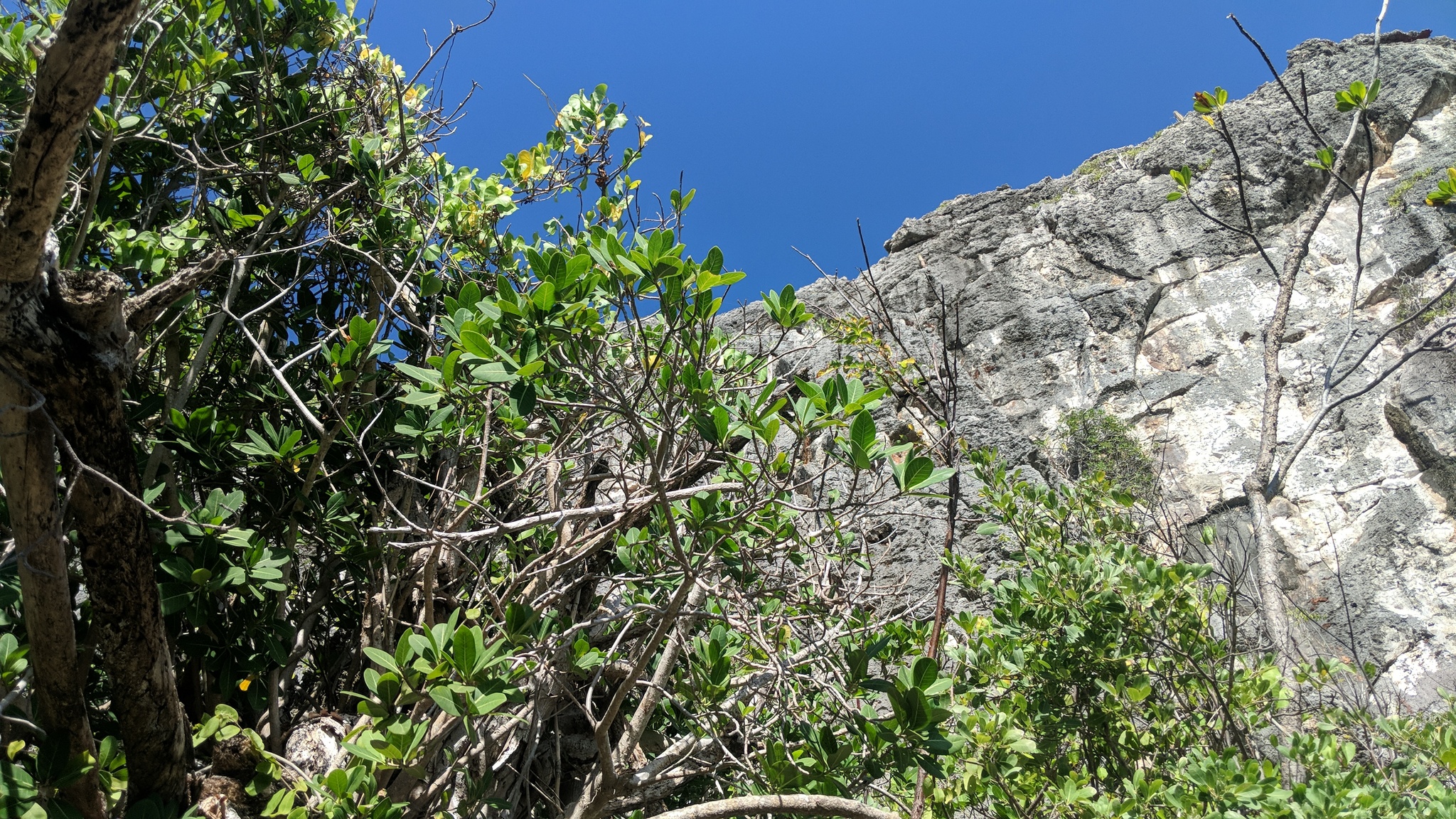
This fig is native to central and southern Florida and ranges down through Mexico, Central America and into Panama, where it grows in wet tropical hardwood forests, pinelands, sand dunes, rocky shores and mangrove forests. It relies on a single species of fig wasp, Pegoscapus mexicanus, for pollination. The RHS lists it too, under the common names Florida strangler and golden fig, within the wider Ficus genus of trees, shrubs and climbers.
Source: Kew
Light, Water, Warmth
Grown indoors as a related banyan-type ficus, this plant wants bright, indirect light for at least six hours a day, since direct sun can scorch the foliage and low light leaves it struggling. Water once the top two to three inches of soil have dried, watering more consistently through spring and summer and tapering off in winter, and set it in a well-draining, rich mix with added perlite. Indoor temperatures above 70°F suit it best, with anything below 60°F posing a real risk, and steady humidity plus an occasional wipe of the leaves keeps it comfortable.
Source: Epic Gardening
Rooting From Cuttings
Stem cuttings are the standard way to propagate this fig indoors, taken with sharp pruners from a branch bearing a few leaves. The cut end can be dipped in rooting hormone and set in moist medium under plastic wrap, or simply placed in water until roots form, a process that generally takes three to four weeks either way. Growing from seed is possible but depends on access to a naturally fruiting outdoor tree, which is part of why the plant stays uncommon in cultivation.
Source: Epic Gardening
Roots, Bark, And Fruit
Left to its own growth, a strangler fig can top 40 metres, its smooth grey bark set off by aerial roots that drop from the trunk to the ground like guy ropes, bracing both fig and host through storms. Leaves are glossy and dark green, though their shape varies by variety from long ovals to rounder, heart-shaped forms. The small round fruits ripen from green to orange or dark red, and after a host has died and rotted away, the fig can persist as a hollow, cage-like trunk.
Source: Kew
Mites, Gnats, And Flies
Spider mites are a common concern, appearing as tiny pale dots on the undersides of leaves along with fine webbing, feeding on sap until foliage wilts and, in heavy infestations, dies; neem oil helps, and keeping the potting mix from drying out too much discourages them. Fungus gnats turn up when soil stays too wet, laying eggs that hatch into root-feeding larvae, and sticky traps left in place for a few weeks can break the cycle. Fruit flies may also be drawn to any fallen, unpalatable fruit, which is worth clearing away.
Source: Epic Gardening
Reading The Leaves
Yellowing leaves usually point to overwatering, while browning foliage tends to mean too little water or humidity, and both can end in leaf drop if the cause isn't addressed. Root rot follows from overwatering or an oversized pot that holds too much moisture, showing up as stunted growth, yellowing, and mushy roots that need trimming away before repotting into fresh, well-draining soil. Bacterial leaf spot, caused by excess moisture and poor airflow, appears as spreading brown or yellow spots and is best managed by removing affected leaves and improving ventilation and watering habits.
Source: Epic Gardening
Pruning And Repotting
Prune in early spring, cutting back any leggy or lopsided stems and trimming the top to encourage bushier growth, wearing gloves since the sap can irritate skin. This ficus prefers to be a little root-bound and doesn't need frequent repotting, doing well with a change of pot every two to three years, or once roots appear at the drainage holes, again best done in spring. When repotting, move up only two to three inches in pot size, or, if size isn't wanted to increase, trim back some larger roots and return the plant to its original container with fresh soil.
Source: Epic Gardening
Care recipe
The species record — the baseline every cultivar inherits unless it says otherwise.
Care notes are early — not yet verified
- Light
- ai:claude-opus-4-8
- Water
- ai:claude-opus-4-8 (range 7-14d)
- Humidity
- ai:claude-opus-4-8
- Soil
- ai:claude-fable-5
- Care
- ai:claude-fable-5
Bright, indirect
≈ every 14 days
Medium
16–30 °C
Well-draining, peat-based potting mix
Stem cuttings or air layering
Balanced liquid feed monthly in the growing season
Moderate
Does not flower indoors
Toxic to cats & dogs
Fig / rubber plant — irritant latex (ficin); GI upset, dermatitis. This is where toxicity lives: every cultivar of this species inherits it and none can override it.
Reference images
Every image credited. Licenses link to their deeds.
PrimarySources: ai:claude-opus-4-8 · ai:claude-opus-4-8 (range 7-14d) · ai:claude-fable-5 · ASPCA
Kept true by its growers
Every fact here carries its source. Grow Florida Strangler yourself? What you’ve observed — how it drinks, how it holds its color, a name that’s off — and a clear photo of your plant are exactly what keep this page honest. Contributions are reviewed before anything changes.
Sign in to add what you know →