Species · genus Ficus · Moraceae
False Banyan
Ficus altissima Blume
Also known as: Council Tree · Lofty Fig · Counciltree · Mountain Fig
Cultivars of F. altissima
The named forms growers keep — each with its own page, each honest about how much we know.
No named cultivars catalogued under F. altissima yet. When growers document a stable, named form, it earns its own page here.
Guide
The species-level account. Cultivar pages build on this and say where they differ.
A Rare Ficus Find
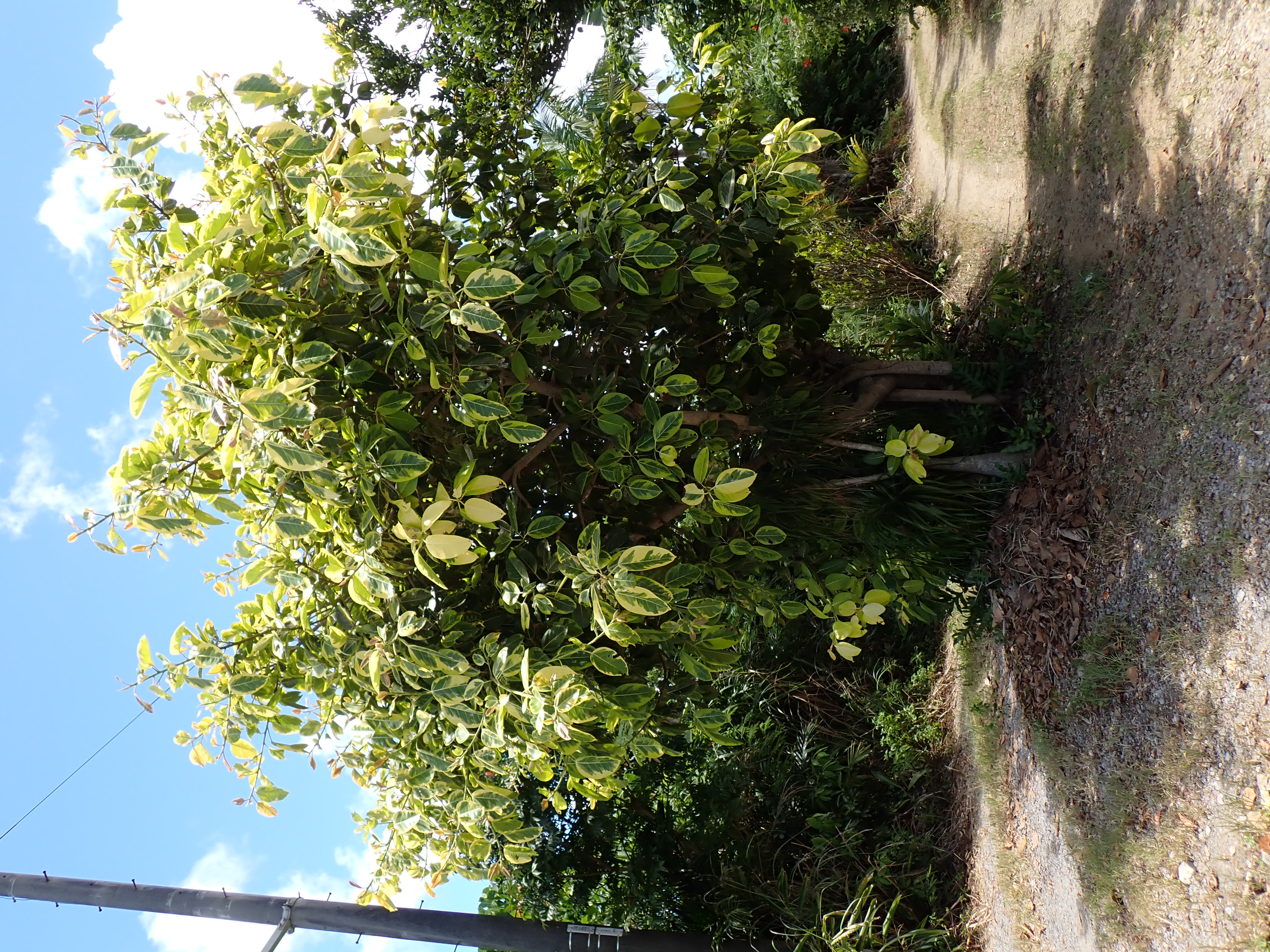
Ficus altissima is a lesser-grown member of the ficus family, sometimes mistaken at first glance for a rubber tree because of its similarly shaped leaves. Look closer and its own texture and structure set it apart. It remains a species collectors have to search for, rather than one found at every garden center.
Source: Epic Gardening
Native to Tropical Asia
This tree's natural range stretches from South China through Tropical Asia, taking in places such as India, Myanmar, Thailand, Vietnam, and the Philippines. It grows as a tree in the wet tropical biome. Where it occurs naturally, people have put it to use as animal fodder, in medicine, and for fuel and food.
Source: Kew
Worth the Search
This species is uncommon enough that simply tracking one down feels like an achievement, and once found it is considered a worthwhile addition to any ficus collection. Its variegated cultivar, Yellow Gem, is described as tolerant of some neglect, doing well in a bright spot with leaves wiped clean now and then to keep their shine.
Source: Epic Gardening
Propagating from Cuttings
New plants of the Yellow Gem cultivar can be started by trimming off a section of new growth and setting it into a soilless mix to root.
Source: Epic Gardening
Leaves Like a Rubber Tree
At a glance, the leaves resemble those of a rubber tree, but they carry a distinct texture and overall form once you look closely. The variegated cultivar Yellow Gem, bred from this species, shows the same broad leaf shape dressed in patches of bright green and yellow with a noticeable sheen, held upright to display the color.
Source: Epic Gardening
Care recipe
The species record — the baseline every cultivar inherits unless it says otherwise.
Care notes are early — not yet verified
- Light
- ai:claude-opus-4-8
- Water
- ai:claude-opus-4-8 (range 7-14d)
- Humidity
- ai:claude-opus-4-8
- Soil
- ai:claude-fable-5
- Care
- ai:claude-fable-5
Bright, indirect
≈ every 14 days
Medium
16–29 °C
Well-draining, peat-based potting mix
Stem cuttings or air layering
Balanced liquid feed monthly in the growing season
Moderate
Does not flower indoors
Toxic to cats & dogs
Fig / rubber plant — irritant latex (ficin); GI upset, dermatitis. This is where toxicity lives: every cultivar of this species inherits it and none can override it.
Reference images
Every image credited. Licenses link to their deeds.
PrimarySources: ai:claude-opus-4-8 · ai:claude-opus-4-8 (range 7-14d) · ai:claude-fable-5 · ASPCA
Kept true by its growers
Every fact here carries its source. Grow False Banyan yourself? What you’ve observed — how it drinks, how it holds its color, a name that’s off — and a clear photo of your plant are exactly what keep this page honest. Contributions are reviewed before anything changes.
Sign in to add what you know →