Species · genus Ferocactus · Cactaceae
Candy Barrel Cactus
Ferocactus wislizeni (Engelm.) Britton & Rose
Also known as: Fishhook Barrel Cactus · Southwestern Barrel Cactus · Arizona Barrel Cactus · Compass Barrel · Fishhook Cactus
Cultivars of F. wislizeni
The named forms growers keep — each with its own page, each honest about how much we know.
No named cultivars catalogued under F. wislizeni yet. When growers document a stable, named form, it earns its own page here.
Guide
The species-level account. Cultivar pages build on this and say where they differ.
A fishhook barrel cactus
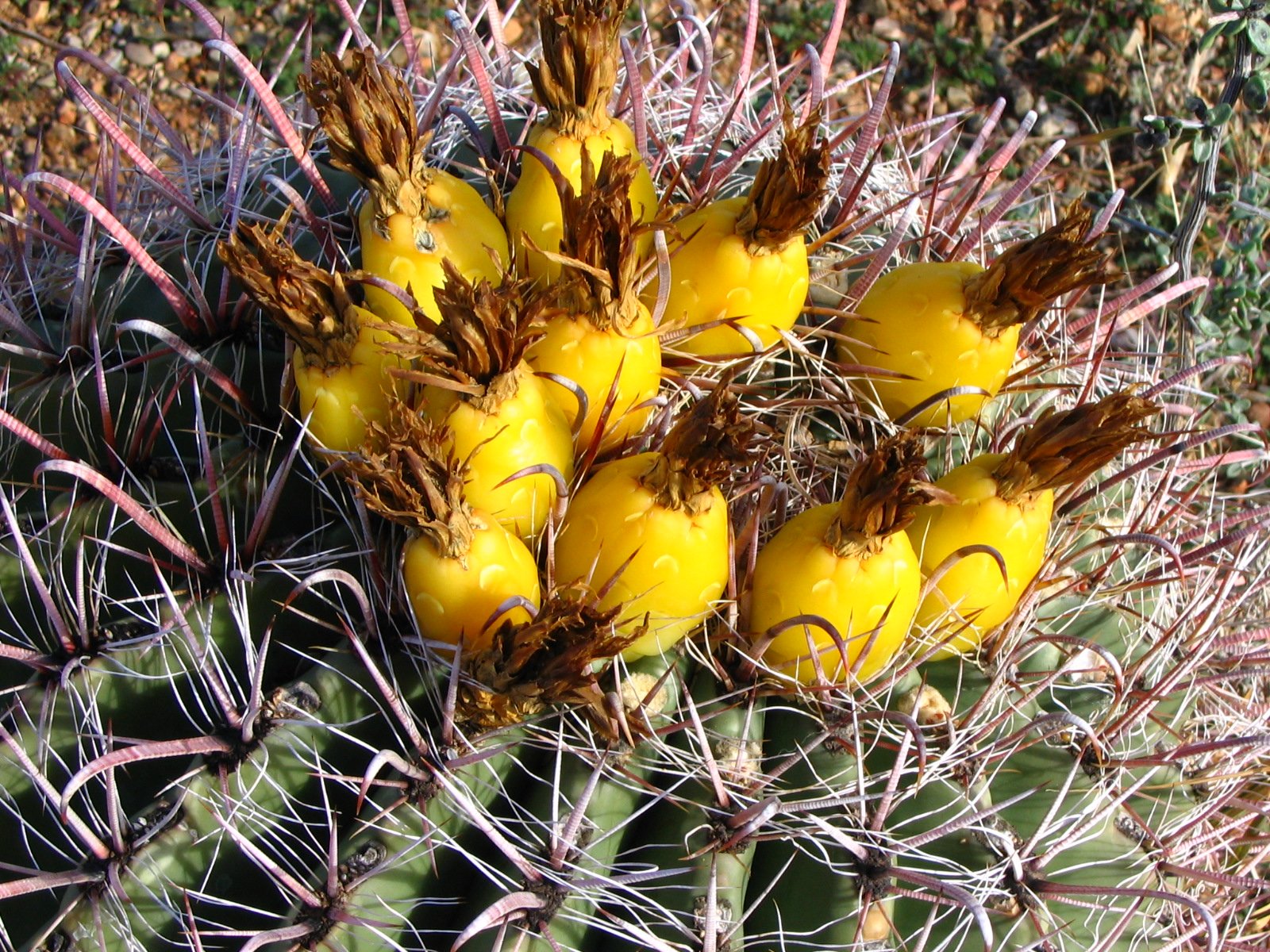
Ferocactus wislizenii, known as the fishhook cactus, is a solitary cactus that starts out globose and grows more cylindrical with age. Its ribs carry hooked spines, and in summer it bears funnel-shaped flowers in shades from yellow to red.
Source: RHS
Desert native of the Southwest
This species is native to Arizona, New Mexico, west Texas, and adjacent northern Mexico, where it grows in desert and dry shrubland. It was first described by Engelmann and later placed in Ferocactus by Britton and Rose in 1922.
Source: Kew
Sun, grit, and restraint
Grow this cactus under glass in a peat-free, loam-based compost with added grit, in full sun with good ventilation, and it can be moved to a sheltered sunny patio in summer. Water moderately while it is in growth and withhold water entirely when dormant, feeding with a balanced liquid fertiliser two or three times during the growing season. It dislikes overly wet compost and humid air, particularly through its winter rest.
Source: RHS
Offsets or seed
New plants are raised from offsets or from seed.
Source: RHS
Ribs, hooks, and habit
The genus Ferocactus is defined by spherical to columnar stems with prominent ribs and spiny areoles, the spines sometimes curving into hooks, topped by funnel-shaped summer flowers. In this species the young plant is rounded, only becoming column-like as it matures, and it can eventually reach one to one and a half metres tall.
Source: RHS
Watch for mealybugs
Mealybugs are the pest most likely to trouble this cactus, though it is otherwise generally free of disease.
Source: RHS
Little upkeep needed
This is a slow grower, taking ten to twenty years to reach full size, and it needs no pruning at all.
Source: RHS
Care recipe
The species record — the baseline every cultivar inherits unless it says otherwise.
Care notes are early — not yet verified
- Light
- ai:claude-opus-4-8
- Water
- ai:claude-opus-4-8 (range 14-30d)
- Humidity
- ai:claude-opus-4-8
- Soil
- ai:claude-fable-5
- Care
- ai:claude-fable-5
Direct sun
≈ every 30 days
Low — average room
8–32 °C
Gritty, fast-draining cactus mix with extra pumice
From seed
Dilute cactus feed once or twice in spring and summer
Slow
Yellow to red blooms on mature barrels in strong light
Not yet documented
This is where toxicity lives — every cultivar of this species inherits it and none can override it.
Reference images
Every image credited. Licenses link to their deeds.
Sources: ai:claude-opus-4-8 · ai:claude-opus-4-8 (range 14-30d) · ai:claude-fable-5
Kept true by its growers
Every fact here carries its source. Grow Candy Barrel Cactus yourself? What you’ve observed — how it drinks, how it holds its color, a name that’s off — and a clear photo of your plant are exactly what keep this page honest. Contributions are reviewed before anything changes.
Sign in to add what you know →