Species · genus Ferocactus · Cactaceae
Mexican Lime Cactus
Ferocactus pilosus (Salm-Dyck) Werderm.
Also known as: Mexican Fire Barrel · Mexican Fire Barrel Cactus · Fire Barrel Cactus · Red Spine Barrel Cactus
Cultivars of F. pilosus
The named forms growers keep — each with its own page, each honest about how much we know.
No named cultivars catalogued under F. pilosus yet. When growers document a stable, named form, it earns its own page here.
Guide
The species-level account. Cultivar pages build on this and say where they differ.
Mexican fire barrel
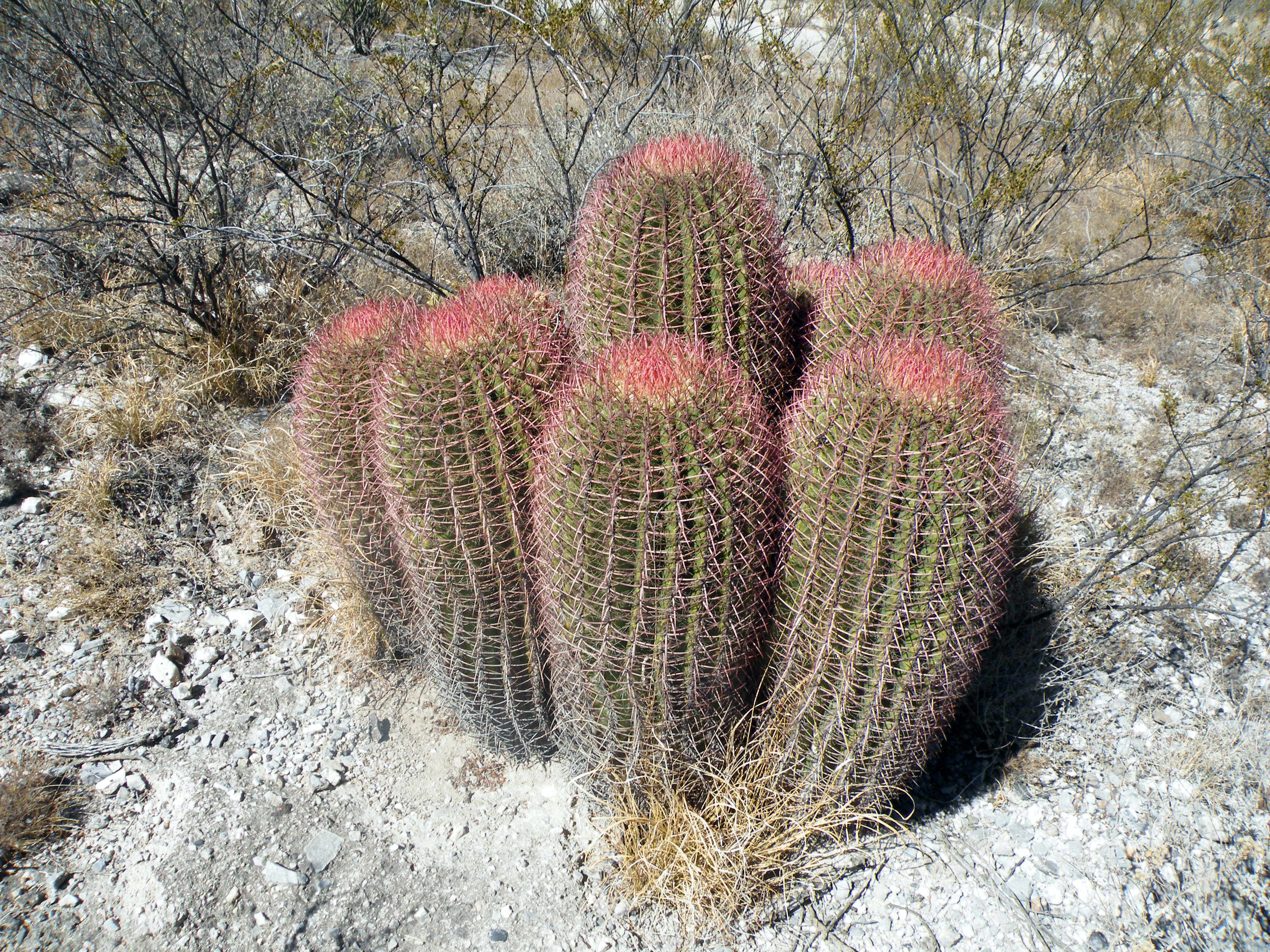
Ferocactus pilosus is the Mexican fire barrel cactus, a slow-growing barrel-type succulent grown both as a houseplant and in sheltered gardens. It starts life globe-shaped and thickens into a true barrel form with age, wearing a crown of red or yellow summer flowers.
Source: RHS
A Mexican desert native
This species belongs to the northeast and southwest of Mexico, where it grows in desert and dry shrubland as a succulent shrub. It carries a long list of botanical synonyms, including Echinocactus pilosus and Ferocactus stainesii var. pilosus, a sign of how often it has been reclassified since its first description in 1933.
Source: Kew
Sun, grit, restraint
Give this cactus full sun, ideally a south- or west-facing spot with some shelter, and pot it in well-drained, gritty cactus compost such as loam or sand mixed with sharp sand. Water moderately through the growing season and keep it almost dry over winter, since the genus as a whole dislikes sitting in wet compost or humid air, especially while resting. Good ventilation helps it settle, and it can spend summer outdoors on a sheltered, sunny patio.
Source: RHS
Grown from seed
Propagation is by seed, sown in spring at around 21°C.
Source: RHS
Ribs, spines, bristles
The stem is dark green and strongly ribbed, studded with areoles that bear coarse red spines alongside fine, threadlike white bristles. Wild plants can reach up to 3 metres, though cultivated specimens stay far smaller and grow at a genuinely slow pace, taking five to ten years to mature. Come early summer, funnel-shaped red or yellow flowers form a ring near the crown of the stem.
Source: RHS
Mealybugs to watch
Mealybugs are the main pest to watch for on this cactus.
Source: RHS
Overwatering is the risk
This plant is otherwise generally free of disease, but stem and root rots can set in if it is overwatered.
Source: RHS
No pruning needed
No pruning is required for this cactus.
Source: RHS
Care recipe
The species record — the baseline every cultivar inherits unless it says otherwise.
Care notes are early — not yet verified
- Light
- ai:claude-opus-4-8
- Water
- ai:claude-opus-4-8 (range 14-30d)
- Humidity
- ai:claude-opus-4-8
- Soil
- ai:claude-fable-5
- Care
- ai:claude-fable-5
Direct sun
≈ every 30 days
Low — average room
10–32 °C
Gritty, fast-draining cactus mix with extra pumice
From seed; clusters offset with age
Dilute cactus feed once or twice in spring and summer
Slow
Orange-red blooms on mature plants in strong light
Not yet documented
This is where toxicity lives — every cultivar of this species inherits it and none can override it.
Reference images
Every image credited. Licenses link to their deeds.
Sources: ai:claude-opus-4-8 · ai:claude-opus-4-8 (range 14-30d) · ai:claude-fable-5
Kept true by its growers
Every fact here carries its source. Grow Mexican Lime Cactus yourself? What you’ve observed — how it drinks, how it holds its color, a name that’s off — and a clear photo of your plant are exactly what keep this page honest. Contributions are reviewed before anything changes.
Sign in to add what you know →