Species · genus Fatsia · Araliaceae
Fatsia
Fatsia japonica (Thunb.) Decne. & Planch.
Also known as: Paperplant · Fatsi · Glossy-leaf Paperplant · Japanese Fatsia · Glossy-leaf Paper Plant
Cultivars of F. japonica
The named forms growers keep — each with its own page, each honest about how much we know.
No named cultivars catalogued under F. japonica yet. When growers document a stable, named form, it earns its own page here.
Guide
The species-level account. Cultivar pages build on this and say where they differ.
Japanese aralia, in brief
Fatsia japonica, known as Japanese aralia, is a medium-sized evergreen shrub of open, spreading habit, grown for its bold, hand-shaped leaves. It can be kept outdoors as a garden shrub or grown as a houseplant, and it carries the RHS Award of Garden Merit.
Source: RHS
Native to East Asia
This species comes from Japan and South Korea, with the wider fatsia group also extending to Taiwan. It belongs to the family Araliaceae, which also gives us ivy and Schefflera, and it has even been crossed with ivy to produce the hybrid x Fatshedera.
Source: RHS
Light, moisture, feeding
Outdoors it grows best in moist but well-drained soil, tolerating anything from full sun to full shade, though it prefers partial shade and copes with dry shade once settled. Established garden plants rarely need watering or feeding beyond an annual mulch of well-rotted manure or compost, while those in containers need regular water and feeding through spring and summer. As a houseplant it prefers a cool spot, roughly 14 to 18 degrees Celsius, that is bright and well ventilated.
Source: RHS
Cuttings or seed
The quickest route is semi-hardwood cuttings, taken about 20cm long in spring or summer and rooted in peat-free compost at 15 to 20 degrees Celsius. Fatsia can also be raised from seed extracted from the ripe, dark berries, sown in a heated propagator at around 20 degrees Celsius, with germination taking two to eight weeks.
Source: RHS
Bold, glossy foliage
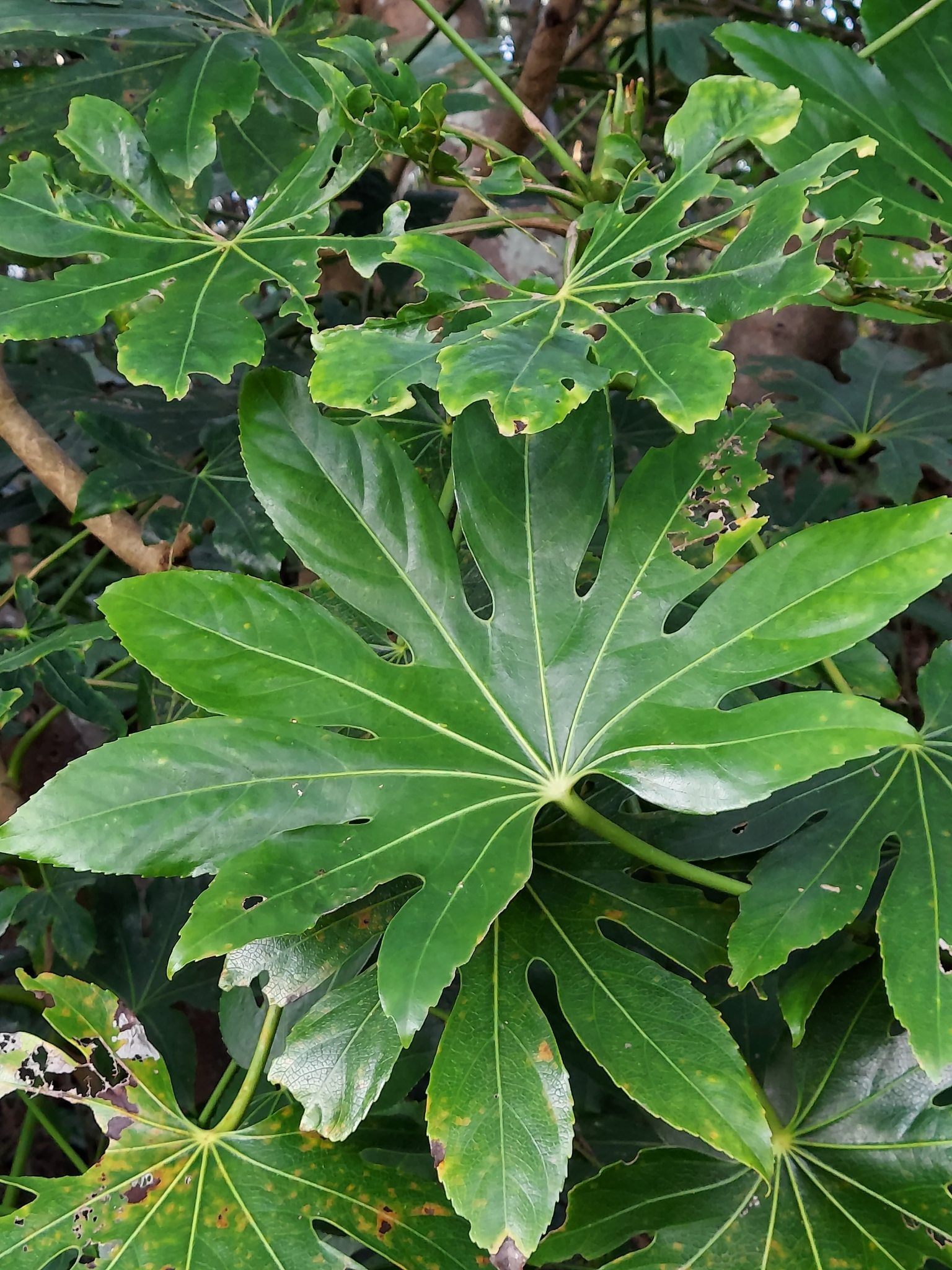
The plant carries palmately lobed, leathery leaves that can reach 45 to 50cm across, held on thick, succulent-looking, sparsely branched stems in a suckering habit. In autumn it produces small clusters of creamy white, globose flowers, followed by small black fruits that mature over winter and appeal to birds. Some cultivars add white, cream, or yellow variegation to the leaves.
Source: RHS
Scale, thrips, mealybugs
Fatsia may be troubled by scale insects and thrips, and mealybugs in particular tend to appear when it is grown indoors.
Source: RHS
Leaf spot and frost tear
The plant can be affected by a leaf spot and by honey fungus. Strong, cold or frosty winds can tear the large leaves, and hard frosts may cause a plant to collapse, though it usually recovers.
Source: RHS
Little pruning needed
Fatsia needs no routine pruning; simply remove wayward, dead or damaged shoots in mid to late spring, since cutting back hard can spoil its naturally architectural shape. Overgrown or mature plants can be renovated by pruning old stems back in spring, followed by a mulch of well-rotted manure to encourage fresh growth. Most forms are hardy enough to need no winter protection, though Fatsia polycarpa requires frost-free conditions.
Source: RHS
Care recipe
The species record — the baseline every cultivar inherits unless it says otherwise.
Care notes are early — not yet verified
- Light
- ai:claude-opus-4-8
- Water
- ai:claude-opus-4-8 (range 7-12d)
- Humidity
- ai:claude-opus-4-8
- Soil
- ai:claude-fable-5
- Care
- ai:claude-fable-5
Bright, indirect
≈ every 12 days
Medium
7–23 °C
Rich, moisture-retentive but well-draining mix
Stem cuttings or air layering
Balanced liquid feed monthly in the growing season
Moderate
Creamy white ball-like umbels on mature plants; rare indoors
Not yet documented
This is where toxicity lives — every cultivar of this species inherits it and none can override it.
Reference images
Every image credited. Licenses link to their deeds.
Sources: ai:claude-opus-4-8 · ai:claude-opus-4-8 (range 7-12d) · ai:claude-fable-5
Kept true by its growers
Every fact here carries its source. Grow Fatsia yourself? What you’ve observed — how it drinks, how it holds its color, a name that’s off — and a clear photo of your plant are exactly what keep this page honest. Contributions are reviewed before anything changes.
Sign in to add what you know →