Species · genus Euphorbia · Euphorbiaceae
African Milk Bush
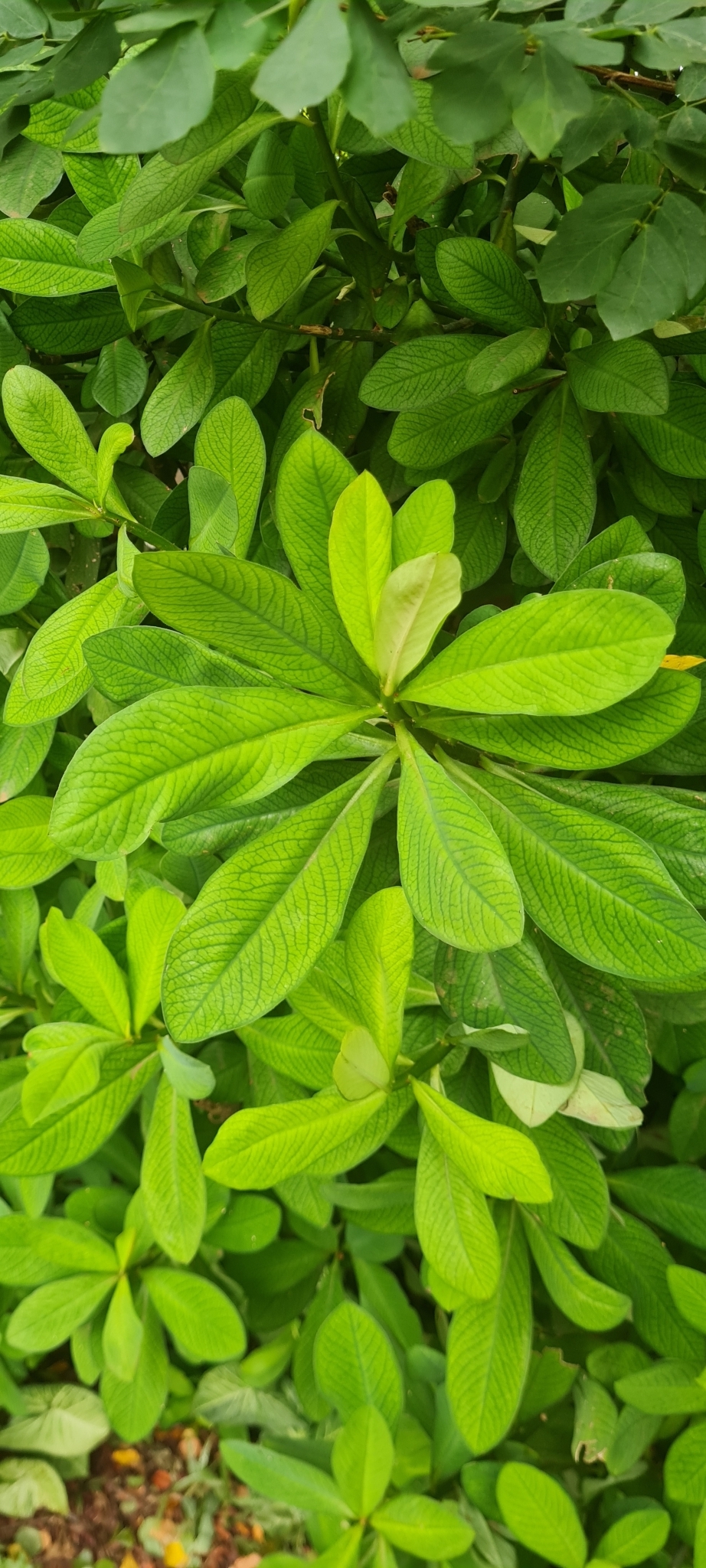
Euphorbia umbellata (Pax) Bruyns
Also known as: Naked Lady · Synadenium
Cultivars of E. umbellata
The named forms growers keep — each with its own page, each honest about how much we know.
No named cultivars catalogued under E. umbellata yet. When growers document a stable, named form, it earns its own page here.
Guide
The species-level account. Cultivar pages build on this and say where they differ.
A shrub of many faces
Euphorbia is a vast genus that spans everything from garden border perennials to strange succulent shrubs kept as houseplants. This guide draws together two of its faces: the wild African species Euphorbia umbellata, and the mottled, candelabra-armed Euphorbia lactea grown widely as an indoor succulent.
Source: Kew
Rooted in East Africa
Euphorbia umbellata is native to a band of East Africa running from South Sudan through Burundi and into Tanzania, with a wider native range covering Burundi, DR Congo, Kenya, Rwanda, Sudan-South Sudan, Tanzania and Uganda. It has since been introduced into Bangladesh and India. In the wild it grows as a shrub or tree, primarily in seasonally dry tropical settings.
Source: Kew
Sun, drought, and patience
Euphorbia lactea wants full to partial sun but should be moved into brighter light gradually, since sudden exposure or intense summer heat can scorch it. Water should soak through and then the soil should dry out completely before the next drink, with watering roughly weekly in summer and cut back to once or not at all through winter. It tolerates humidity well given its tropical origins but cannot take cold, with 40°F as its rough lower limit, and it appreciates a diluted, low-nitrogen feed monthly from spring to fall with none in winter.
Source: Epic Gardening
Cuttings, grafts, and division
The plain form of Euphorbia lactea roots readily from stem cuttings taken in spring or summer, cut at a branch joint, left to callus for one to two weeks, then set upright in soil and rooted in warmth. Crested and variegated forms rarely root well on their own and are instead grafted onto Euphorbia neriifolia to make the so-called coral cactus. Garden euphorbias more broadly are propagated by division for clump-forming herbaceous types, or by softwood cuttings for shrubby kinds, taken from the short shoots at the base in early spring.
Source: RHS
The mottled dragon bones
Euphorbia lactea, often called candelabra cactus or dragon bones, carries three-sided branching arms on a tall, lanky stem, giving it a slightly wobbly, hand-drawn silhouette. Its green surfaces are mottled with white stripes, edged with short but sharp spines. Despite its cactus-like look it is a true shrub, told apart by its milky sap and lack of large flowers, and cultivars extend into crested, wavy-paddled forms and variegated types splashed with yellow, pink or violet.
Source: Epic Gardening
Mealybugs and mites
Mealybugs are the most persistent pest, gathering in cottony white nests and drawing on the plant's sap, with infestations showing up as yellowing and wilting; a cotton swab dipped in diluted rubbing alcohol handles them, since insecticidal soap can harm this particular euphorbia. Spider mites may also turn up, spinning fine webs, and respond to a strong water spray or well-diluted neem oil. In garden euphorbias generally, aphids are the aphid, causing distortion of leaves and stems.
Source: Epic Gardening
Reading the wrinkles
Overwatered Euphorbia lactea turns yellow, brown and mushy, while an underwatered plant wrinkles and wilts, and of the two it recovers faster from too little water than too much. Root rot is the deeper risk of constantly wet, poorly drained soil, turning tissue brownish-black and mushy, and is treated by trimming away affected parts and letting the plant dry before replanting. Powdery mildew, a sign of poor air circulation and humidity, can be washed off with a mild baking soda solution. Garden euphorbias share the same vulnerability to root rot in wet soils, plus occasional powdery mildew and rust.
Source: Epic Gardening
Careful hands, careful cuts
Because the sap is toxic and the stems spined, repotting calls for gloves, and ideally covered arms and eye protection on larger plants. A new pot need only be about two inches wider, since the roots stay modest even on a tall plant, and after repotting it is worth waiting a couple of weeks before watering to let any root damage heal. Dead or unwanted stems, including growth from a graft's host plant, can simply be pruned away. In garden euphorbias more broadly, deadheading spent flowering stems or cutting the whole plant back in autumn keeps growth tidy, and feeding is best kept minimal since rich soil or heavy feeding tends to produce lush, leggy growth.
Source: RHS
Care recipe
The species record — the baseline every cultivar inherits unless it says otherwise.
Care notes are early — not yet verified
- Light
- ai:claude-opus-4-8
- Water
- ai:claude-opus-4-8 (range 10-21d)
- Humidity
- ai:claude-opus-4-8
- Soil
- ai:claude-fable-5
- Care
- ai:claude-fable-5
Bright, indirect
≈ every 21 days
Low — average room
13–30 °C
Well-draining gritty mix
Stem cuttings, callused before potting
Light feed once or twice in summer
Fast
Small white-bracted cyathia; infrequent indoors
Toxic to cats & dogs & humans
Euphorbiaceae produce a milky latex that is a skin and eye irritant and toxic if ingested. This is where toxicity lives: every cultivar of this species inherits it and none can override it.
Reference images
Every image credited. Licenses link to their deeds.
PrimarySources: ai:claude-opus-4-8 · ai:claude-opus-4-8 (range 10-21d) · ai:claude-fable-5 · ai:claude-opus-4-8 (family inference)
Kept true by its growers
Every fact here carries its source. Grow African Milk Bush yourself? What you’ve observed — how it drinks, how it holds its color, a name that’s off — and a clear photo of your plant are exactly what keep this page honest. Contributions are reviewed before anything changes.
Sign in to add what you know →