Species · genus Euphorbia · Euphorbiaceae
African Milk Tree
Euphorbia trigona Mill.
Also known as: African Milktree · African Milk Bush · Finger Tree · Marble Column
Cultivars of E. trigona
The named forms growers keep — each with its own page, each honest about how much we know.
Guide
The species-level account. Cultivar pages build on this and say where they differ.
African Milk Tree
Euphorbia trigona, known as the African milk tree, is a tender, slow-growing succulent shrub grown for its strongly upright, architectural form. It is also sold under the older name Euphorbia hermentiana, and a red-leaved form, f. rubra, is grown for its reddish-green stems and reddish-purple leaves.
Source: RHS
A Central African Succulent
This species comes from central Africa, and belongs to the sprawling Euphorbia genus, which spans annuals, perennials, shrubs and succulents, all sharing milky sap and small flowers held in cupped bracts.
Source: RHS
Sun, Drainage, Shelter
Grow this succulent in well-drained, loam or sandy soil, in full sun to partial shade, and give it a sheltered spot. It tolerates dry conditions well but has no frost hardiness, only withstanding cool temperatures down to around 1–5°C, so it needs protection from cold.
Source: RHS
Cuttings With Care
Propagate by taking cuttings in spring or early summer. Because the sap bleeds readily, dip the cut surface in charcoal or lukewarm water to seal it before potting on.
Source: RHS
Ridged, Spined, Banded Stems
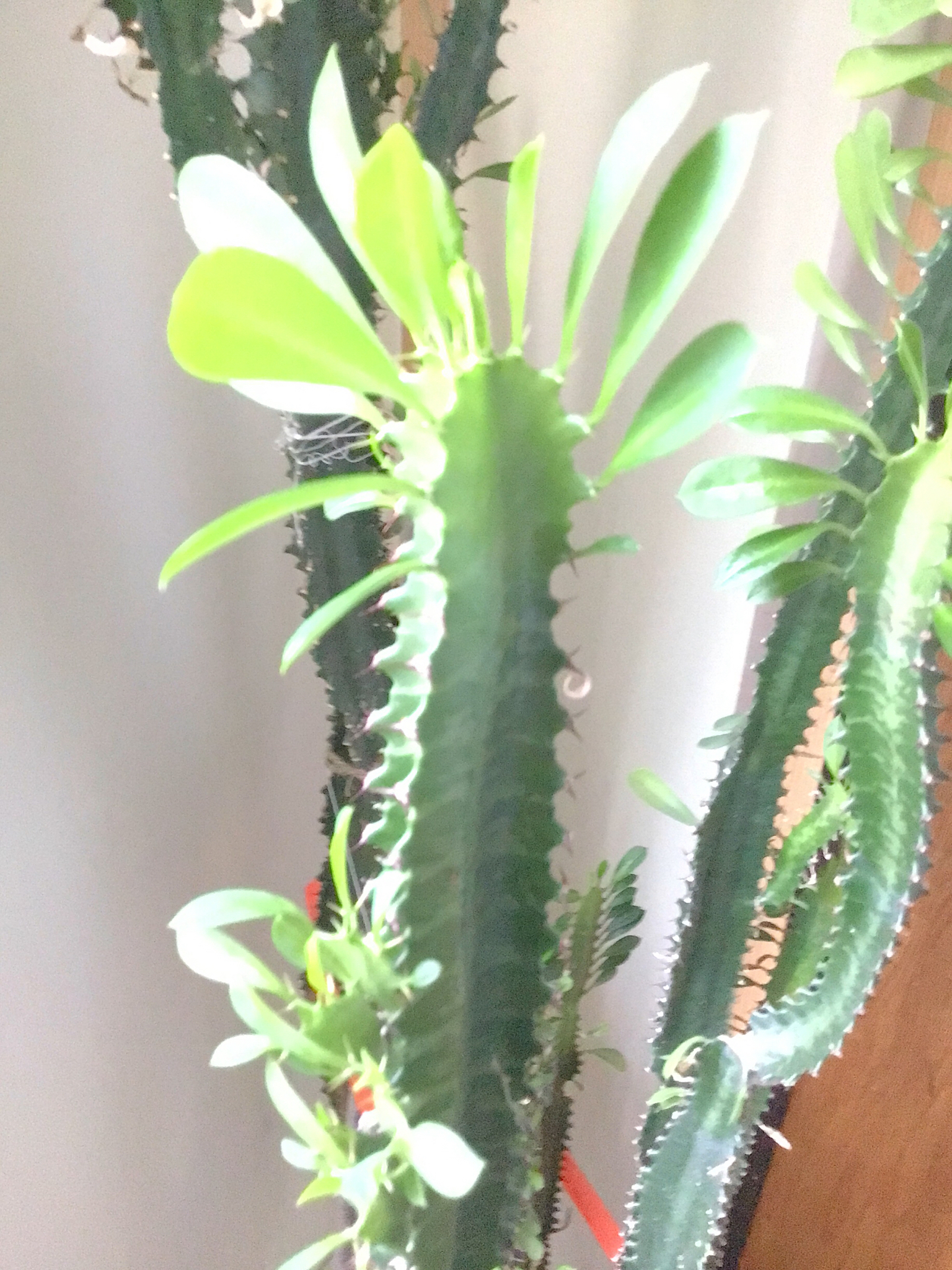
The plant sends up very upright, three- to four-sided green stems and branches that can reach 1.8m indoors, edged with persistent reddish-brown spines along their ridges. Along each face run variable, V-shaped bands of pale grey-green, and short-lived oval leaves appear along the stems before dropping. Small pale-green flowers may form at the stem tips in spring and summer outdoors, though this is unlikely in a home setting. The red form carries the same structure but in reddish-green stems, reddish-purple leaves, and pale green banding.
Source: RHS
Watch For Mealybugs
The main pest concern here is mealybugs; otherwise the plant is generally free of disease.
Source: RHS
Handle With Gloves
The sap is irritant to skin and eyes and harmful if eaten, so gloves and other protective equipment are worth wearing when pruning or taking cuttings.
Source: RHS
Occasional Pruning Only
This is a slow grower, taking something like ten to twenty years to reach maturity, so little routine work is needed. Prune only when necessary to control size, and do this in early spring.
Source: RHS
Care recipe
The species record — the baseline every cultivar inherits unless it says otherwise.
Care notes are early — not yet verified
- Light
- ai:claude-opus-4-8
- Water
- ai:claude-opus-4-8 (range 14-28d)
- Humidity
- ai:claude-opus-4-8
- Soil
- ai:claude-fable-5
- Care
- ai:claude-fable-5
Direct sun
≈ every 28 days
Low — average room
13–30 °C
Gritty, fast-draining cactus mix
Stem cuttings, callused before potting
Dilute cactus feed once or twice in summer
Moderate
Rarely flowers indoors
Toxic to cats & dogs & humans
The milky latex carries diterpenoid euphorbol esters — skin contact can cause irritation, rash, and blisters, eye contact severe irritation, and ingestion stomach upset. Toxic to cats, dogs, and people — keep sap off skin and the plant out of reach. This is where toxicity lives: every cultivar of this species inherits it and none can override it.
Reference images
Every image credited. Licenses link to their deeds.
PrimarySources: ai:claude-opus-4-8 · ai:claude-opus-4-8 (range 14-28d) · ai:claude-fable-5 · NC State Extension Plant Toolbox — Euphorbia trigona (species entry; medium-severity poison characteristics)
Kept true by its growers
Every fact here carries its source. Grow African Milk Tree yourself? What you’ve observed — how it drinks, how it holds its color, a name that’s off — and a clear photo of your plant are exactly what keep this page honest. Contributions are reviewed before anything changes.
Sign in to add what you know →