Species · genus Euphorbia · Euphorbiaceae
Firestick Pencil Cactus
Euphorbia tirucalli L.
Also known as: Indiantree Spurge · African Milkbush · Fingertree · Indian Tree Spurge · Milkhedge · Naked-lady
Cultivars of E. tirucalli
The named forms growers keep — each with its own page, each honest about how much we know.
No named cultivars catalogued under E. tirucalli yet. When growers document a stable, named form, it earns its own page here.
Guide
The species-level account. Cultivar pages build on this and say where they differ.
Meet the Pencil Cactus
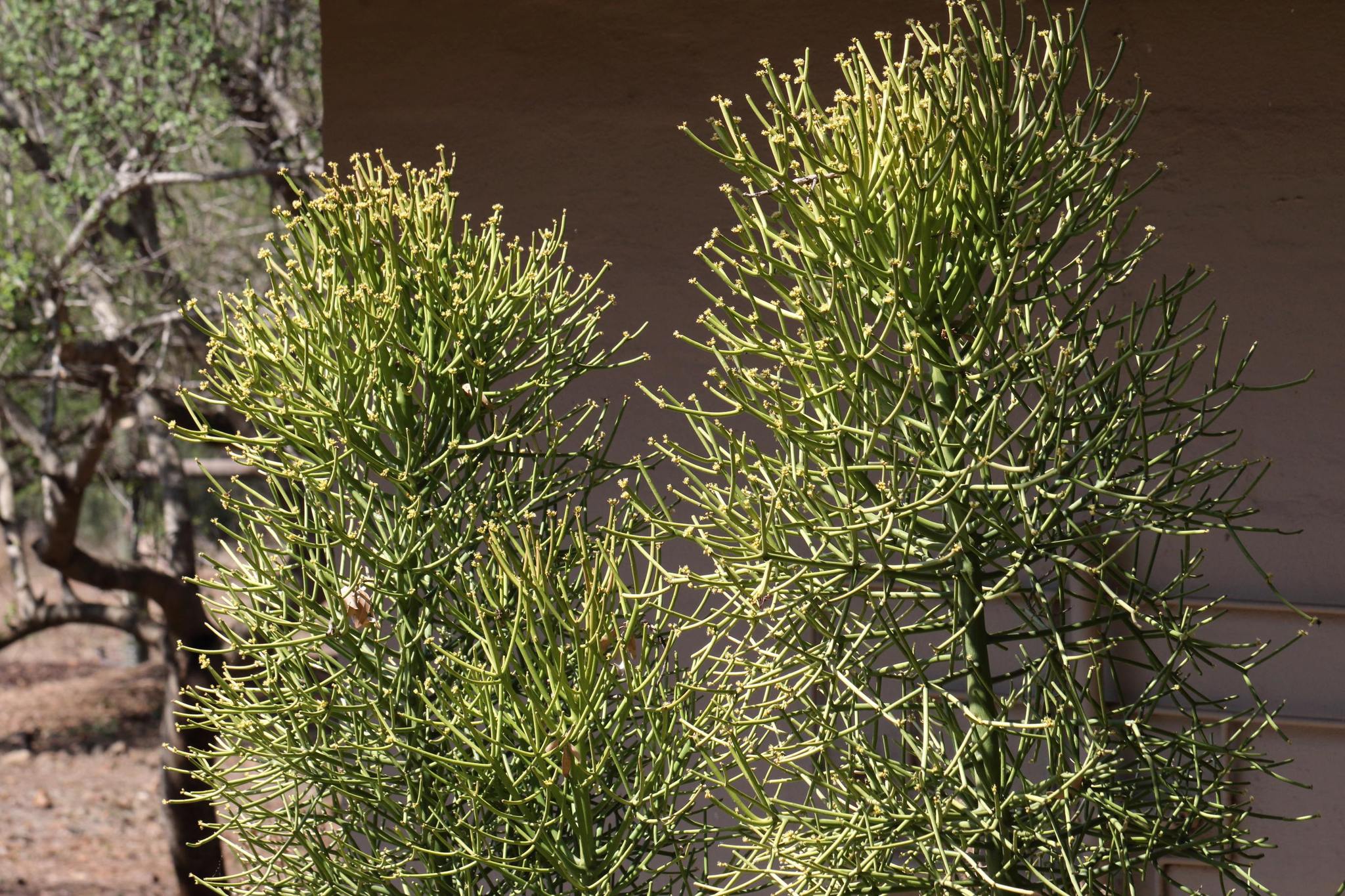
The pencil cactus, Euphorbia tirucalli, is a striking succulent grown as a houseplant or outdoor ornamental for its slender, pencil-thin stems. Despite the common name, it is not a true cactus but a member of the spurge family, and it carries a good number of aliases including firestick plant, milkbush, and naked lady.
Source: Epic Gardening
Where It Comes From
This species is native to Madagascar, according to Kew, though it has since been introduced across a remarkable span of the globe, from Africa and India to the Arabian Peninsula, parts of Asia, and beyond. In the wild it behaves as a semisucculent shrub or tree of desert and dry shrubland habitats. People have long put it to practical use, too, as animal fodder, a source of poison and medicine, and even as a feedstock for fuel and rubber-like latex.
Source: Kew
A Simple Care Rhythm
This plant asks for full, bright sun for at least six hours a day, ideally near a south-facing window, and it tolerates heat well while disliking cold drafts and temperatures below 50°F. Water sparingly, only once the top inch of soil has dried out, roughly every two to three weeks in summer and about once a month or not at all in winter. It wants gritty, well-draining soil, since standing moisture invites root rot, and it appreciates a controlled-release feed at the start of the growing season with no fertilizer during its fall and winter dormancy.
Source: Epic Gardening
Rooting Stem Cuttings
Pencil cactus propagates readily from cuttings taken off new or healthy stems, always with gloves and eye protection since the sap is an irritant. Let the cut end dry out before placing it in fresh cactus mix, as planting a wet cut risks rot before roots can form. Water lightly at first, then hold off until the top two inches of soil dry, and expect roots and new growth within about a month.
Source: Epic Gardening
Coral-Like, Leafless Stems
In its natural habitat this plant can reach up to 30 feet, though indoors it tends to stay in the 4 to 8 foot range with full sun and frost-free conditions. The pencil-diameter stems give the plant its name, and the popular cultivar 'Sticks on Fire' shows off a reddish-gold color that shifts to yellow in late spring and red in winter. What look like thorns are technically modified stems, and any leaves that appear on new growth are fleeting, dropping off soon after the branch matures.
Source: Epic Gardening
Sap-Suckers to Watch
Aphids, mealybugs, and spider mites are the common visitors, gathering to feed on plant juices and causing curled leaf tips, dead stem sections, or leaf drop in bad cases. A damp cloth wipe-down handles early infestations, followed by a cloth soaked in rubbing alcohol for anything more stubborn.
Source: Epic Gardening
Overwatering and Its Fallout
Most trouble traces back to too much water paired with poor drainage, which leads to root rot showing up as soft, browning stem bases. Low light can bring on yellowing, chlorotic stems, best remedied by more sun or a grow light. Phomopsis fungus is another risk in overly wet conditions, producing gray, recessed tips that need the infected portion cut away and dusted with sulfur.
Source: Epic Gardening
Repotting and Pruning
Plan to repot every year or two into a container just one to three inches wider than the root ball, with good drainage, gently loosening the roots before settling the plant into fresh cactus soil. Pruning is rarely needed, but if the plant outgrows its space, branches can be trimmed back for shape. Always wear gloves when cutting, since the milky sap is toxic and irritating to skin.
Source: Epic Gardening
Care recipe
The species record — the baseline every cultivar inherits unless it says otherwise.
Care notes are early — not yet verified
- Light
- admin:curated
- Water
- ai:claude-opus-4-8 (range 14-28d)
- Humidity
- admin:curated
- Soil
- ai:claude-fable-5
- Care
- ai:claude-fable-5
Direct sun
≈ every 28 days
Low — average room
13–30 °C
Gritty, fast-draining cactus mix
Stem cuttings, callused before potting
Dilute feed once or twice in summer
Fast
Rarely flowers indoors
Toxic to cats & dogs & humans
Euphorbiaceae produce a caustic milky latex that irritates skin, eyes, and mucous membranes. This is where toxicity lives: every cultivar of this species inherits it and none can override it.
Reference images
Every image credited. Licenses link to their deeds.
Sources: admin:curated · ai:claude-opus-4-8 (range 14-28d) · ai:claude-fable-5 · ai:claude-opus-4-8 · ai:claude-opus-4-8 (family inference)
Kept true by its growers
Every fact here carries its source. Grow Firestick Pencil Cactus yourself? What you’ve observed — how it drinks, how it holds its color, a name that’s off — and a clear photo of your plant are exactly what keep this page honest. Contributions are reviewed before anything changes.
Sign in to add what you know →