Species · genus Euphorbia · Euphorbiaceae
Poinsettia
Euphorbia pulcherrima Willd. ex Klotzsch
Also known as: Christmas Flower · Christmas Star · Mexican Flameleaf · Lobsterplant · Paintedleaf
Cultivars of E. pulcherrima
The named forms growers keep — each with its own page, each honest about how much we know.
No named cultivars catalogued under E. pulcherrima yet. When growers document a stable, named form, it earns its own page here.
Guide
The species-level account. Cultivar pages build on this and say where they differ.
A Winter Bract Show
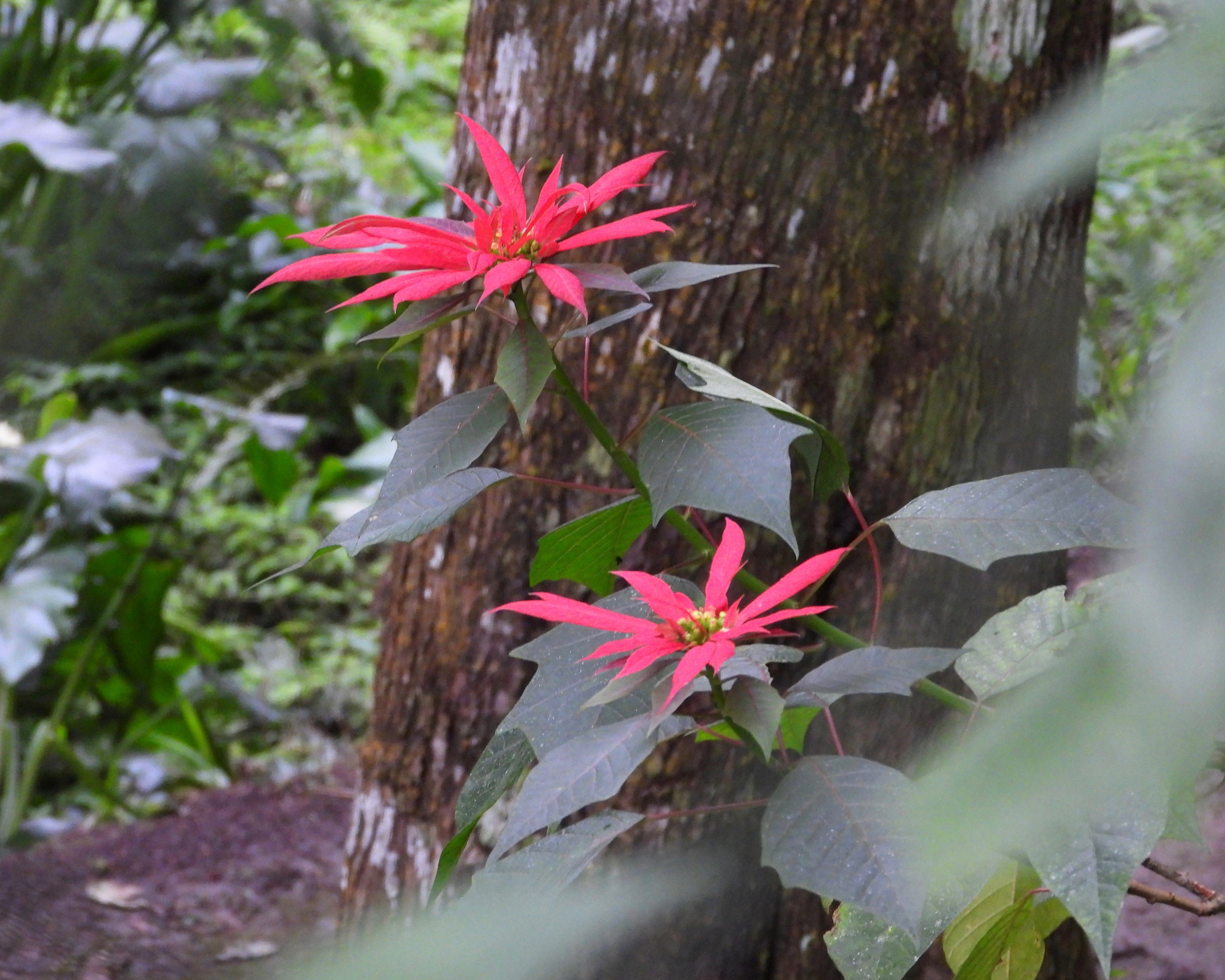
Poinsettia is the semi-evergreen shrub grown as a Christmas houseplant, prized not for its small yellow flowers but for the large, colourful bracts that surround them. In milder outdoor settings it is a bushy plant, though in our homes it is kept modest and compact.
Source: RHS
A Mexican Native
This plant is native to the Pacific slope of Mexico and Guatemala, where it grows in seasonally dry tropical forest as a scraggly shrub or small tree reaching up to twelve feet. Its common name honours Joel R. Poinsett, a South Carolina diplomat who served as ambassador to Mexico in 1824 and brought the plant home with him. The genus name likely honours Euphorbus, physician to the King of Mauretania, while the species name simply means beautiful.
Source: Missouri Botanical Garden
Light, Warmth, Moisture
Give it bright light away from direct sun and a fairly steady temperature of around 16-21°C, keeping it clear of hot radiators and cold draughts alike. Water so the compost stays just moist, checking the surface and watering only once it feels dry, since both drying out and sogginess push the plant to drop its bracts and leaves. Getting these two things right, warmth without draughts and moisture without excess, is really the whole of its winter care.
Source: RHS
Cuttings in Early Summer
Poinsettia is propagated from stem cuttings taken in early summer, dipped in a hormone rooting compound to help them strike.
Source: RHS
Bracts, Not Petals
What reads as the flower is in fact a ring of leaf-like bracts in red, pink, or cream, opening around firm, branching stems set with large, softly toothed leaves. The true flowers are the small, yellow, ball-like structures held at the centre of each cluster.
Source: RHS
Common Sap-Suckers
Poinsettia can attract glasshouse red spider mite, glasshouse whitefly, and mealybugs, along with scale in some cases. Watch for the usual early signs of these sap-feeders, such as stippled or sticky leaves, since they are the most frequent visitors on this plant.
Source: RHS
Dropped Bracts and Rot
The most common complaint is bracts and leaves dropping, usually brought on by hot dry spots near radiators, cold draughty windowsills, or inconsistent watering. Overwatering can also lead to root or stem rot, and because the stems are notably brittle, careless handling can snap them, so the plant is best moved and pruned gently.
Source: Missouri Botanical Garden
Cutting Back for Rebloom
To carry a plant on to another Christmas, cut it back hard in April to about 10cm and repot it, then grow it on somewhere light and cool over summer, ideally around 15-18°C. From November, the plant needs twelve hours of darkness a day, shielded from any stray light, to trigger the bract colouring that naturally happens in December and January; it also wants a steady temperature near 18°C to colour up properly without getting chilled.
Source: RHS
Care recipe
The species record — the baseline every cultivar inherits unless it says otherwise.
Care notes are early — not yet verified
- Light
- ai:claude-opus-4-8
- Water
- ai:claude-opus-4-8 (range 7-14d)
- Humidity
- ai:claude-opus-4-8
- Soil
- ai:claude-fable-5
- Care
- ai:claude-fable-5
Bright, indirect
≈ every 14 days
Medium
15–24 °C
Rich, well-draining peat-based mix
Stem cuttings taken in spring
Balanced liquid feed monthly while in leaf
Moderate
Showy red bracts with short-day light control; tricky to rebloom indoors
Toxic to cats & dogs & humans
Euphorbiaceae produce an irritant milky latex that can inflame skin, eyes, and the mouth or gut if chewed. This is where toxicity lives: every cultivar of this species inherits it and none can override it.
Reference images
Every image credited. Licenses link to their deeds.
Sources: ai:claude-opus-4-8 · ai:claude-opus-4-8 (range 7-14d) · ai:claude-fable-5 · ai:claude-opus-4-8 (family inference)
Kept true by its growers
Every fact here carries its source. Grow Poinsettia yourself? What you’ve observed — how it drinks, how it holds its color, a name that’s off — and a clear photo of your plant are exactly what keep this page honest. Contributions are reviewed before anything changes.
Sign in to add what you know →