Species · genus Euphorbia · Euphorbiaceae
Petty Spurge
Euphorbia peplus L.
Also known as: Radium-plant · Purple Spurge · Stinging Milkweed
Cultivars of E. peplus
The named forms growers keep — each with its own page, each honest about how much we know.
No named cultivars catalogued under E. peplus yet. When growers document a stable, named form, it earns its own page here.
Guide
The species-level account. Cultivar pages build on this and say where they differ.
A Small, Common Spurge
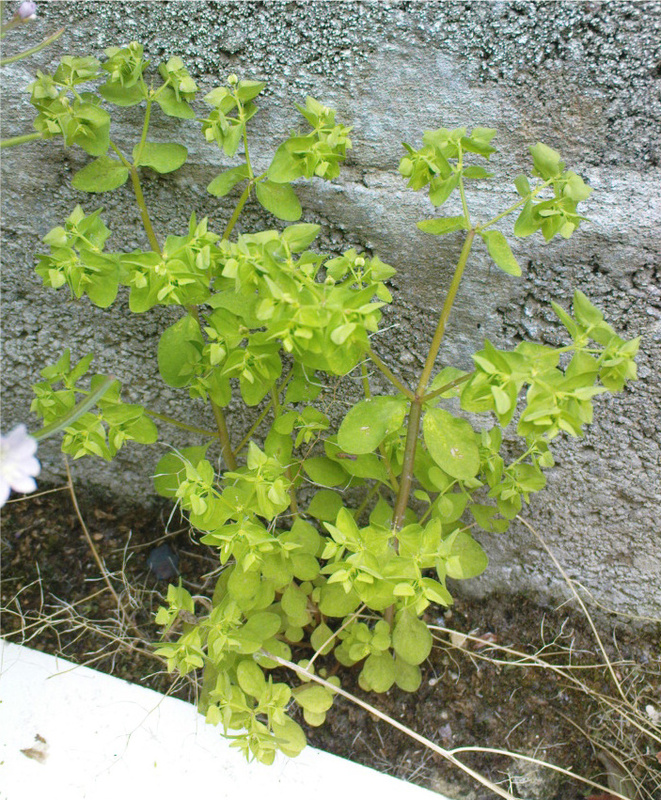
Petty spurge is a small annual, usually only five to twenty centimetres tall, and it is frequently regarded as a garden weed rather than a plant one sets out to grow. It carries the milky sap and cupped bracts typical of its genus, alongside modest oval leaves and small pale green flowers.
Source: RHS
A Wide Native Range
This species is native across a broad sweep from the Mediterranean to Somalia, through Europe and east to the western Himalaya, and it is also native to Great Britain and Ireland. It has since become introduced far beyond that range, turning up on nearly every continent, from North America to New Zealand and many islands between.
Source: Kew
Light, Soil, And Spread
Petty spurge prefers well-drained soil in full sun but tolerates moist ground and shade without complaint, and it copes with chalk, clay, loam or sandy soils alike. It is drought resistant once established, and given how readily it self-seeds, plants are best removed before they set seed if you want to keep its spread in check.
Source: RHS
Grown From Seed
Propagation is simply a matter of seed, which suits a plant that self-seeds so freely in the garden on its own.
Source: RHS
Habit, Leaf, And Bract
The plant grows upright and branching, with a columnar habit, bearing oval leaves up to about three centimetres long. Its flowers are small and pale green, set beneath the triangular bracts that give the genus its characteristic look.
Source: RHS
Largely Trouble-Free
This is generally a pest-free and disease-free plant, so there is little to watch for on that front. Do note, though, that the sap is an irritant to skin and eyes and harmful if eaten, so gloves and care in handling are worthwhile.
Source: RHS
Little Upkeep Needed
No pruning is required for this plant. Its main upkeep is really about controlling its self-seeding, by pulling plants before flowers go to seed if you wish to limit how far it spreads.
Source: RHS
Care recipe
The species record — the baseline every cultivar inherits unless it says otherwise.
Care notes are early — not yet verified
- Light
- ai:claude-opus-4-8
- Water
- ai:claude-opus-4-8 (range 5-10d)
- Humidity
- ai:claude-opus-4-8
- Soil
- ai:claude-fable-5
- Care
- ai:claude-fable-5
Bright, indirect
≈ every 10 days
Medium
10–27 °C
Gritty, fast-draining sandy mix
Seed, or reseeds readily; a weedy annual spurge
Light balanced feed once or twice in the growing season
Fast
Tiny green cyathia appear readily indoors
Toxic to cats & dogs & humans
Euphorbiaceae produce an irritant milky latex (sap) that can burn skin, eyes, and mucous membranes. This is where toxicity lives: every cultivar of this species inherits it and none can override it.
Reference images
Every image credited. Licenses link to their deeds.
PrimarySources: ai:claude-opus-4-8 · ai:claude-opus-4-8 (range 5-10d) · ai:claude-fable-5 · ai:claude-opus-4-8 (family inference)
Kept true by its growers
Every fact here carries its source. Grow Petty Spurge yourself? What you’ve observed — how it drinks, how it holds its color, a name that’s off — and a clear photo of your plant are exactly what keep this page honest. Contributions are reviewed before anything changes.
Sign in to add what you know →