Species · genus Euphorbia · Euphorbiaceae
Crown Of Thorns
Euphorbia milii Des Moul.
Also known as: Christ's-plant · Christ's-thorn · Christplant · Christ Plant · Christ Thorn
Cultivars of E. milii
The named forms growers keep — each with its own page, each honest about how much we know.
No named cultivars catalogued under E. milii yet. When growers document a stable, named form, it earns its own page here.
Guide
The species-level account. Cultivar pages build on this and say where they differ.
A Thorned Succulent Shrub
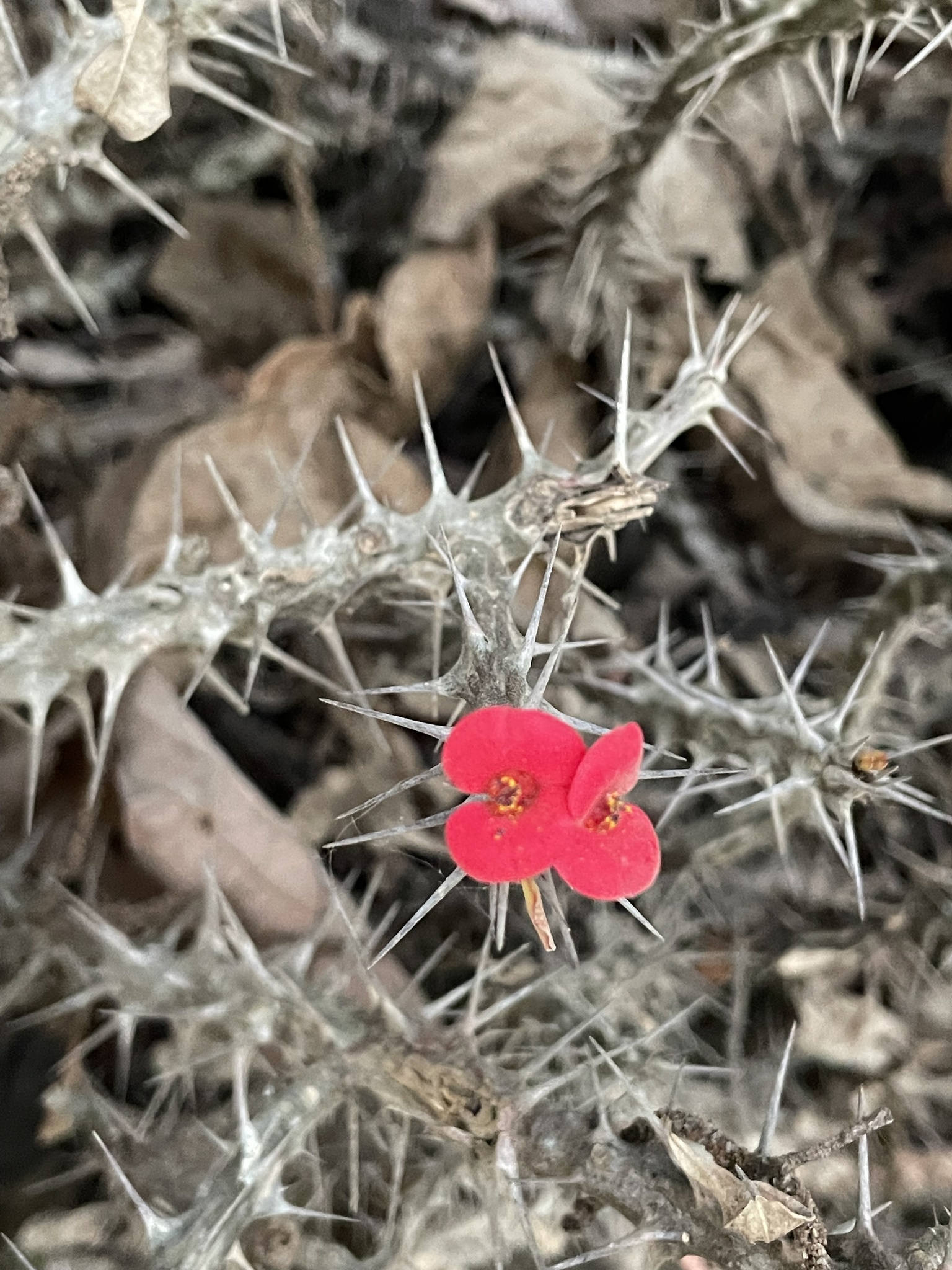
Euphorbia milii, known as crown of thorns or Christ plant, is a woody succulent shrub in the spurge family. It carries thick black thorns along its stems and produces long-lasting, showy bracts around its true flowers, which makes it as much an ornamental curiosity as a houseplant.
Source: Missouri Botanical Garden
From Madagascar to Europe
This species is native to Madagascar, where it grows as a sprawling shrub reaching five to six feet. Its epithet honors Baron Milius, a governor of the island of Bourbon credited with bringing it into cultivation in France in 1821. The common name comes from the old belief that Christ's crown of thorns was woven from stems like these.
Source: Missouri Botanical Garden
Sun, Sparing Water, Dry Winters
Give this plant full sun and a gritty, free-draining, loam-based potting mix. Water sparingly while it is actively growing, feeding monthly with a low-nitrogen liquid fertiliser, and keep it dry over winter. Outdoors it tolerates poor, rocky, or sandy soils and drought, but wet soil in winter can be fatal, and it reacts poorly once temperatures drop below 35°F.
Source: RHS
By Cuttings or Seed
Indoors, propagation is typically done from tip cuttings. The RHS instead notes propagation by seed, sown as soon as it is ripe at 15 to 20°C. Either way, remember the sap is a skin and eye irritant, so gloves are worth wearing during the process.
Source: Missouri Botanical Garden
Thorns, Bracts, and Bloom
The plant's fleshy green leaves are obovate with wedge-shaped bases and emerge on new growth, while its true flowers are tiny and greenish, easy to overlook beneath the bright red or yellow bracts that surround them. Sharp black thorns up to half an inch long cover the water-storing stems. As a houseplant it stays compact, generally no more than about two feet tall, and it can flower from late winter into fall.
Source: Missouri Botanical Garden
Mostly Trouble-Free
The RHS considers this plant generally pest-free. Where problems do appear, the Missouri Botanical Garden notes scale, mealybug, thrips, and mites as the insects to watch for.
Source: RHS
Sap, Rot, and Mould
The milky white latex sap is poisonous and can cause skin rashes in some people, so contact with skin, mouth, or eyes should be avoided. Potential disease issues include leaf spots, stem and root rots, and botrytis blight, with the RHS specifically flagging grey mould as a risk. Wet, poorly drained soil, especially in winter, is a common trigger for rot.
Source: Missouri Botanical Garden
Pruning and Light Needs
This shrub falls into pruning group six. Indoors it needs bright light and does best in a gritty, soil-based potting mix, while outdoors it appreciates some midday shade in hot summer climates and good air circulation.
Source: Missouri Botanical Garden
Care recipe
The species record — the baseline every cultivar inherits unless it says otherwise.
Care notes are early — not yet verified
- Light
- ai:claude-opus-4-8
- Water
- ai:claude-opus-4-8 (range 10-18d)
- Humidity
- ai:claude-opus-4-8
- Soil
- ai:claude-fable-5
- Care
- ai:claude-fable-5
Direct sun
≈ every 18 days
Low — average room
13–29 °C
Well-draining cactus or succulent mix
Stem cuttings, callused before potting
Balanced feed monthly through spring and summer
Slow
Long-blooming red, pink, or yellow bracts nearly year-round in good light
Toxic to cats & dogs & humans
Euphorbiaceae produce an irritant milky latex that can harm skin, eyes, and mucous membranes if ingested. This is where toxicity lives: every cultivar of this species inherits it and none can override it.
Reference images
Every image credited. Licenses link to their deeds.
PrimarySources: ai:claude-opus-4-8 · ai:claude-opus-4-8 (range 10-18d) · ai:claude-fable-5 · ai:claude-opus-4-8 (family inference)
Kept true by its growers
Every fact here carries its source. Grow Crown Of Thorns yourself? What you’ve observed — how it drinks, how it holds its color, a name that’s off — and a clear photo of your plant are exactly what keep this page honest. Contributions are reviewed before anything changes.
Sign in to add what you know →