Species · genus Euphorbia · Euphorbiaceae
Snow On The Mountain
Euphorbia marginata Pursh
Also known as: Variegated Spurge · Smoke-on-the-prairie · Ghostweed · White-margin Spurge · White-margined Spurge
Cultivars of E. marginata
The named forms growers keep — each with its own page, each honest about how much we know.
No named cultivars catalogued under E. marginata yet. When growers document a stable, named form, it earns its own page here.
Guide
The species-level account. Cultivar pages build on this and say where they differ.
A frosted-looking annual
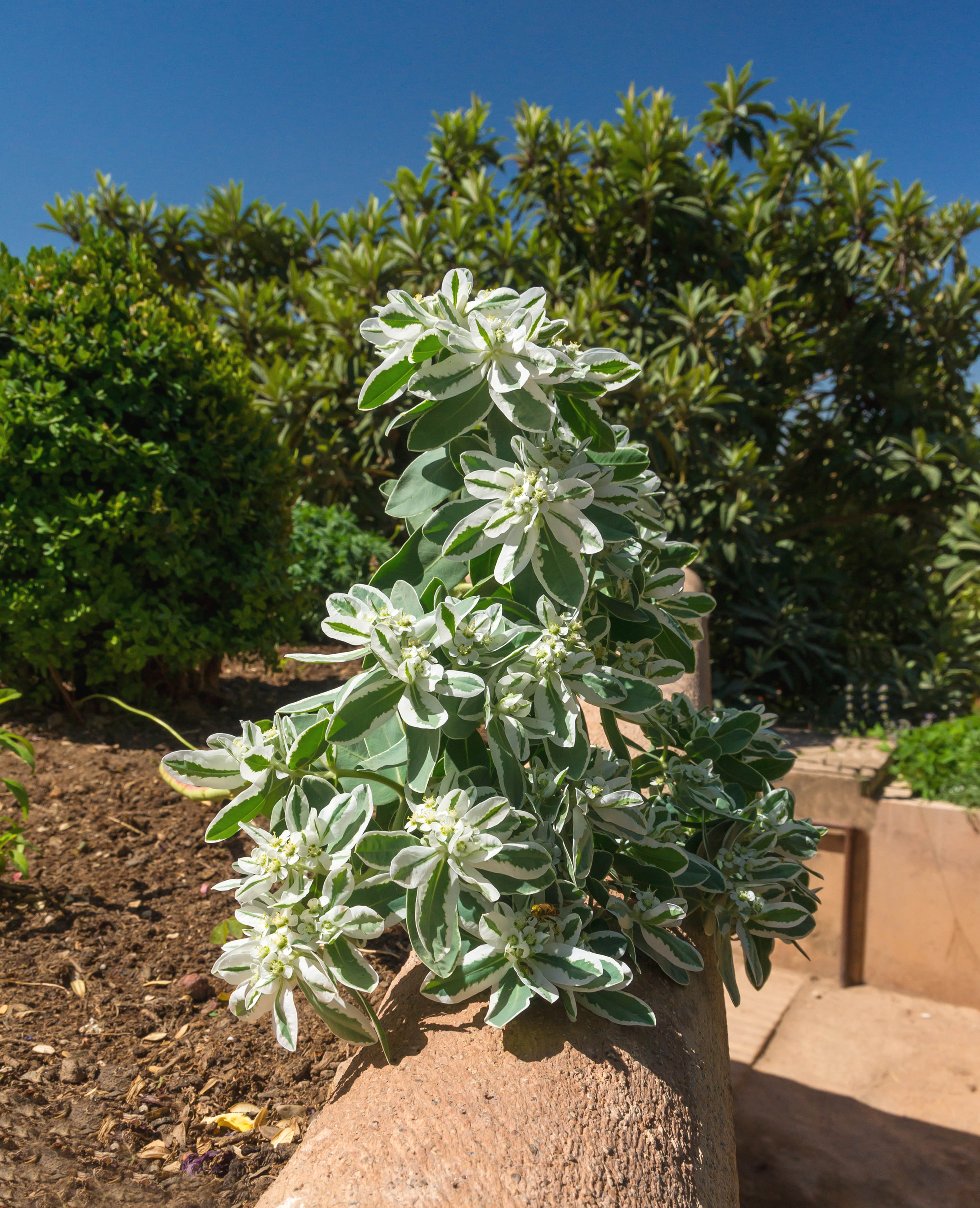
Snow on the mountain, Euphorbia marginata, is a branching annual grown for its foliage rather than its flowers. The true flowers are small and greenish-yellow, almost an afterthought beside the showy white-margined bracts that surround them.
Source: RHS
Sun, drainage, restraint
Give it full sun to partial shade and well-drained soil, and it asks little else. Euphorbias generally need watering to establish and, once settled, moisture just to keep the soil from drying out completely. Feeding is best kept minimal, since rich soil or heavy feeding tends to make growth lush and leggy rather than sturdy.
Source: RHS
Grown fresh from seed
As an annual, snow on the mountain is raised from seed sown in spring, rather than by division or cuttings as with its shrubby or clump-forming relatives. Collect seed once the capsules have turned brown if you want to save your own.
Source: RHS
White-edged leaves
The plant starts as a single stem reaching up to 90cm, clothed in narrowly oval, light-green leaves through spring. As the season goes on, the uppermost leaves gradually take on broad, pure white margins, and the branched flowering stems at the top carry those insignificant true flowers wrapped in showy white bracts.
Source: RHS
Largely left alone
This species is generally free of both pests and disease, though the wider euphorbia genus can occasionally attract aphids, which show up as distortion in leaves and stems.
Source: RHS
One season, then done
As an annual, snow on the mountain is simply removed once flowering finishes in autumn rather than cut back for regrowth. Handle it with gloves, since the sap and foliage are irritant to skin and eyes and harmful if eaten.
Source: RHS
Care recipe
The species record — the baseline every cultivar inherits unless it says otherwise.
Care notes are early — not yet verified
- Light
- ai:claude-opus-4-8
- Water
- ai:claude-opus-4-8 (range 7-14d)
- Humidity
- ai:claude-opus-4-8
- Soil
- ai:claude-fable-5
- Care
- ai:claude-fable-5
Direct sun
≈ every 14 days
Low — average room
10–27 °C
Well-draining, average garden or potting mix
Seed, sown in spring
Light feed in spring; needs little
Fast
Grown for its white-margined leaves and showy white bracts in summer
Toxic to cats & dogs & humans
Euphorbiaceae produce an irritant milky latex that can harm skin, eyes, and mucous membranes if broken or ingested. This is where toxicity lives: every cultivar of this species inherits it and none can override it.
Reference images
Every image credited. Licenses link to their deeds.
PrimarySources: ai:claude-opus-4-8 · ai:claude-opus-4-8 (range 7-14d) · ai:claude-fable-5 · ai:claude-opus-4-8 (family inference)
Kept true by its growers
Every fact here carries its source. Grow Snow On The Mountain yourself? What you’ve observed — how it drinks, how it holds its color, a name that’s off — and a clear photo of your plant are exactly what keep this page honest. Contributions are reviewed before anything changes.
Sign in to add what you know →