Species · genus Euphorbia · Euphorbiaceae
Cactus Spurge
Euphorbia ingens E.Mey. ex Boiss.
Also known as: Candelabra-tree · Naboom · Cactus Euphorbia · Common Naboom · Giant Candelabra-Tree
Cultivars of E. ingens
The named forms growers keep — each with its own page, each honest about how much we know.
No named cultivars catalogued under E. ingens yet. When growers document a stable, named form, it earns its own page here.
Guide
The species-level account. Cultivar pages build on this and say where they differ.
The candelabra tree
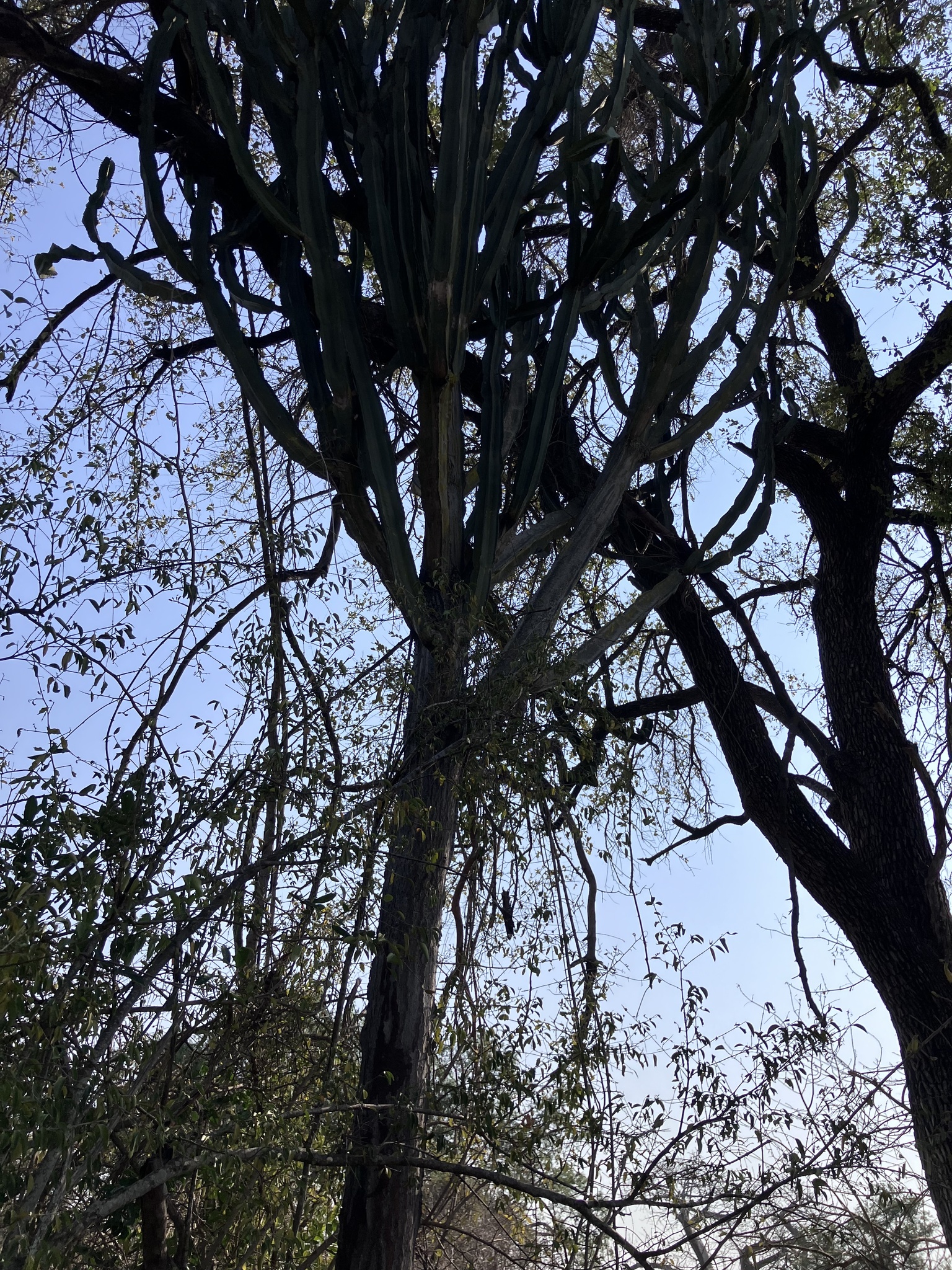
Euphorbia ingens is a succulent tree known as the candelabra tree, capable of reaching great height in the wild but far more often kept as a pot plant indoors. Its branching, leafless stems carry the plant's structure, and mature specimens can produce small greenish-yellow flowers at the branch tips, followed by dark red to purple fruit.
Source: RHS
Native to eastern and southern Africa
This species has a wide native range stretching from Eritrea down through eastern Africa to South Africa, taking in countries such as Kenya, Tanzania, Zambia, Zimbabwe, Mozambique and beyond. It grows there as a succulent tree in seasonally dry tropical habitat.
Source: Kew
Light, grit, and a dry rest
Grown indoors, this plant wants full light and a free-draining mix, equal parts peat-free loam-based compost and grit suit it well. Water moderately through the growing season and hold back almost entirely over winter, and feed a low-nitrogen liquid fertiliser two or three times while it is actively growing.
Source: RHS
Seed or stem cuttings
Propagate by sowing seed at 15-18°C in early spring, or by taking stem cuttings in spring or early summer.
Source: RHS
Ridged stems, no leaves
The stems are columnar and upright, branching to build the candelabra shape the plant is named for, each stem marked with four or five vertical ridges bearing small spines. There is no true foliage to speak of, so the sculptural stem structure is the plant's whole presence, occasionally punctuated by flowers and fruit at the tips.
Source: RHS
Mealybugs and mites to watch
Mealybugs, glasshouse whitefly and glasshouse red spider mite are the pests most likely to trouble this plant.
Source: RHS
Mildew and root rot
Powdery mildews and root rots are the main problems to guard against, the latter a reminder that this succulent tree resents sitting wet, particularly in winter.
Source: RHS
Little pruning needed
No routine pruning is required, though the plant can be cut back if you need to restrict its size. Because all parts are irritant to skin and eyes and harmful if eaten, wear gloves and other protective equipment whenever you do handle it.
Source: RHS
Care recipe
The species record — the baseline every cultivar inherits unless it says otherwise.
Care notes are early — not yet verified
- Light
- ai:claude-opus-4-8
- Water
- ai:claude-opus-4-8 (range 14-30d)
- Humidity
- ai:claude-opus-4-8
- Soil
- ai:claude-fable-5
- Care
- ai:claude-fable-5
Direct sun
≈ every 30 days
Low — average room
13–29 °C
Gritty, fast-draining cactus and succulent mix
Stem cuttings, callused for several days before potting
Dilute succulent feed once or twice in spring and summer
Moderate
Rarely flowers indoors
Toxic to cats & dogs & humans
Euphorbiaceae produce a caustic, irritant milky latex that can burn skin, eyes, and mucous membranes. This is where toxicity lives: every cultivar of this species inherits it and none can override it.
Reference images
Every image credited. Licenses link to their deeds.
PrimarySources: ai:claude-opus-4-8 · ai:claude-opus-4-8 (range 14-30d) · ai:claude-fable-5 · ai:claude-opus-4-8 (family inference)
Kept true by its growers
Every fact here carries its source. Grow Cactus Spurge yourself? What you’ve observed — how it drinks, how it holds its color, a name that’s off — and a clear photo of your plant are exactly what keep this page honest. Contributions are reviewed before anything changes.
Sign in to add what you know →