Species · genus Euphorbia · Euphorbiaceae
Grassleaf Spurge
Euphorbia graminea Jacq.
Cultivars of E. graminea
The named forms growers keep — each with its own page, each honest about how much we know.
No named cultivars catalogued under E. graminea yet. When growers document a stable, named form, it earns its own page here.
Guide
The species-level account. Cultivar pages build on this and say where they differ.
A Frothy Little Spurge
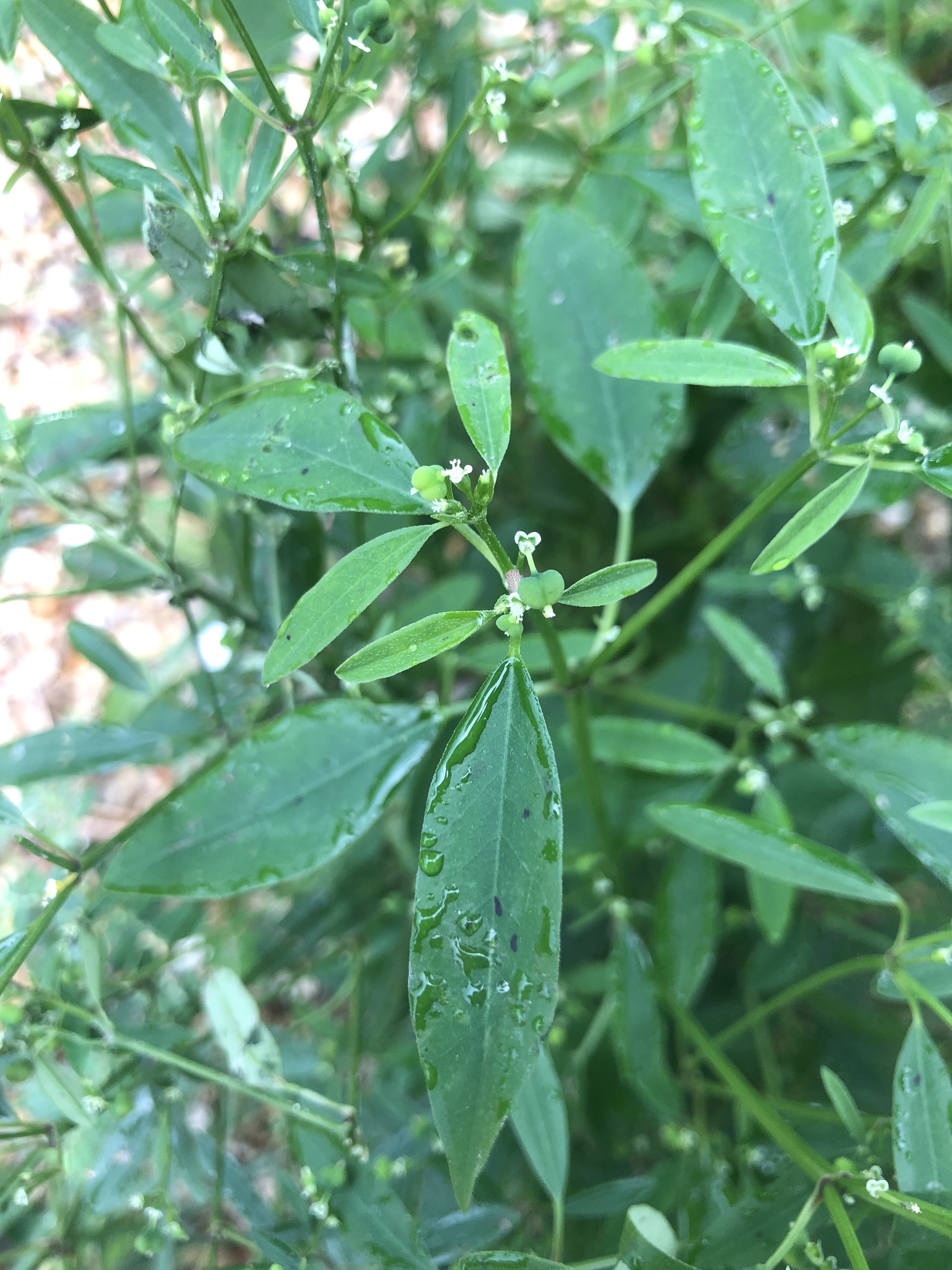
Euphorbia graminea 'Glitz' is a compact, evergreen, frost-tender perennial, though many growers simply raise it from seed as an annual. It forms a neat mound of narrow, oblong to linear leaves and produces branched sprays of tiny white flowers over a remarkably long season, from late spring right into autumn.
Source: RHS
Tropical American Roots
The species Euphorbia graminea comes from Mexico and tropical America, where it grows as an annual across the seasonally dry tropical biome. From there it has spread widely, having become naturalised in places as far apart as Florida, Hawaii, Taiwan, and even Sweden and Cyprus.
Source: Kew
Sun, Drainage, Shelter
Give this plant full sun, though it will tolerate a bit of partial shade, in a light, well-drained soil that can be chalk, loam, or sand. It is drought resistant and prefers a sheltered spot, tolerating low temperatures but not a hard frost, so in the UK it is generally treated as tender.
Source: RHS
Seed Or Cuttings
Propagate by seed, or by taking basal cuttings in spring or early summer.
Source: RHS
Small Flowers, Long Show
This is a bushy plant reaching only around 40cm, valued more for its persistence than its size. Its narrow foliage stays evergreen where conditions allow, and the real distinction is the sheer volume of tiny white flowers it carries for months on end.
Source: RHS
Largely Untroubled
This plant is generally free of both pests and disease, which is one less thing to watch for through the growing season.
Source: RHS
A Spring Cutback
If you overwinter this plant under cover, cut it back in spring to keep its habit compact before moving it back outside once the risk of frost has passed. Bear in mind too that its sap is an irritant to skin and eyes and harmful if eaten, so gloves are worth wearing when handling or pruning it.
Source: RHS
Care recipe
The species record — the baseline every cultivar inherits unless it says otherwise.
Care notes are early — not yet verified
- Light
- ai:claude-opus-4-8
- Water
- ai:claude-opus-4-8 (range 7-14d)
- Humidity
- ai:claude-opus-4-8
- Soil
- ai:claude-fable-5
- Care
- ai:claude-fable-5
Direct sun
≈ every 14 days
Low — average room
13–29 °C
Light, well-draining potting mix
Seed or soft stem cuttings
Dilute balanced feed every two to three weeks while blooming
Fast
Frothy mass of tiny white bracts, near year-round in light
Toxic to cats & dogs & humans
Euphorbiaceae produce an irritant milky latex that can harm skin, eyes, and mucous membranes if ingested. This is where toxicity lives: every cultivar of this species inherits it and none can override it.
Reference images
Every image credited. Licenses link to their deeds.
PrimarySources: ai:claude-opus-4-8 · ai:claude-opus-4-8 (range 7-14d) · ai:claude-fable-5 · ai:claude-opus-4-8 (family inference)
Kept true by its growers
Every fact here carries its source. Grow Grassleaf Spurge yourself? What you’ve observed — how it drinks, how it holds its color, a name that’s off — and a clear photo of your plant are exactly what keep this page honest. Contributions are reviewed before anything changes.
Sign in to add what you know →