Species · genus Euphorbia · Euphorbiaceae
Cypress Spurge
Euphorbia cyparissias L.
Also known as: Graveyard Spurge · Spurge Cypress · Cemetary Spurge
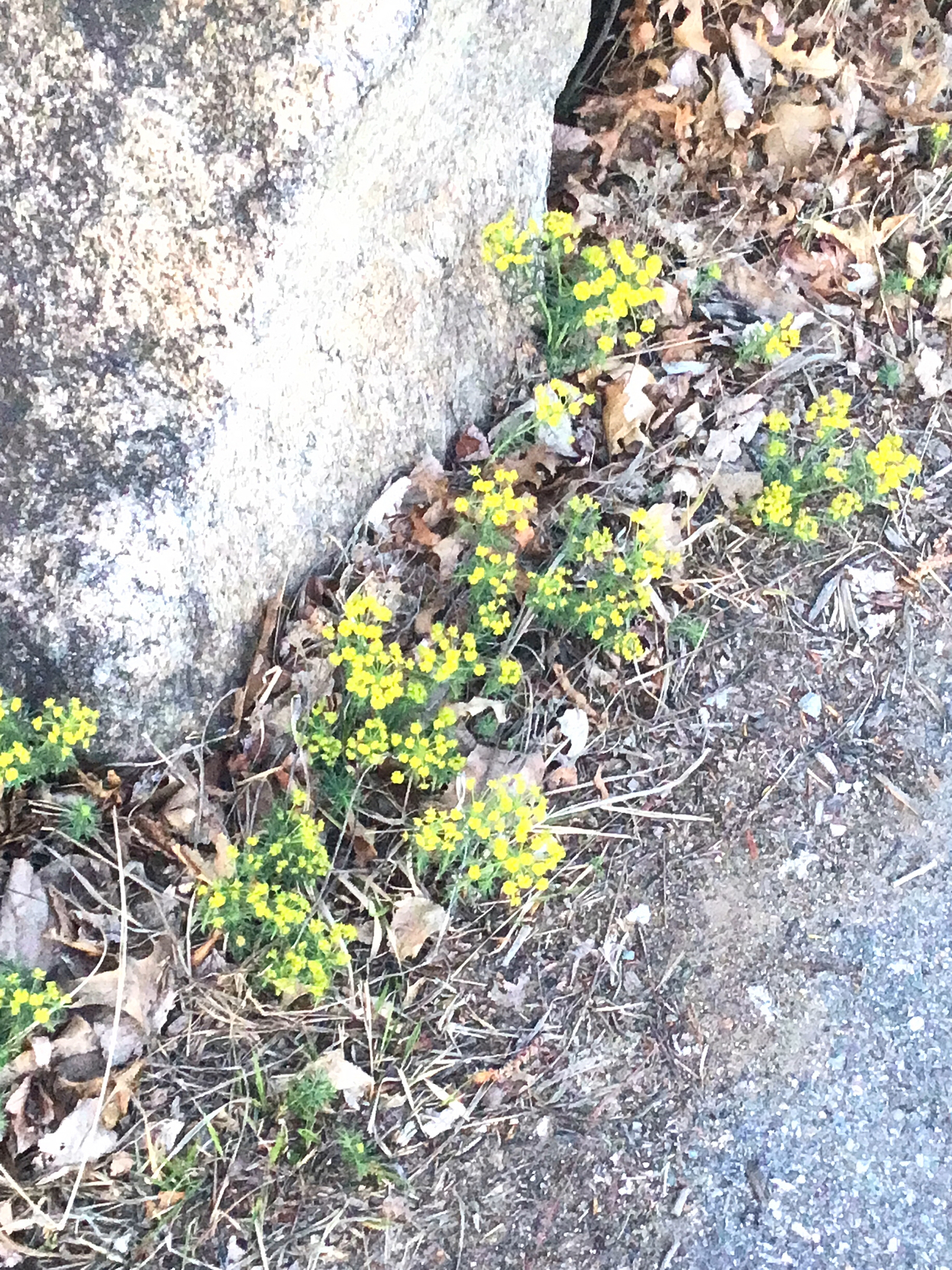
Cultivars of E. cyparissias
The named forms growers keep — each with its own page, each honest about how much we know.
No named cultivars catalogued under E. cyparissias yet. When growers document a stable, named form, it earns its own page here.
Guide
The species-level account. Cultivar pages build on this and say where they differ.
Cypress Spurge, Briefly
Cypress spurge is a herbaceous perennial in the Euphorbia family, grown for its narrow blue-green foliage and clusters of greenish-yellow flowers that appear in late spring and early summer. It also goes by a string of old country names, from Irish moss to welcome-to-our-house, hints at how long it has kept company with gardeners.
Source: RHS
A European Native
This species has its natural range across Europe, and it is not native to Britain or Ireland, though it has long since settled into gardens there. Its cultivar 'Fens Ruby' carries synonyms such as 'Purpurea' and 'Clarice Howard', suggesting a history of selection for its darker foliage.
Source: RHS
Sun, Drainage, Little Else
Give this plant full sun and well-drained soil, whether chalk, loam or sand, and it asks for little more. It tolerates acid, neutral or alkaline conditions and is rated drought resistant, so established plants cope with dry spells without extra watering. It is hardy through the severest European continental winters, so no special winter protection is needed.
Source: RHS
Divide In Spring
The straightforward route is division in early spring, lifting and splitting the spreading rhizomes. The species can also be raised from seed sown in autumn or spring.
Source: RHS
Feathery Foliage, Spreading Habit
The species shows very narrow blue-green leaves on erect stems to about 40cm, with flowers that often turn orange as they age. The cultivar 'Fens Ruby' offers feathery, linear purple foliage instead, on the same fast-spreading, mat-forming, rhizomatous frame. Both are deciduous and can spread widely, to 1-1.5 metres, well beyond their modest height.
Source: RHS
Largely Trouble-Free
Cypress spurge is generally pest-free, which is one less thing to watch for through the growing season.
Source: RHS
A Tendency To Roam
Left unchecked, this plant has the potential to become a nuisance in the garden, spreading rhizomes further than intended. It may also be susceptible to a rust disease, so watch the foliage for signs of it.
Source: RHS
Cut Back Each Spring
In early spring, cut the plant back to its base to keep growth tidy and refreshed for the season ahead. Bear in mind that its sap is an irritant to skin and eyes and harmful if eaten, so gloves and other protective equipment are worth wearing when handling or pruning it.
Source: RHS
Care recipe
The species record — the baseline every cultivar inherits unless it says otherwise.
Care notes are early — not yet verified
- Light
- ai:claude-opus-4-8
- Water
- ai:claude-opus-4-8 (range 10-21d)
- Humidity
- ai:claude-opus-4-8
- Soil
- ai:claude-fable-5
- Care
- ai:claude-fable-5
Direct sun
≈ every 21 days
Low — average room
5–25 °C
Ordinary well-draining mix; tolerates lean soil
Division or seed; spreads by runners
Minimal feeding; a light dose in spring suffices
Fast
Chartreuse-yellow bracts in spring
Toxic to cats & dogs & humans
Euphorbiaceae produce an irritant milky latex that can harm skin, eyes, and mucous membranes if ingested. This is where toxicity lives: every cultivar of this species inherits it and none can override it.
Reference images
Every image credited. Licenses link to their deeds.
PrimarySources: ai:claude-opus-4-8 · ai:claude-opus-4-8 (range 10-21d) · ai:claude-fable-5 · ai:claude-opus-4-8 (family inference)
Kept true by its growers
Every fact here carries its source. Grow Cypress Spurge yourself? What you’ve observed — how it drinks, how it holds its color, a name that’s off — and a clear photo of your plant are exactly what keep this page honest. Contributions are reviewed before anything changes.
Sign in to add what you know →