Species · genus Euphorbia · Euphorbiaceae
Candelilla
Euphorbia antisyphilitica Zucc.
Cultivars of E. antisyphilitica
The named forms growers keep — each with its own page, each honest about how much we know.
No named cultivars catalogued under E. antisyphilitica yet. When growers document a stable, named form, it earns its own page here.
Guide
The species-level account. Cultivar pages build on this and say where they differ.
A desert candelilla
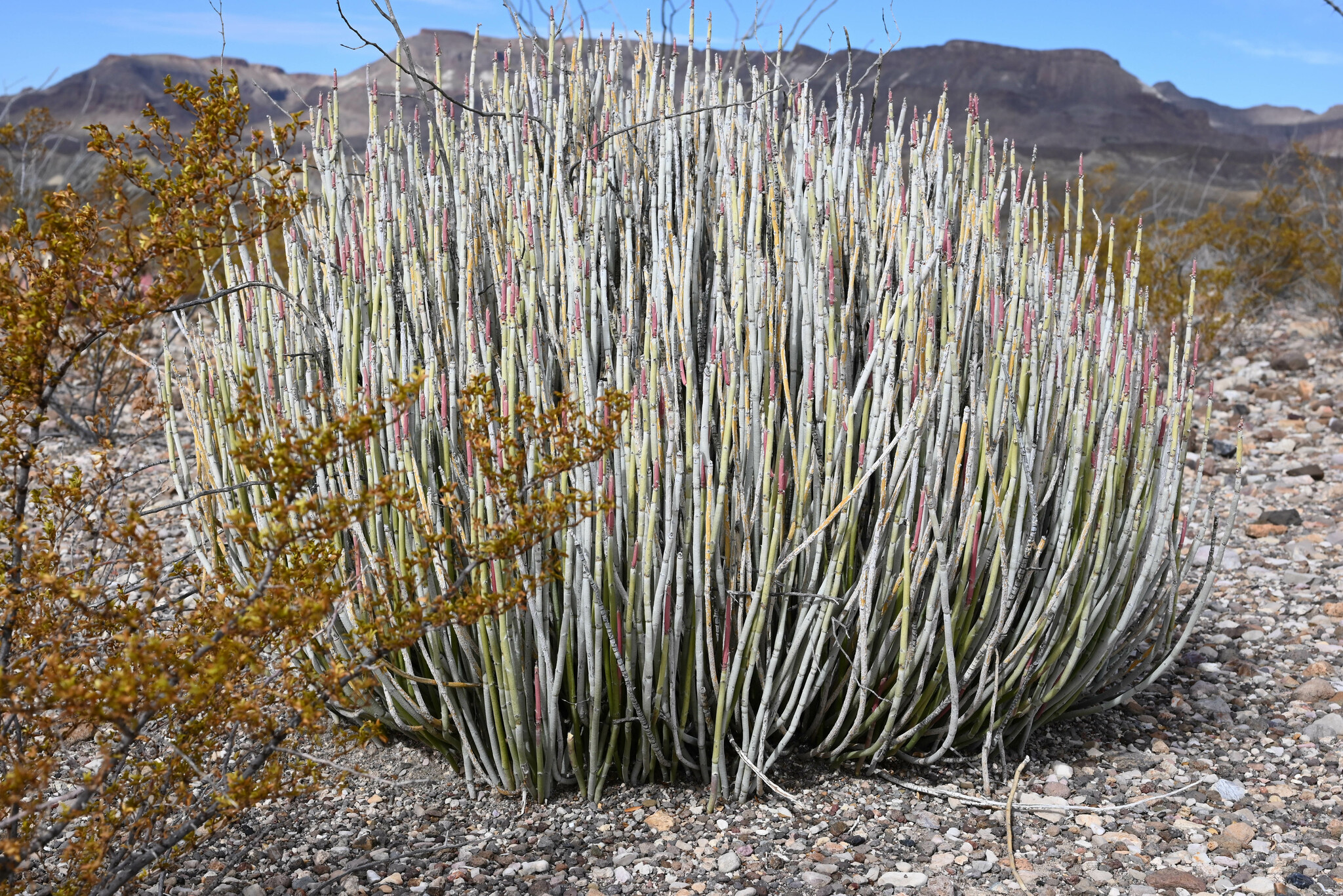
Euphorbia antisyphilitica is a semisucculent subshrub in the Euphorbiaceae family, one of the many species gathered under the sprawling genus Euphorbia. It is a modest, wiry desert plant rather than a showpiece, and its place in cultivation owes more to its native habitat than to any ornamental breeding history.
Source: Kew
From Mexico's dry ground
This species is native to south-central United States through to northeastern and central Mexico, spanning Texas, New Mexico, and the states of Mexico Central and Mexico Northeast. It was first described by Zuccarini in 1832, and it belongs to a genus, Euphorbia, that Linnaeus established in 1753 and which today has a cosmopolitan distribution across nearly every part of the globe.
Source: Kew
Subshrub of dry ground
It grows as a semisucculent subshrub or shrub, a form suited to the desert and dry shrubland biome it calls home. Within the wider genus Euphorbia it sits among relatives of enormously varied habit, from tiny herbs to tree-like succulents, though this particular species keeps to a smaller, wiry stature fit for arid ground.
Source: Kew
Care recipe
The species record — the baseline every cultivar inherits unless it says otherwise.
Care notes are early — not yet verified
- Light
- ai:claude-opus-4-8
- Water
- ai:claude-opus-4-8 (range 14-28d)
- Humidity
- ai:claude-opus-4-8
- Soil
- ai:claude-fable-5
- Care
- ai:claude-fable-5
Direct sun
≈ every 28 days
Low — average room
13–32 °C
Very free-draining, sandy cactus mix
Callused stem cuttings
Dilute cactus feed monthly in the growing season
Slow
Small blooms, rare indoors
Toxic to cats & dogs & humans
Euphorbiaceae produce a caustic milky latex that irritates skin, eyes, and mucous membranes. This is where toxicity lives: every cultivar of this species inherits it and none can override it.
Reference images
Every image credited. Licenses link to their deeds.
Sources: ai:claude-opus-4-8 · ai:claude-opus-4-8 (range 14-28d) · ai:claude-fable-5 · ai:claude-opus-4-8 (family inference)
Kept true by its growers
Every fact here carries its source. Grow Candelilla yourself? What you’ve observed — how it drinks, how it holds its color, a name that’s off — and a clear photo of your plant are exactly what keep this page honest. Contributions are reviewed before anything changes.
Sign in to add what you know →