Species · genus Euphorbia · Euphorbiaceae
Triangular Spurge
Euphorbia antiquorum L.
Also known as: Antique Spurge · Malayan Spurge Tree
Cultivars of E. antiquorum
The named forms growers keep — each with its own page, each honest about how much we know.
No named cultivars catalogued under E. antiquorum yet. When growers document a stable, named form, it earns its own page here.
Guide
The species-level account. Cultivar pages build on this and say where they differ.
A Succulent Tree Euphorbia
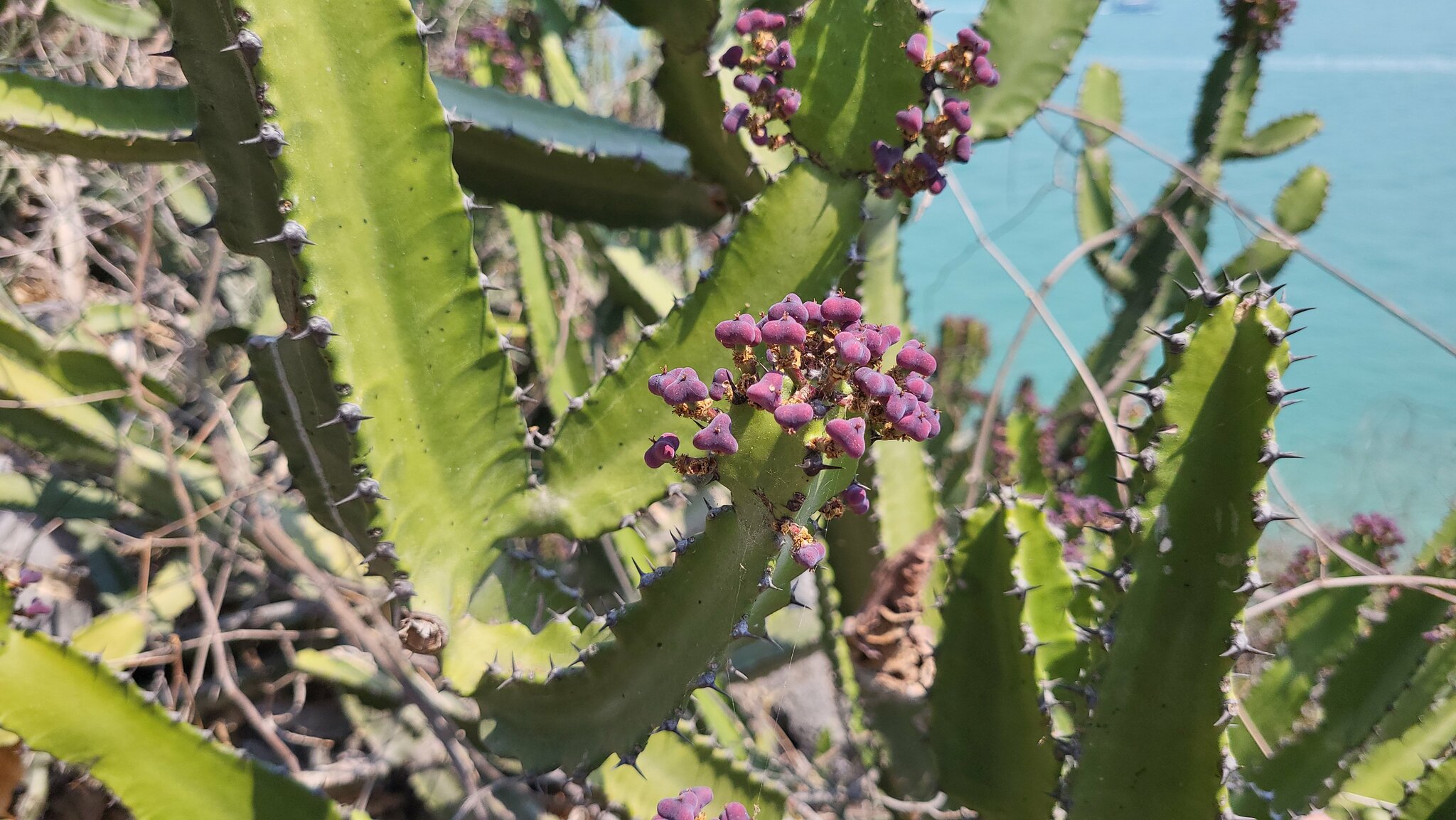
Euphorbia antiquorum is a succulent tree species within the large Euphorbia genus, first described by Linnaeus in 1753. It belongs to the spurge family, Euphorbiaceae, and is grown primarily in wet tropical settings.
Source: Kew
From Pakistan to Java
This species is native to a broad swath of South and Southeast Asia, including Pakistan, India, Bangladesh, Sri Lanka, Myanmar, Thailand, Cambodia, Vietnam, and the island of Java. It has also been introduced into other regions such as South-Central and Southeast China, Hainan, the Andaman Islands, the Leeward Islands, and Sumatra.
Source: Kew
Sun, Drainage, Restraint
Across the Euphorbia genus generally, most species want a sunny position and soil that never sits wet, with free-draining, gritty mixes favoured for the silvery and blue-leaved kinds. Watering matters most while a plant is establishing, kept just damp rather than soaked; afterward, feeding is best kept minimal, since rich soil or overfeeding tends to make euphorbias lush and leggy rather than sturdy. A layer of mulch, organic matter for typical beds or gravel for Mediterranean-style plantings, helps hold moisture steady and keep weeds down.
Source: RHS
Division, Cuttings, or Seed
Clump-forming, herbaceous euphorbias are propagated by division, timed either just after flowering for early bloomers or in spring as growth resumes for later bloomers. Shrubby types are propagated from softwood cuttings taken from short shoots at the base in early spring. Seed can also be collected once capsules turn brown, though cultivars won't come true from seed and seedlings may vary in habit and colour.
Source: RHS
Aphids and Mildew
Euphorbias are generally trouble-free plants, but aphids can show up and cause distortion in leaves and stems. Powdery mildews may appear on leaves and flowers, and rust diseases turn up occasionally as well.
Source: RHS
Wet Soil and Sap Caution
Root rot is the main risk when euphorbias are grown in soils that stay wet. Some rhizomatous species can spread widely and become invasive if not kept in check by digging out the excess each spring. Every part of the plant, and especially the sap, can irritate skin and eyes or cause discomfort if ingested, so gloves are worth wearing when handling or pruning.
Source: RHS
Care recipe
The species record — the baseline every cultivar inherits unless it says otherwise.
Care notes are early — not yet verified
- Light
- ai:claude-opus-4-8
- Water
- ai:claude-opus-4-8 (range 14-28d)
- Humidity
- ai:claude-opus-4-8
- Soil
- ai:claude-fable-5
- Care
- ai:claude-fable-5
Direct sun
≈ every 28 days
Low — average room
13–32 °C
Gritty, sharply draining cactus mix
Callused stem cuttings
Weak cactus feed monthly in summer only
Slow
Rarely flowers indoors
Toxic to cats & dogs & humans
Euphorbiaceae produce an irritant milky latex that can harm skin, eyes, and mucous membranes if ingested. This is where toxicity lives: every cultivar of this species inherits it and none can override it.
Reference images
Every image credited. Licenses link to their deeds.
PrimarySources: ai:claude-opus-4-8 · ai:claude-opus-4-8 (range 14-28d) · ai:claude-fable-5 · ai:claude-opus-4-8 (family inference)
Kept true by its growers
Every fact here carries its source. Grow Triangular Spurge yourself? What you’ve observed — how it drinks, how it holds its color, a name that’s off — and a clear photo of your plant are exactly what keep this page honest. Contributions are reviewed before anything changes.
Sign in to add what you know →