Species · genus Episcia · Gesneriaceae
Flame Violet
Episcia cupreata (Hook.fil.) Hanst.
Cultivars of E. cupreata
The named forms growers keep — each with its own page, each honest about how much we know.
No named cultivars catalogued under E. cupreata yet. When growers document a stable, named form, it earns its own page here.
Guide
The species-level account. Cultivar pages build on this and say where they differ.
A Small Trailing Gesneriad
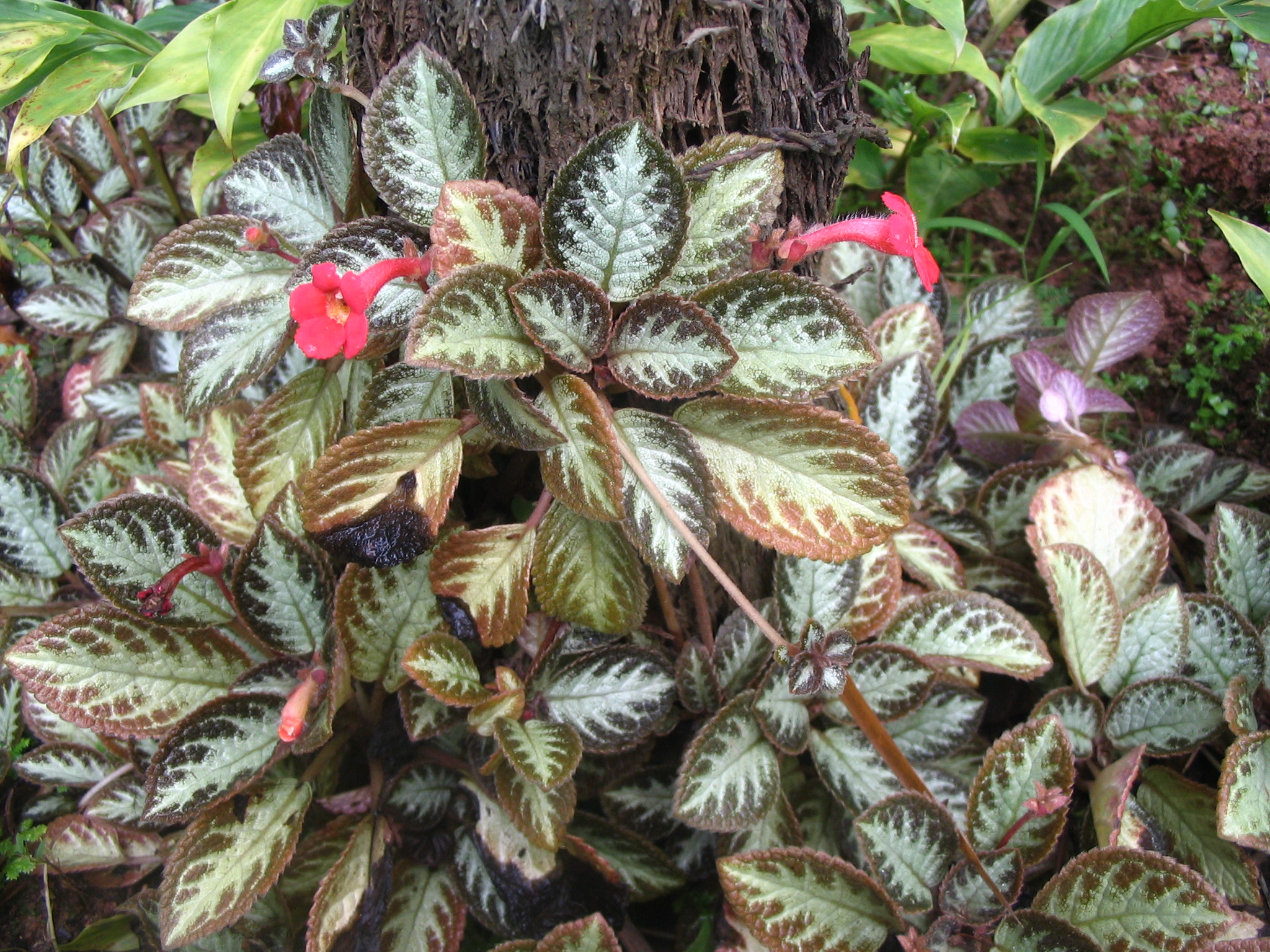
Flame violet, botanically Episcia cupreata, is a small houseplant grown as much for its foliage as its flowers. It belongs to the African violet family, but rather than sitting upright like its cousin, it spreads and trails, sending its little trumpet-shaped blooms out among silver- or bronze-marked leaves.
Source: Costa Farms
A Gesneriad Relative
Episcia belongs to the genus of trailing, flowering perennials native to Central and South America, Brazil, and the West Indies, where they are grown chiefly for velvety, textured, colourful foliage rather than for showy flowers alone. Its closest relatives in cultivation, Alsobia and Codonanthe, share the same growing habits and origins.
Source: RHS
Warmth, Moisture, Filtered Light
Flame violet asks for medium to bright light shielded from direct sun, especially in the afternoon, and it will happily grow under fluorescent shop lights run twelve to fourteen hours a day if that's what's available. Keep the potting mix lightly moist but never soggy, watering with room-temperature water since cold splashes can leave yellow spots on the leaves. It appreciates average to high humidity, which can be supplied by a terrarium, a bathroom, grouping with other plants, or a pebble tray, and it responds well to regular feeding with a general houseplant fertilizer, whether time-release a few times a year or water-soluble mixed in as you irrigate.
Source: Costa Farms
Cuttings, Division, Runners
Flame violet can be propagated by stem cuttings, by division, or simply by removing its rooted runners.
Source: RHS
Colour Beneath the Bloom
The foliage carries green, brown, and red tones threaded with silvery-green veining, a texture that stays interesting whether or not the plant is in flower. Funnel-shaped, bright red flowers with a yellow eye appear intermittently from spring into autumn on creeping stems that keep the whole plant low, spreading, and bushy.
Source: RHS
Common Sap Feeders
Flame violet may draw aphids, glasshouse leafhoppers, mealybugs, thrips, vine weevil, and tarsonemid mite.
Source: RHS
Overwatering and Sunburn
Too much direct light can leave the leaves pale or bleached with brown, dry edges, a sign to move the plant into gentler conditions. On the other end, potting mix that stays wet too long invites root and stem rot, and the RHS notes the plant can also be prone to basal rot and grey mould when overwatered.
Source: Costa Farms
Little Pruning Needed
Flame violet asks for no routine pruning, though it can be pinched back if it outgrows its space, and a light trim after flowering tends to bring on the next round of blooms sooner.
Source: Costa Farms
Care recipe
The species record — the baseline every cultivar inherits unless it says otherwise.
Care notes are early — not yet verified
- Light
- ai:claude-opus-4-8
- Water
- ai:claude-opus-4-8 (range 5-9d)
- Humidity
- ai:claude-opus-4-8
- Soil
- ai:claude-fable-5
- Care
- ai:claude-fable-5
Bright, indirect
≈ every 9 days
High
16–27 °C
Light, humus-rich, well-draining mix
Stolon plantlets or stem cuttings
Dilute balanced feed every 2 weeks in growth
Moderate
Small scarlet flowers amid coppery foliage in warmth
Not yet documented
This is where toxicity lives — every cultivar of this species inherits it and none can override it.
Reference images
Every image credited. Licenses link to their deeds.
PrimarySources: ai:claude-opus-4-8 · ai:claude-opus-4-8 (range 5-9d) · ai:claude-fable-5
Kept true by its growers
Every fact here carries its source. Grow Flame Violet yourself? What you’ve observed — how it drinks, how it holds its color, a name that’s off — and a clear photo of your plant are exactly what keep this page honest. Contributions are reviewed before anything changes.
Sign in to add what you know →