Species · genus Epipremnum · Araceae
Centipede Tongavine
Epipremnum pinnatum (L.) Engl.
Also known as: Tongavine · Pothos · Variegated-philodendron · Dragon-tail · Dragon-tail Plant
Cultivars of E. pinnatum
The named forms growers keep — each with its own page, each honest about how much we know.
No named cultivars catalogued under E. pinnatum yet. When growers document a stable, named form, it earns its own page here.
Guide
The species-level account. Cultivar pages build on this and say where they differ.
Devil's Ivy, Briefly
Epipremnum, commonly called devil's ivy or money plant, is an easy-going evergreen climber grown for its glossy, heart-shaped leaves and long trailing or climbing stems. It suits beginners well, tolerating a wide range of indoor conditions while still bringing a lush, tropical presence to a room.
Source: RHS
From Tropical Forests
This climber comes from tropical forests across South-East Asia and Australia, where it scrambles up trees toward the light using fleshy aerial roots that grip the bark. That climbing habit, born in the wild, is exactly what it falls back on when trained up a moss or coir pole indoors.
Source: RHS
Light, Water, Feed
Give it bright but indirect light, such as an east- or west-facing window, or a shaded spot in a south-facing one, since full sun scorches the leaves and deep shade dulls variegation. Keep it warm, between about 18 and 30°C, away from cold draughts and radiators, and water only once the compost is nearing dryness, ideally with rainwater or filtered water rather than hard tap water. High humidity is not a requirement here, which sets it apart from many tropical houseplants. Feed monthly with a general houseplant fertiliser from April to October.
Source: RHS
Rooting From Stems
Epipremnum roots readily from its leaf joints, making propagation straightforward. Take stem cuttings, trimming just below a leaf joint, and stand them in a glass of water in a bright spot until roots form before potting up, or simply pin a trailing stem into a pot of free-draining compost and let it layer in place.
Source: RHS
Leaves, Habit, Variegation
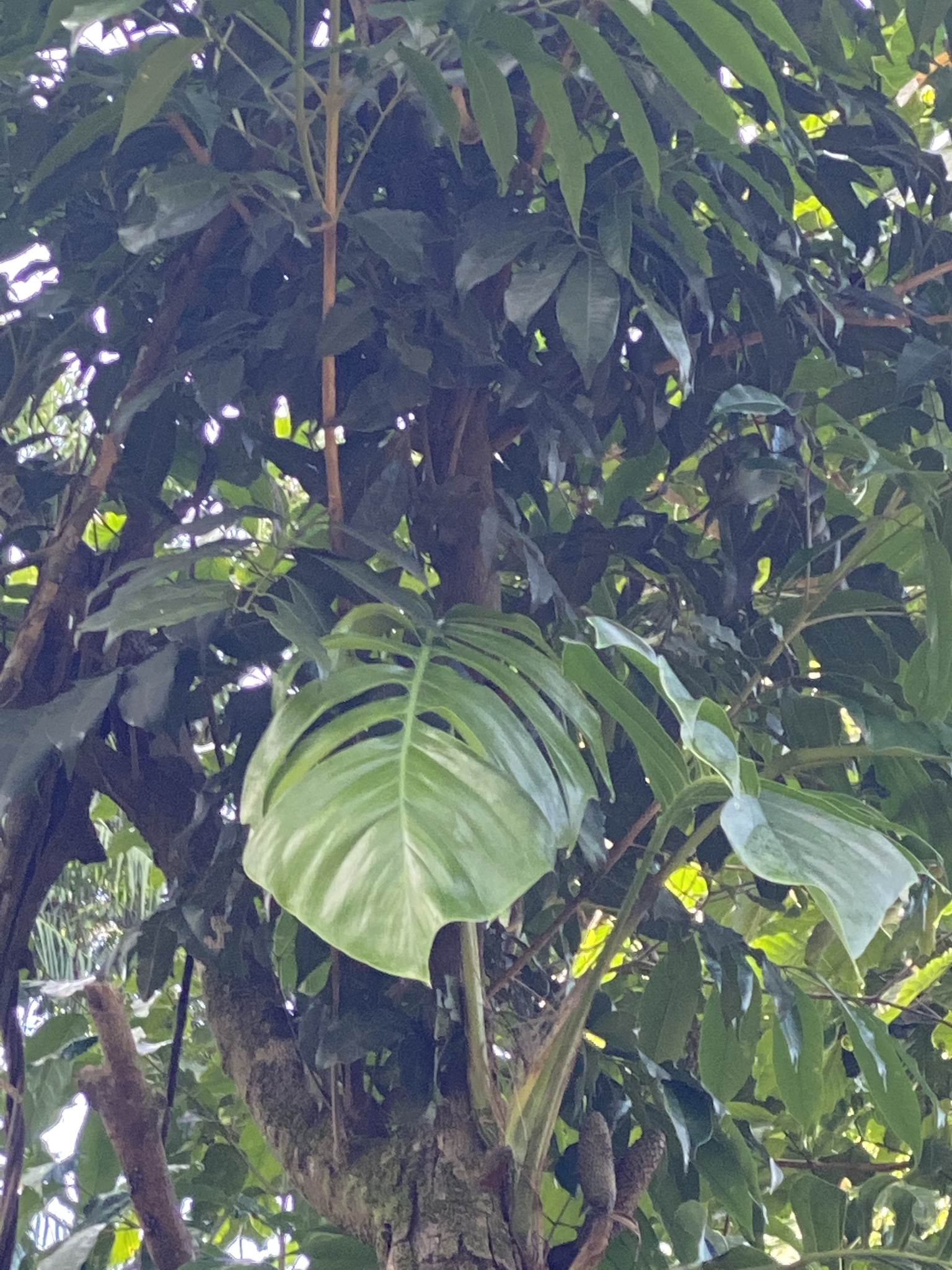
The leaves are evergreen and heart-shaped, often speckled with white or yellow, and the stems either trail attractively or climb given support. Left to mature under ideal conditions, the foliage can grow much larger and become deeply lobed, reaching up to 90cm long. Poor light tends to mute or lose variegation and slow growth generally.
Source: RHS
Watch For Mealybugs
This plant may be troubled by mealybugs, scale insects, and glasshouse red spider mite, though it is otherwise generally free of disease.
Source: RHS
Overwatering Is the Risk
Epipremnum is largely trouble-free, and most problems trace back to overwatering, since sitting in wet compost puts the roots at risk of rot. Waiting until the top layer of compost has dried before watering again is the simplest safeguard.
Source: RHS
Pruning and Repotting
Trim stems back to just above a leaf if they grow too long or straggly; this encourages bushier growth from the leaf joints, and the cut ends can be used as cuttings. Repot in spring once roots crowd the pot or emerge from the drainage holes, moving up only one pot size every two or three years, since a much larger pot keeps compost wet for too long and risks root rot. Tip pruning in spring also promotes branching.
Source: RHS
Care recipe
The species record — the baseline every cultivar inherits unless it says otherwise.
Care notes are early — not yet verified
- Light
- ai:claude-opus-4-8
- Water
- ai:claude-opus-4-8 (range 7-14d)
- Humidity
- ai:claude-opus-4-8
- Soil
- ai:claude-fable-5
- Care
- ai:claude-fable-5
Bright, indirect
≈ every 14 days
Medium
16–30 °C
Chunky, well-draining aroid mix
Stem cuttings rooted in water or mix
Balanced liquid feed monthly in the growing season
Fast
Rarely flowers indoors
Toxic to cats & dogs & humans
Araceae contain insoluble calcium oxalate crystals, which irritate the mouth and digestive tract if chewed. This is where toxicity lives: every cultivar of this species inherits it and none can override it.
Reference images
Every image credited. Licenses link to their deeds.
PrimarySources: ai:claude-opus-4-8 · ai:claude-opus-4-8 (range 7-14d) · ai:claude-fable-5 · ai:claude-opus-4-8 (family inference)
Kept true by its growers
Every fact here carries its source. Grow Centipede Tongavine yourself? What you’ve observed — how it drinks, how it holds its color, a name that’s off — and a clear photo of your plant are exactly what keep this page honest. Contributions are reviewed before anything changes.
Sign in to add what you know →