Species · genus Epipremnum · Araceae
Golden Pothos
Epipremnum aureum (Linden & André) G.S.Bunting
Also known as: Devil's Ivy · Golden Hunter's-robe · Ivy Arum · Silver Vine · Taro Vine
Cultivars of E. aureum
The named forms growers keep — each with its own page, each honest about how much we know.
No named cultivars catalogued under E. aureum yet. When growers document a stable, named form, it earns its own page here.
Guide
The species-level account. Cultivar pages build on this and say where they differ.
An easy-going trailer
Epipremnum, commonly called devil's ivy or pothos, is a lush, leafy houseplant with long trailing or climbing stems. It is widely regarded as an easy, forgiving plant, well suited to beginners and to most rooms in a home.
Source: RHS
From tropical canopies
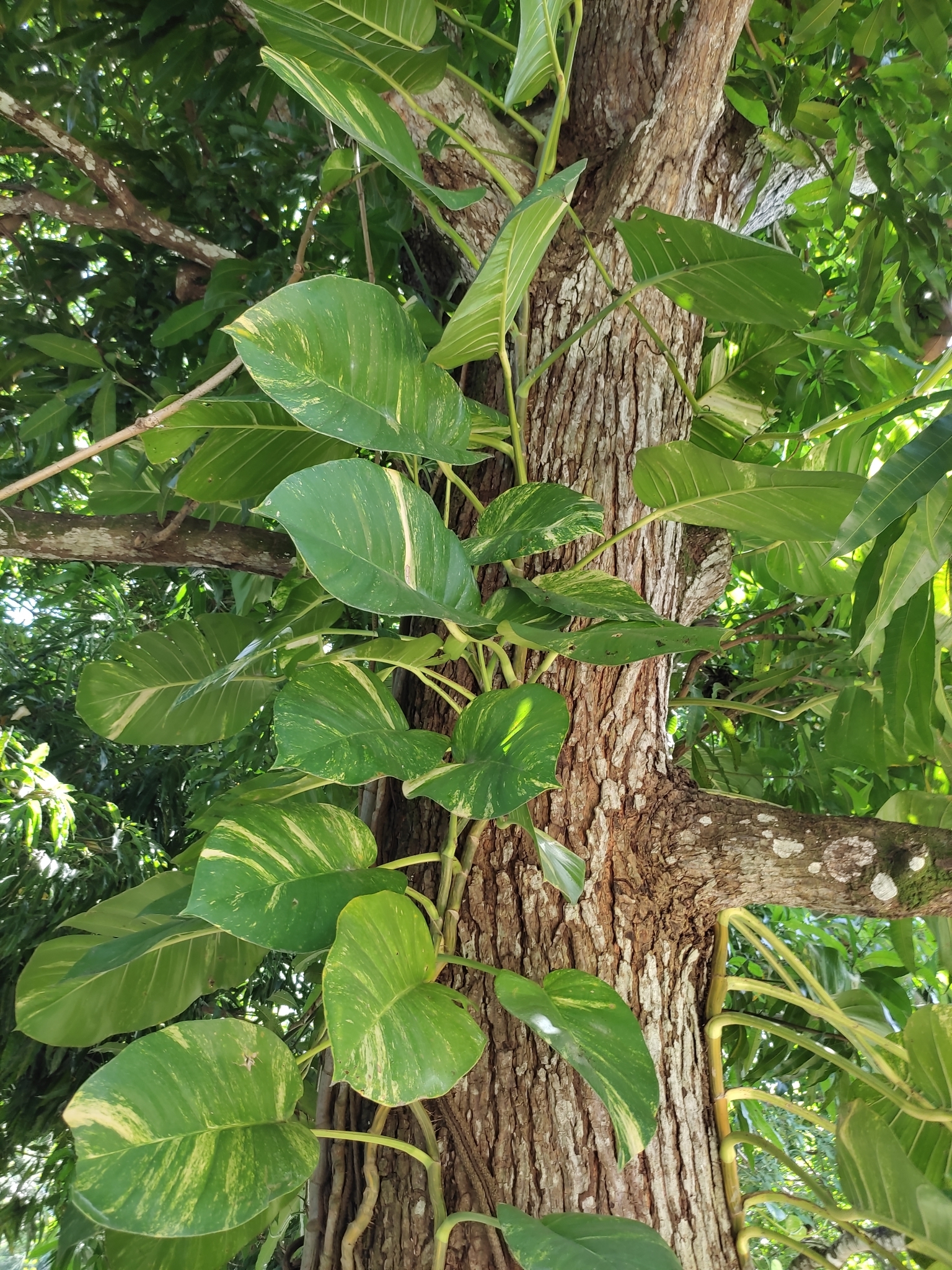
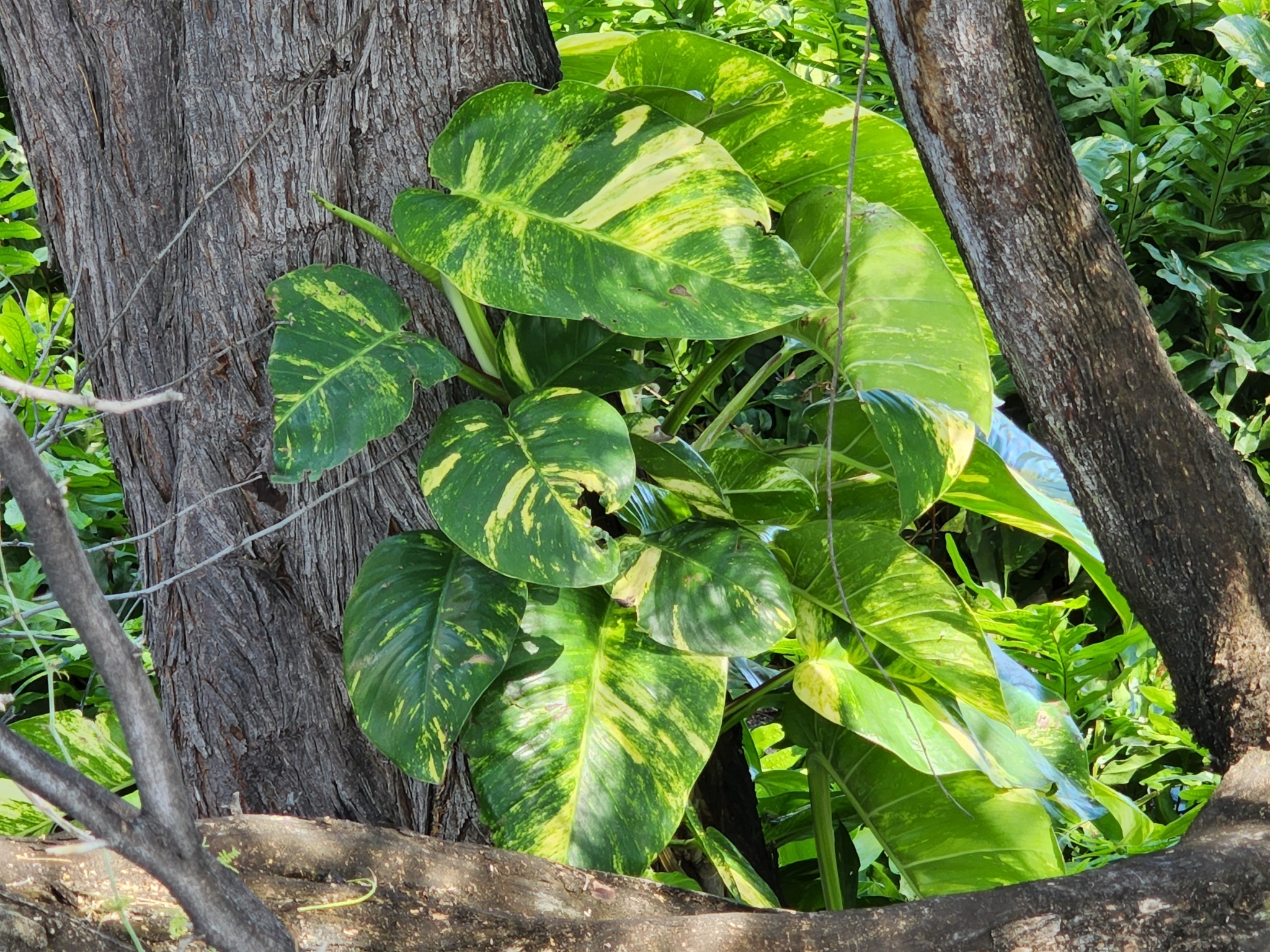
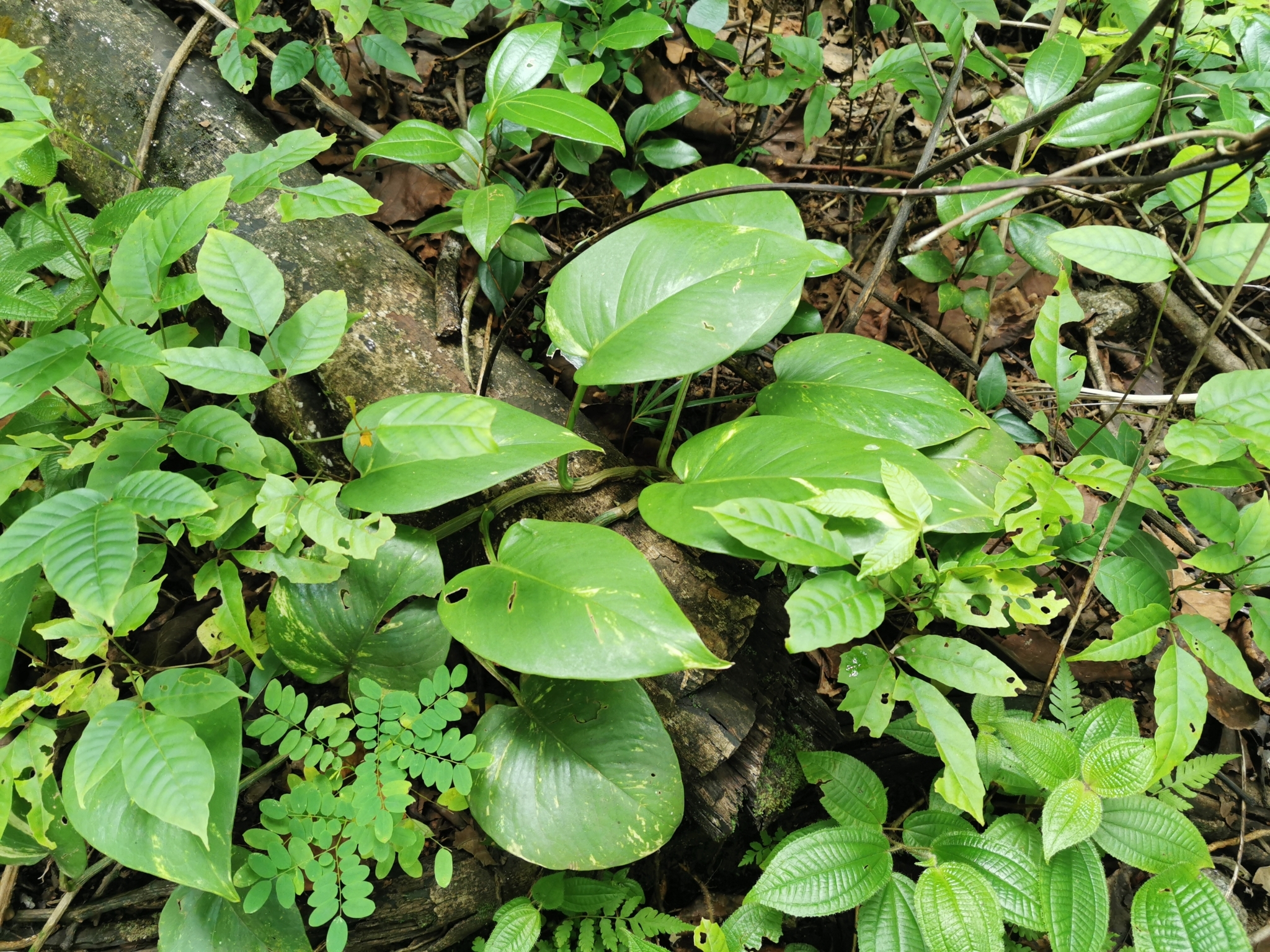
These climbing evergreens come from tropical forests of South-East Asia and Australia, where they scramble up trees to reach more light. They grip the bark using fleshy aerial roots, a habit that carries through to how they climb a support indoors.
Source: RHS
A forgiving rhythm
Give epipremnum bright but indirect light, keeping it out of full sun and deep shade, and a warm spot away from cold draughts, roughly 18–30°C. Water only once the compost is nearing dryness, using rainwater or filtered water where possible, and feed monthly with a general houseplant fertiliser through the growing season from April to October. Unlike many tropical houseplants, it does not demand high humidity, which is part of what makes it so adaptable.
Source: RHS
Rooting from the stem
Epipremnum propagates readily, since its stems produce roots from the leaf joints. Cut a section of stem just below a joint and stand it in a glass of water in a bright spot until roots form, then pot it up. It can also be layered by pinning a trailing stem into a pot of free-draining compost, where roots will sprout from the joint.
Source: RHS
Foliage, form, and fenestration
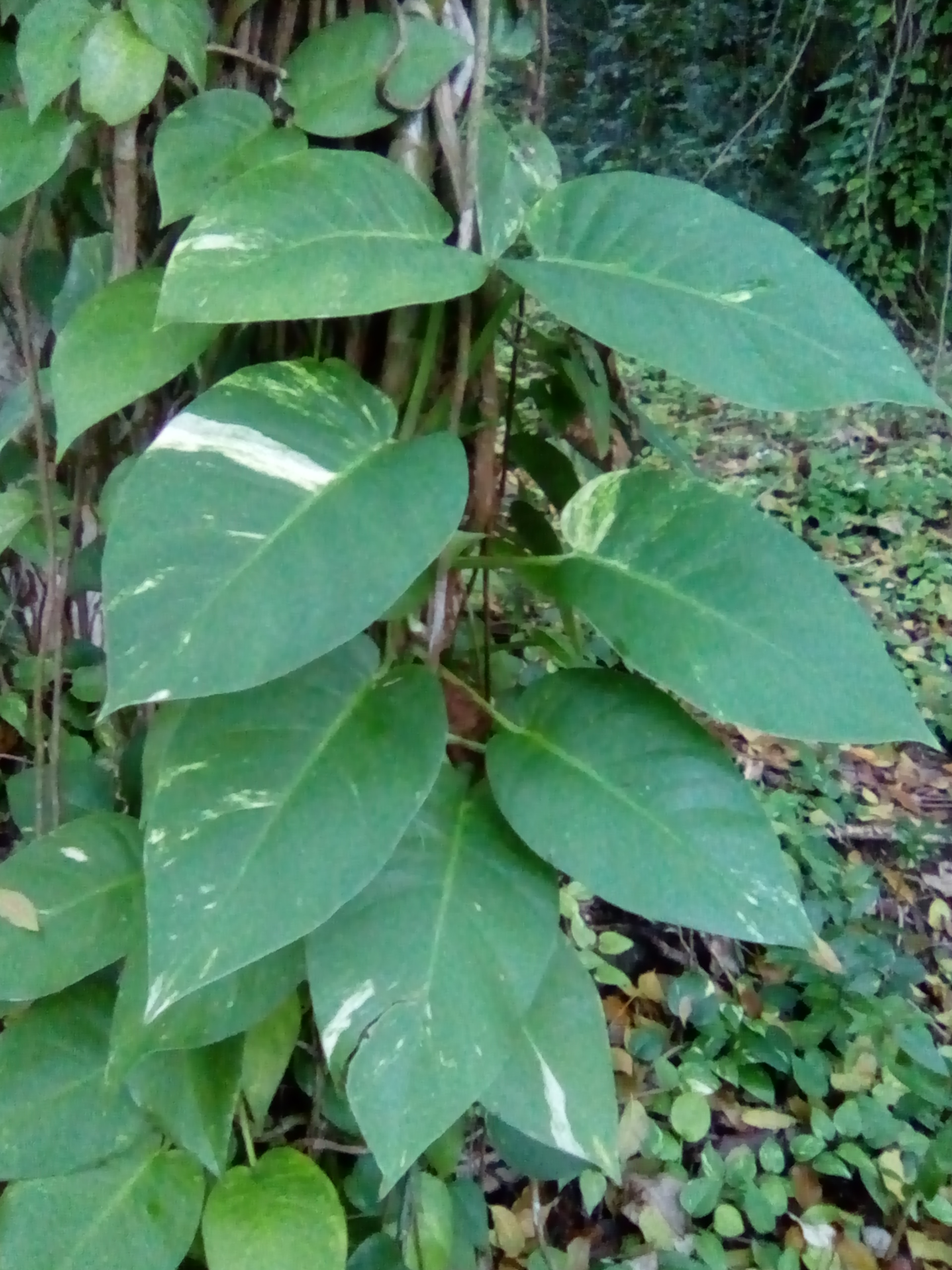
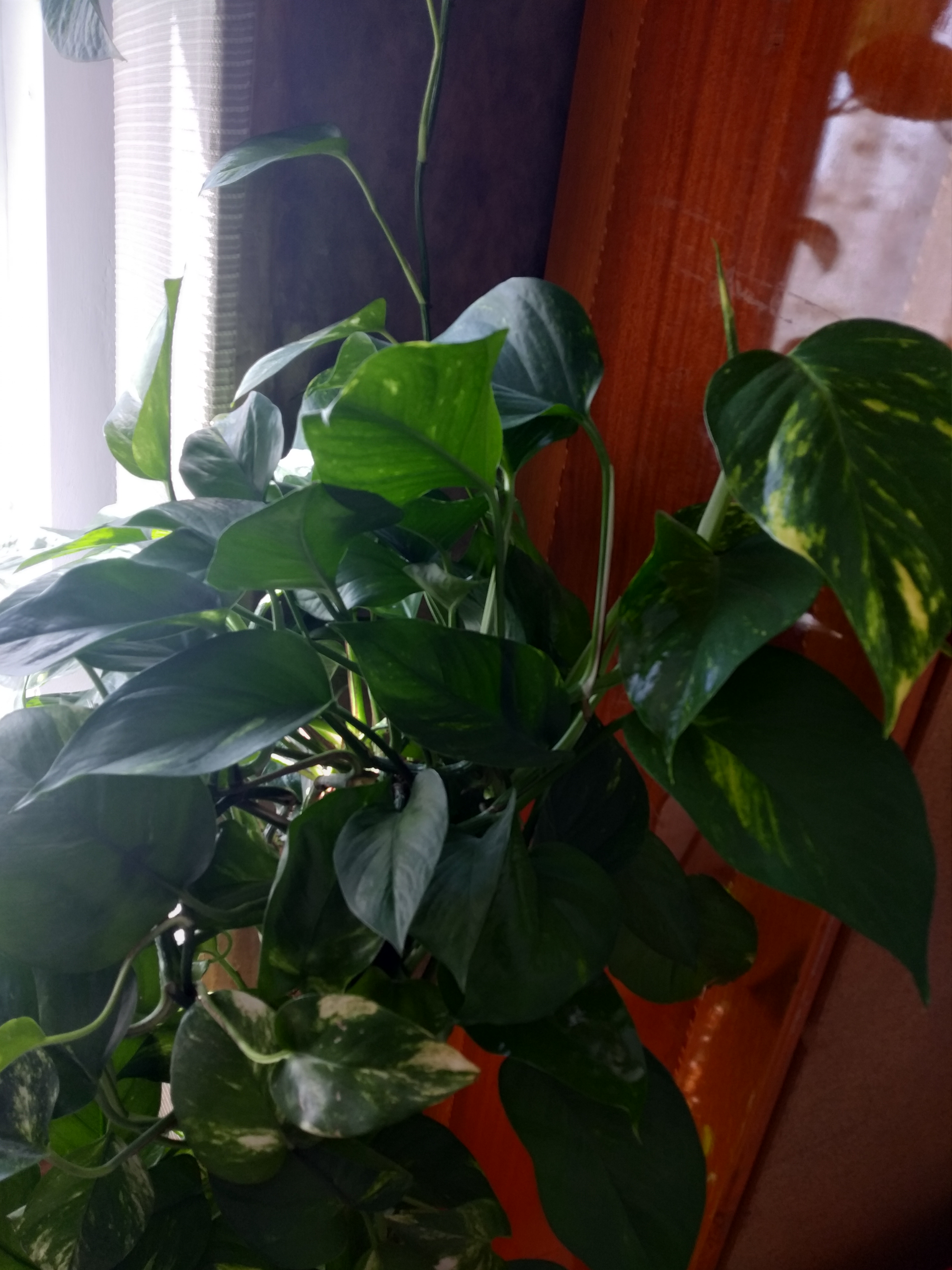
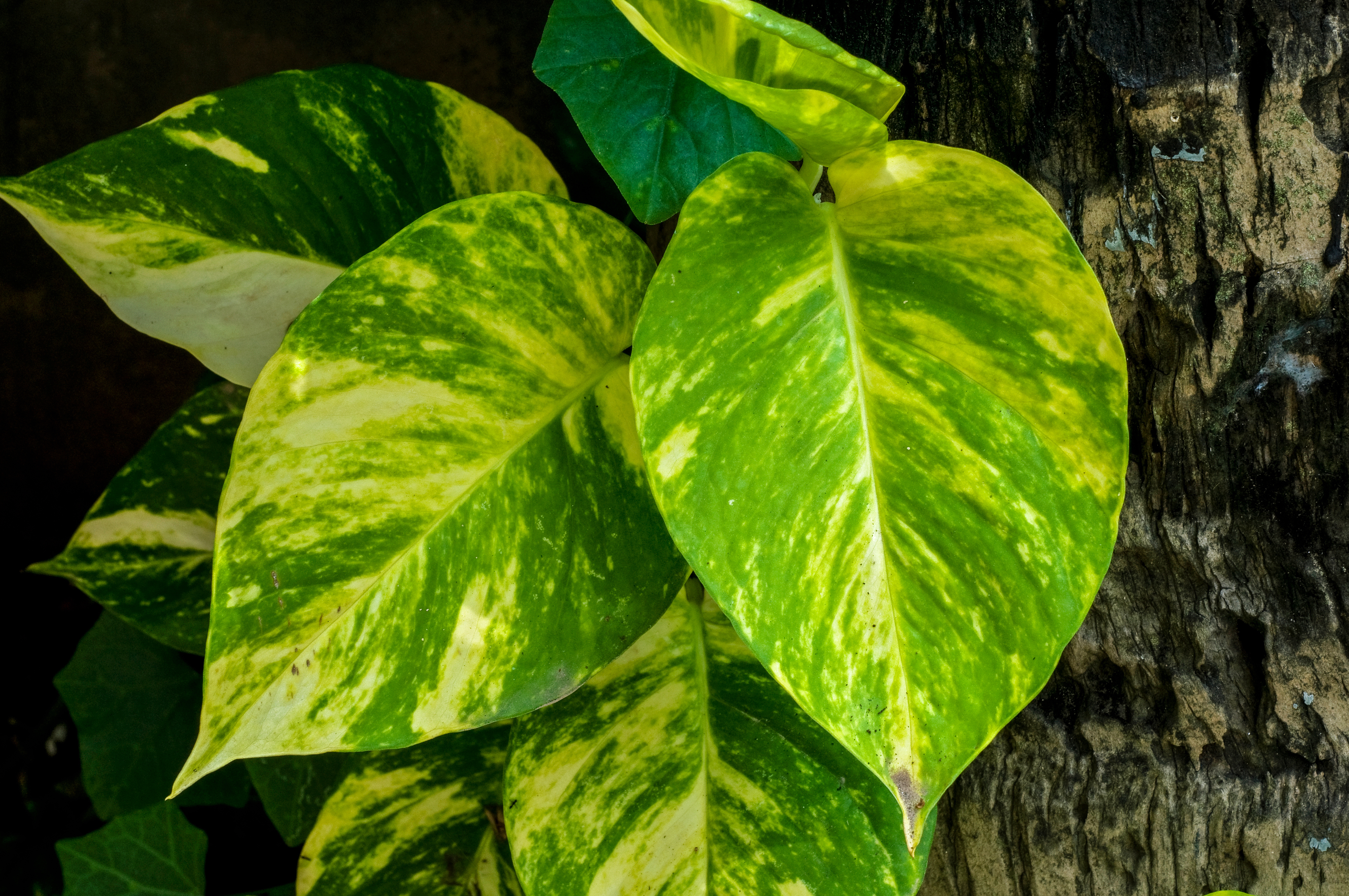
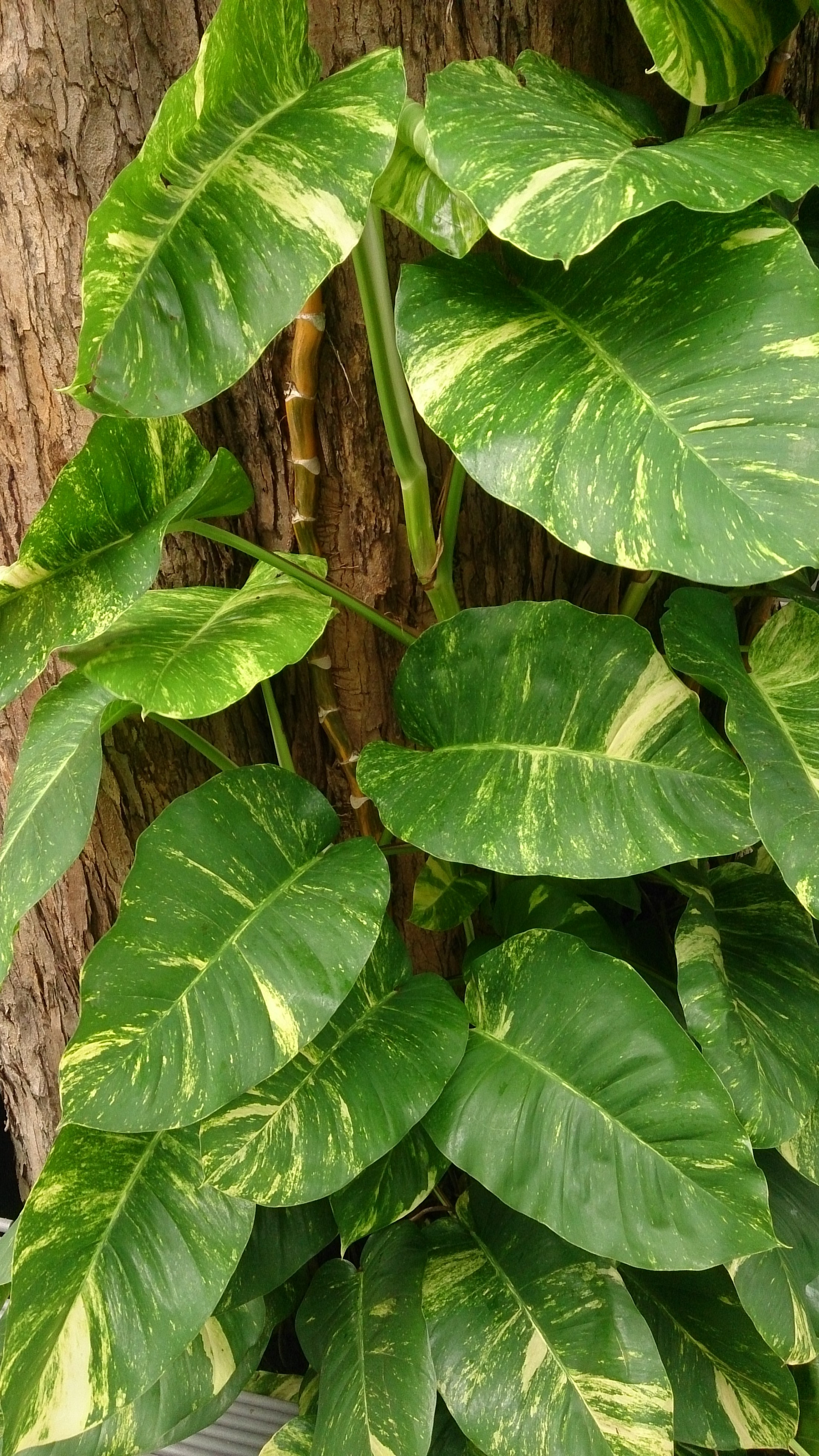
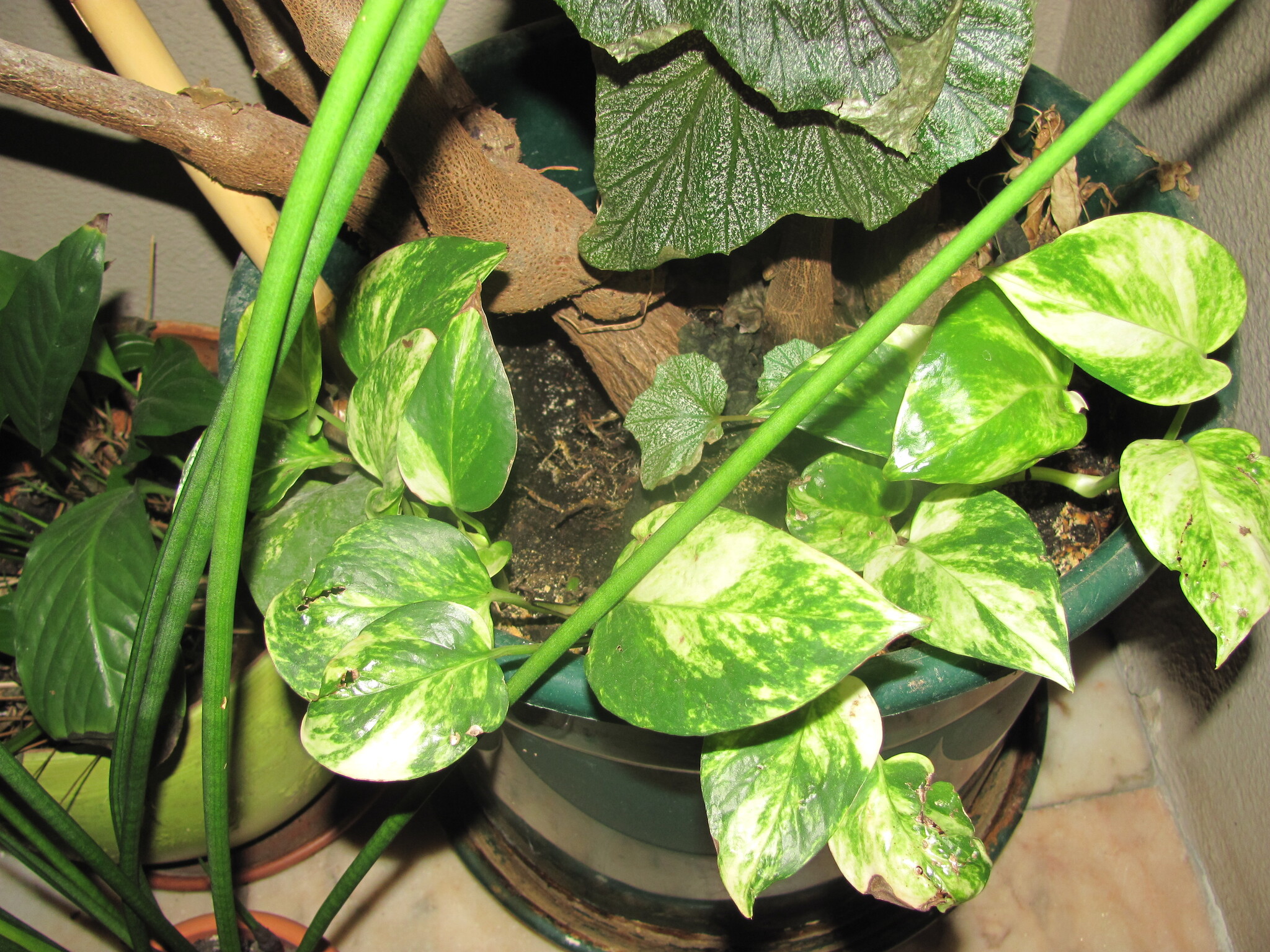
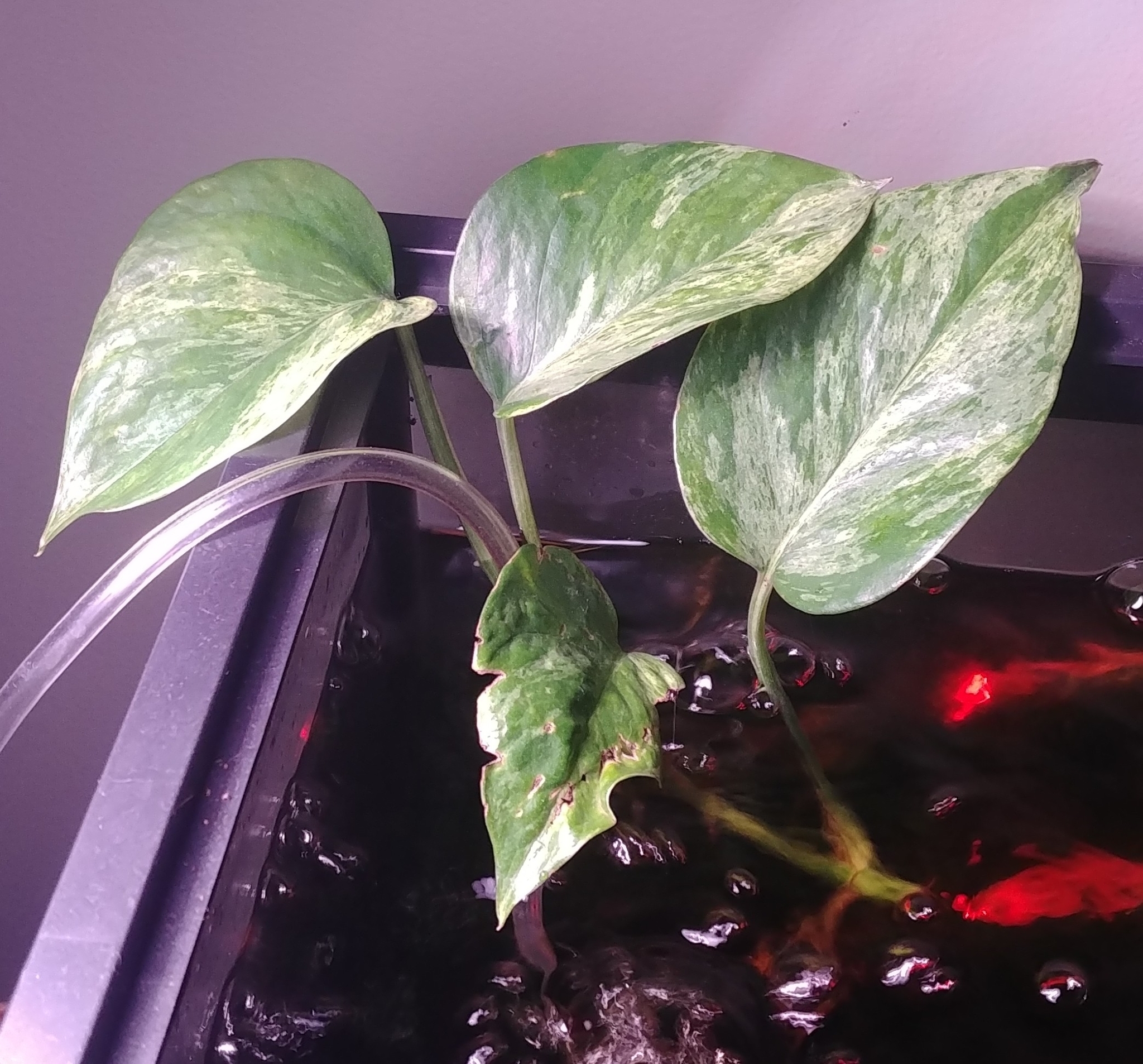
The classic form, golden pothos, has dark green leaves splashed and marbled with yellow, cream, or white, and it grows quickly. Newer selections vary the pattern considerably, from the green-on-green look of Global Green to the silvery cast of Cebu Blue. Leaves start small on young plants and enlarge with maturity, and a few varieties, including Baltic Blue and Cebu Blue, develop dramatic fenestrations that give them a monstera-like look.
Source: Costa Farms
Watering is the risk
Epipremnum is generally trouble-free, but overwatering is the main hazard, since roots that sit wet are prone to rot. Underwatered plants show dry, brittle, or crispy leaves and noticeable wilting, while overwatered ones tend toward yellowing or drooping leaves and, in bad cases, a foul smell from the base. Both issues are usually resolved by adjusting the watering rhythm and confirming the soil drains freely.
Source: Epic Gardening
Pruning and repotting
Trim overly long stems back to just above a leaf to keep growth bushy, and avoid removing more than about a third of the leaves at once, since heavy pruning stresses the plant. Repotting is best done once roots start filling the container, moving up just one pot size at a time, as an oversized pot holds excess moisture and can cause roots to rot.
Source: Costa Farms
Care recipe
The species record — the baseline every cultivar inherits unless it says otherwise.
Care notes are early — not yet verified
- Light
- Horta curated (seed)
- Water
- ai:claude-opus-4-8 (range 7-14d)
- Humidity
- ai:claude-opus-4-8
- Soil
- ai:claude-fable-5
- Care
- ai:claude-fable-5
Bright, indirect
≈ every 14 days
Medium
15–29 °C
Any well-draining potting mix — famously unfussy
Stem cuttings root readily in water
Balanced liquid feed monthly in the growing season
Fast
Almost never flowers in cultivation
Toxic to cats & dogs
Insoluble calcium oxalates — oral irritation, drooling, vomiting. This is where toxicity lives: every cultivar of this species inherits it and none can override it.
Reference images
Every image credited. Licenses link to their deeds.
Primary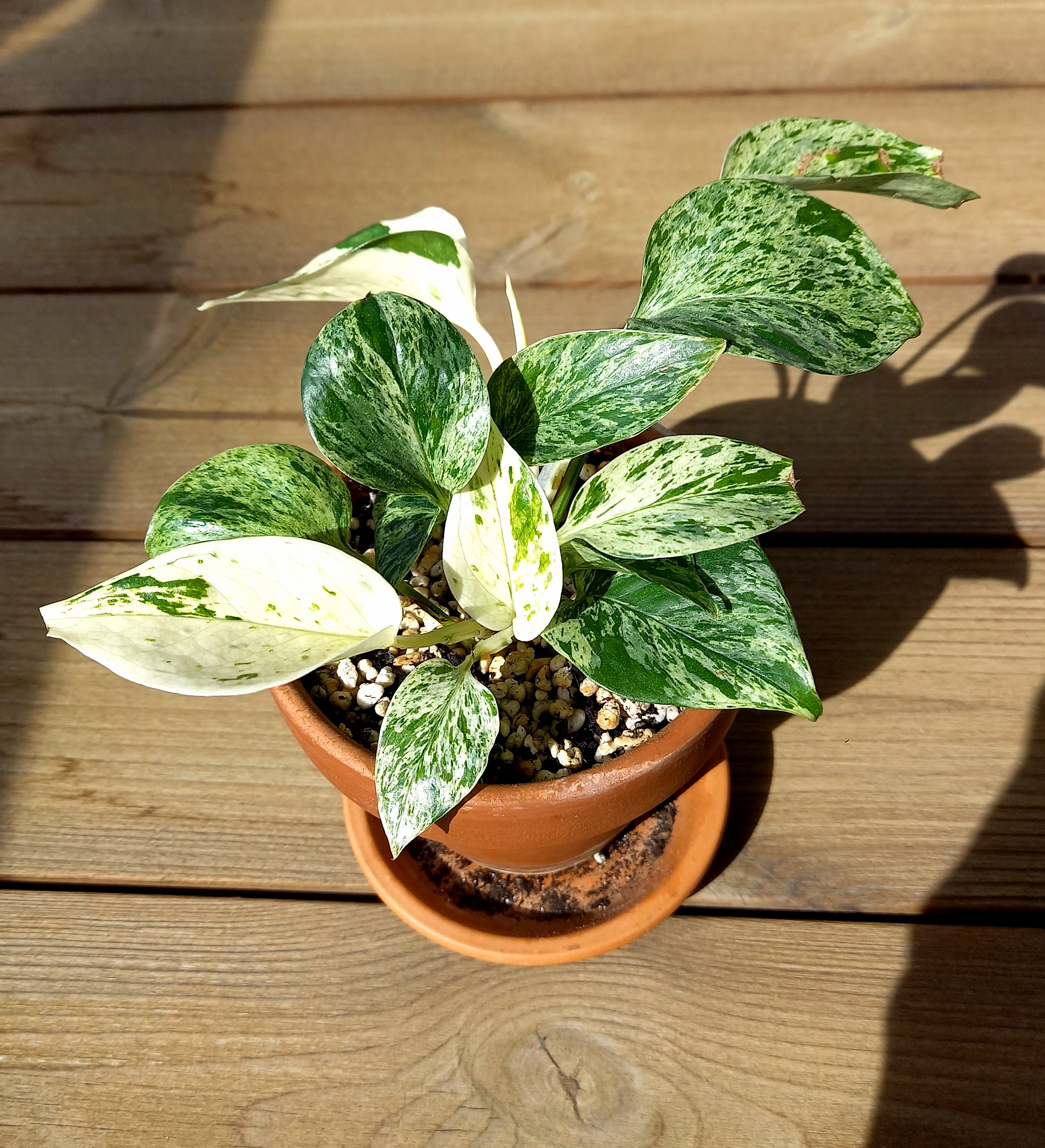



Sources: Horta curated (seed) · ai:claude-opus-4-8 (range 7-14d) · ai:claude-opus-4-8 · ai:claude-fable-5 · ASPCA
Kept true by its growers
Every fact here carries its source. Grow Golden Pothos yourself? What you’ve observed — how it drinks, how it holds its color, a name that’s off — and a clear photo of your plant are exactly what keep this page honest. Contributions are reviewed before anything changes.
Sign in to add what you know →