Species · genus Epiphyllum · Cactaceae
Climbing Cactus
Epiphyllum phyllanthus (L.) Haw.
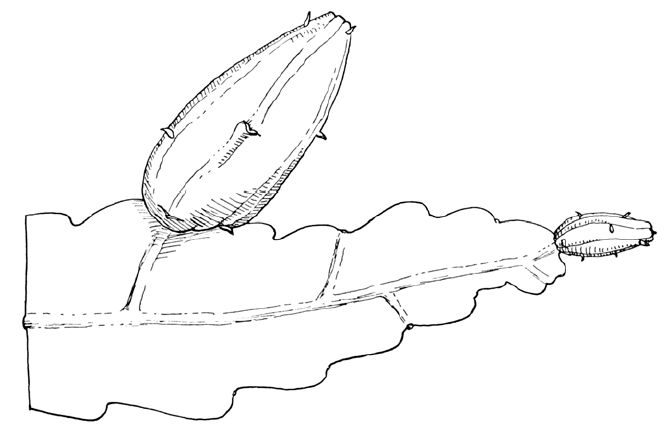
Cultivars of E. phyllanthus
The named forms growers keep — each with its own page, each honest about how much we know.
No named cultivars catalogued under E. phyllanthus yet. When growers document a stable, named form, it earns its own page here.
Guide
The species-level account. Cultivar pages build on this and say where they differ.
A wide-ranging epiphytic cactus
Epiphyllum phyllanthus is a succulent epiphyte in the cactus family, native across a broad swath of the Americas from Central Mexico down to northeastern Argentina. It grows perched on other plants rather than rooted in soil, favouring a seasonally dry tropical setting.
Source: Kew
From Mexico to Argentina
This species' native range stretches from Central Mexico through Colombia, the Amazon, and the Andes, all the way to the Guyanas and northeastern Argentina, with populations recorded at elevations up to about 1700 metres in Colombia. It is found across varied habitats there, including forest and woodland, savanna, shrubland, native grassland, and wetlands. A related species, Epiphyllum hookeri, occupies a somewhat more northern range, from north-central Mexico through Central America to Trinidad and northern Venezuela, and grows in a wetter tropical biome.
Source: Kew
Epiphyte habit and habitat
Its habit is that of a herbaceous epiphyte, a cactus that clings to other plants rather than growing terrestrially. In the wild it is recorded across a wide elevational band, from sea level up to roughly 1700 metres, spanning forest, savanna, shrubland, and even wetland margins.
Source: Kew
Care recipe
The species record — the baseline every cultivar inherits unless it says otherwise.
Care notes are early — not yet verified
- Light
- ai:claude-opus-4-8
- Water
- ai:claude-opus-4-8 (range 7-14d)
- Humidity
- ai:claude-opus-4-8
- Soil
- ai:claude-fable-5
- Care
- ai:claude-fable-5
Bright, indirect
≈ every 14 days
Medium
13–29 °C
Airy, fast-draining epiphyte mix
Stem segment cuttings, callused then rooted
Dilute cactus feed monthly while growing
Moderate
Slender night-opening white flowers along stem margins
Not yet documented
This is where toxicity lives — every cultivar of this species inherits it and none can override it.
Reference images
Every image credited. Licenses link to their deeds.
Sources: ai:claude-opus-4-8 · ai:claude-opus-4-8 (range 7-14d) · ai:claude-fable-5
Kept true by its growers
Every fact here carries its source. Grow Climbing Cactus yourself? What you’ve observed — how it drinks, how it holds its color, a name that’s off — and a clear photo of your plant are exactly what keep this page honest. Contributions are reviewed before anything changes.
Sign in to add what you know →