Species · genus Epiphyllum · Cactaceae
Dutchman's Pipe Cactus
Epiphyllum oxypetalum (DC.) Haw.
Also known as: Moonflower Cactus · Night-blooming Cereus · Queen Of The Night
Cultivars of E. oxypetalum
The named forms growers keep — each with its own page, each honest about how much we know.
No named cultivars catalogued under E. oxypetalum yet. When growers document a stable, named form, it earns its own page here.
Guide
The species-level account. Cultivar pages build on this and say where they differ.
Queen of the Night
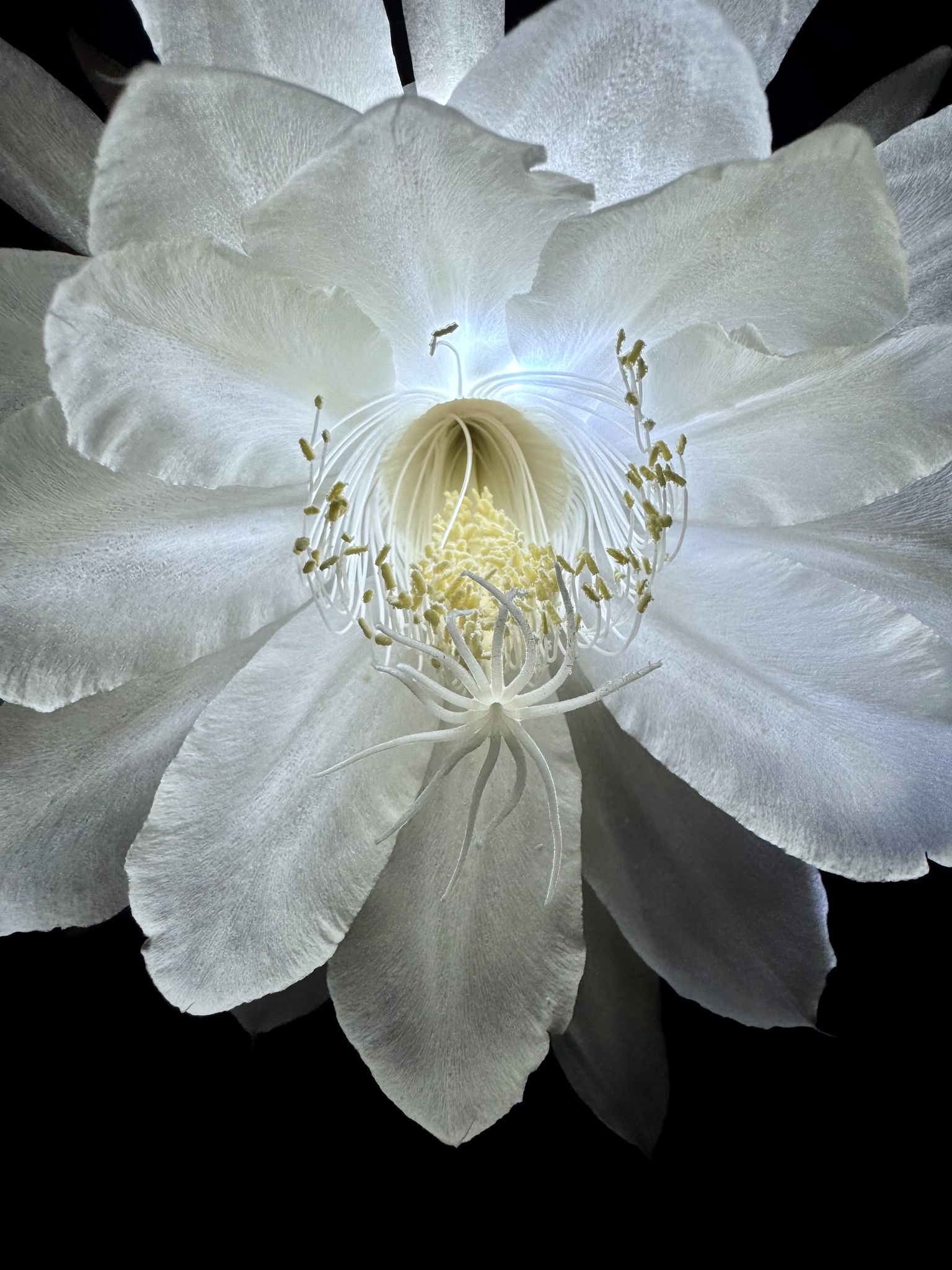
Epiphyllum oxypetalum, known as queen of the night, is an erect, branching epiphytic cactus that grows flat, leaf-like, spineless stems in place of true leaves. It is best known for huge, waterlily-like flowers, richly fragrant, that open only after dusk and close again by morning.
Source: RHS
A Central American Epiphyte
This species is native to a swathe of Central Mexico down through Belize, Guatemala, Honduras, El Salvador and Nicaragua, growing as a succulent epiphyte in seasonally dry tropical forest. It has since been carried well beyond that range, becoming naturalised in parts of Brazil, the Caribbean, China and various Pacific islands.
Source: Kew
Warmth, Filtered Light, a Winter Rest
Grow this cactus in an epiphytic cactus compost, in bright but filtered or indirect light, and keep humidity moderate, standing the pot on damp gravel rather than letting the compost itself sit wet. During active growth water freely and feed with a high-potash fertiliser three or four times, then after flowering ease off and keep the compost just moist for about six weeks to give the plant its rest. Position it out of strong midday sun and away from cold draughts or heat sources, since it prefers a sheltered spot with partial shade.
Source: RHS
By Cutting or Seed
New plants are most readily raised from stem cuttings taken in early summer, while seed can also be sown, kept at around 21°C in spring.
Source: RHS
Nocturnal, Waterlily Blooms
The plant is an epiphyte in habit, clinging to bark and branches rather than rooting in soil, and it draws its moisture and nutrients from the humid air and leaf litter around it rather than from any host. Its cylindrical stems bear flattened, scalloped, leaf-like branches to around 40cm long, and in late spring and early summer these carry enormous flowers, to 25cm across, that open at dusk and fade by morning.
Source: RHS
Watch for Mealybugs
This plant may be susceptible to mealybugs, so it is worth checking the stems periodically for their tell-tale waxy clusters.
Source: RHS
Little Pruning Needed
No routine pruning is required, and the plant is generally disease-free when given suitable conditions.
Source: RHS
Care recipe
The species record — the baseline every cultivar inherits unless it says otherwise.
Care notes are early — not yet verified
- Light
- ai:claude-opus-4-8
- Water
- ai:claude-opus-4-8 (range 10-21d)
- Humidity
- ai:claude-opus-4-8
- Soil
- ai:claude-fable-5
- Care
- ai:claude-fable-5
Bright, indirect
≈ every 21 days
Medium
13–29 °C
Loose, well-draining cactus or epiphyte mix
Flattened stem cuttings, callused then rooted
Low-nitrogen cactus feed monthly in growth
Moderate
Spectacular fragrant white night blooms, brief and prized
Not yet documented
This is where toxicity lives — every cultivar of this species inherits it and none can override it.
Reference images
Every image credited. Licenses link to their deeds.
PrimarySources: ai:claude-opus-4-8 · ai:claude-opus-4-8 (range 10-21d) · ai:claude-fable-5
Kept true by its growers
Every fact here carries its source. Grow Dutchman's Pipe Cactus yourself? What you’ve observed — how it drinks, how it holds its color, a name that’s off — and a clear photo of your plant are exactly what keep this page honest. Contributions are reviewed before anything changes.
Sign in to add what you know →