Species · genus Epiphyllum · Cactaceae
Nightblooming Cactus
Epiphyllum hookeri Haw.
Also known as: Nopalillo De Hooker · Climbing Cactus · Hooker's Orchid Cactus
Cultivars of E. hookeri
The named forms growers keep — each with its own page, each honest about how much we know.
No named cultivars catalogued under E. hookeri yet. When growers document a stable, named form, it earns its own page here.
Guide
The species-level account. Cultivar pages build on this and say where they differ.
An Orchid Cactus
Epiphyllum hookeri belongs to a genus of around twenty epiphytic cacti, cousins of the familiar orchid cactus group grown for their long, leaf-like stems and striking flowers. Rather than spiny and upright, this is a trailing, soft-bodied cactus better suited to a hanging basket than a windowsill pot.
Source: RHS
A Rainforest Wanderer
This species is native to a wide arc from northern Central Mexico down through Central America to Trinidad and northern Venezuela. It lives as an epiphyte in wet tropical forest, settling into bark crevices and branch forks rather than rooting in soil. People in its native range have also used it as a food and a medicine.
Source: Kew
Warmth, Light, Humidity
Grown as a houseplant, this cactus wants bright but filtered light, sheltered from strong midday sun, and warmth above fifteen degrees Celsius through the growing season. Its rainforest origins mean it prefers moderate to high humidity, achieved by standing the pot on damp gravel or misting the leaves, and compost kept slightly moist from mid-spring to late summer. Feed sparingly with a cactus fertiliser through the growing months, since this plant is used to low-nutrient conditions in the wild and heavy feeding does more harm than good.
Source: RHS
Cuttings Are Quickest
New plants are most easily raised from stem cuttings, taken as fifteen to twenty-three centimetre sections left to callus for several days before potting into cactus compost. Kept moist and warm, they typically root within three to six weeks and can flower the following spring. Seed is also possible but far slower, often taking four or more years to reach flowering size, and requires hand pollination between two plants in bloom together.
Source: RHS
Trailing Stems, Night Flowers
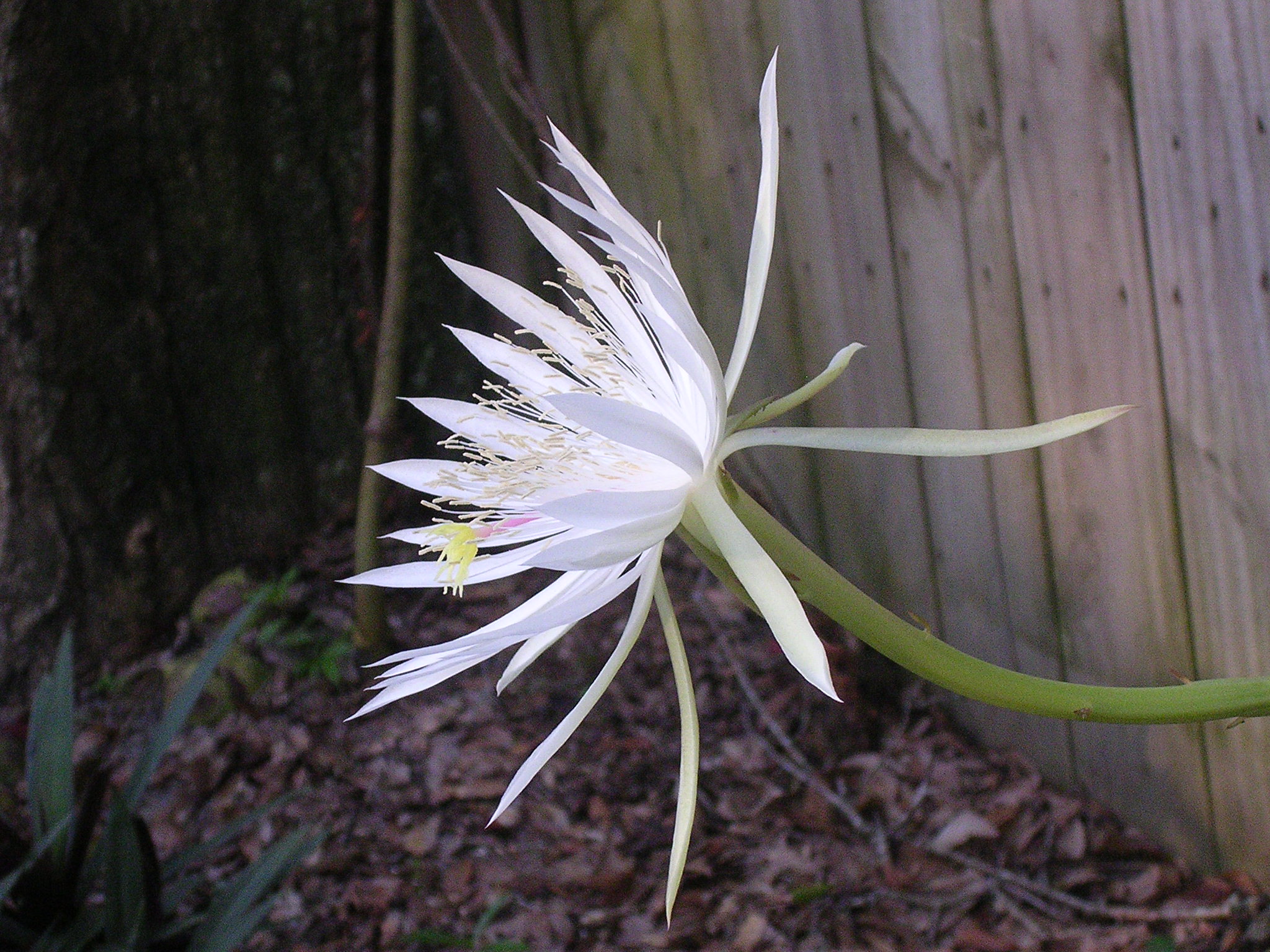
Epiphyllum cacti carry flattened, scalloped, leaf-like stems that trail and can reach some sixty centimetres, giving the plant an architectural, cascading habit. The flowers are large and often fragrant, opening in various colours from spring to midsummer, and some open only in the evening to draw in night-flying pollinators. Individual blooms are short-lived, often lasting just a couple of days.
Source: RHS
Glasshouse Regulars
Mealybugs, aphids, and red spider mites are the pests most likely to trouble this cactus, so regular checks make early control easier. Plants moved outdoors in summer, or kept in a heated greenhouse, should also be watched for snails.
Source: RHS
Sun, Water, and Flowering
Brown spots or discoloured stems usually point to scorching from strong sunshine, though overwatering and fungal disease can cause similar marks. A plant that refuses to flower has often missed its cool, dry winter rest, or has been repotted into too roomy a container.
Source: RHS
Rootbound By Choice
This cactus flowers best when its roots have filled the pot, so repotting is kept to a minimum and only done after flowering, into a container just slightly larger than the rootball. Winter calls for a cooler, drier rest at eleven to fourteen degrees Celsius to trigger bud formation, after which the plant returns to its warmer spot to bloom. Old, tatty, or overly long stems can be trimmed back occasionally, and larger specimens do better in a heavy or wide pot that can bear the weight of their cascading growth.
Source: RHS
Care recipe
The species record — the baseline every cultivar inherits unless it says otherwise.
Care notes are early — not yet verified
- Light
- ai:claude-opus-4-8
- Water
- ai:claude-opus-4-8 (range 7-14d)
- Humidity
- ai:claude-opus-4-8
- Soil
- ai:claude-fable-5
- Care
- ai:claude-fable-5
Bright, indirect
≈ every 14 days
Medium
13–29 °C
Chunky, fast-draining cactus or epiphyte mix
Stem segment cuttings, callused then rooted
Light cactus feed monthly in the growing season
Moderate
Large fragrant white night blooms in summer
Not yet documented
This is where toxicity lives — every cultivar of this species inherits it and none can override it.
Reference images
Every image credited. Licenses link to their deeds.
PrimarySources: ai:claude-opus-4-8 · ai:claude-opus-4-8 (range 7-14d) · ai:claude-fable-5
Kept true by its growers
Every fact here carries its source. Grow Nightblooming Cactus yourself? What you’ve observed — how it drinks, how it holds its color, a name that’s off — and a clear photo of your plant are exactly what keep this page honest. Contributions are reviewed before anything changes.
Sign in to add what you know →