Species · genus Epidendrum · Orchidaceae
Fire Star Orchid
Epidendrum radicans Pav. ex Lindl.
Also known as: Crucifix Orchid · Ground-rooting Epidendrum · Poormans Orchid · Rainbow Orchid · Reed-stem Epidendrum
Cultivars of E. radicans
The named forms growers keep — each with its own page, each honest about how much we know.
No named cultivars catalogued under E. radicans yet. When growers document a stable, named form, it earns its own page here.
Guide
The species-level account. Cultivar pages build on this and say where they differ.
A Hardy Reed Orchid
Epidendrum orchids belong to one of the largest genera in the orchid family, with more than a thousand species and countless hybrids to choose among. Their flowers are small and clustered rather than showy single blooms, which keeps them out of florist shops but makes them satisfying, easy-care houseplants. They are counted among the most forgiving orchids to grow and to propagate.
Source: Epic Gardening
Roots in the Americas
The genus name comes from Greek words for 'upon trees,' a nod to the epiphytic habit of many species. One particular species in this family, Epidendrum radicans, is native to a stretch running from Mexico down through Central America into Colombia and Venezuela, favoring wet tropical conditions, and has also become established in Cuba and Puerto Rico. The wider genus was first coaxed into bloom in cultivation in England back in 1787, and it has been a subject of study and collection ever since.
Source: Kew
Light, Water, Warmth
These orchids want bright, indirect light for most of the day and will tolerate some direct sun, though leaves turning bronze signal sunburn and too little light shows up as leggy, flowerless growth. Water thoroughly but let the roots dry between drinks, watering roughly every four to five days in active growth and stretching to about once a week as things cool. They are comfortable in a daytime range of 60 to 90 degrees and can shrug off brief dips near 40 if kept covered, but they do best with humidity between 50 and 80 percent, which is why a steamy bathroom window often suits them well. Feed weekly with a balanced orchid fertilizer during the growing season, tapering to every three to four weeks once blooms fade, and flush the roots periodically to clear salt buildup.
Source: Epic Gardening
Keikis and Division
Epidendrums are unusually generous propagators, producing keikis, small plantlets that form on the parent and can be cut away once they have their own roots and potted separately. Division is the other reliable route, worked differently depending on growth habit: monopodial reed types are sliced through the rhizome so the cutting keeps several leaves and ideally some aerial roots, then rooted in damp sphagnum moss, while sympodial types are divided so each half retains several pseudobulbs, since a new pseudobulb should never be separated from at least one spent one supporting it. Growing from seed is technically possible but impractical for most home growers, requiring a sterile environment and, in the case of flasked seedlings, up to two years in a nutrient flask before they can survive alone.
Source: Epic Gardening
Reeds, Clusters, and Keikis
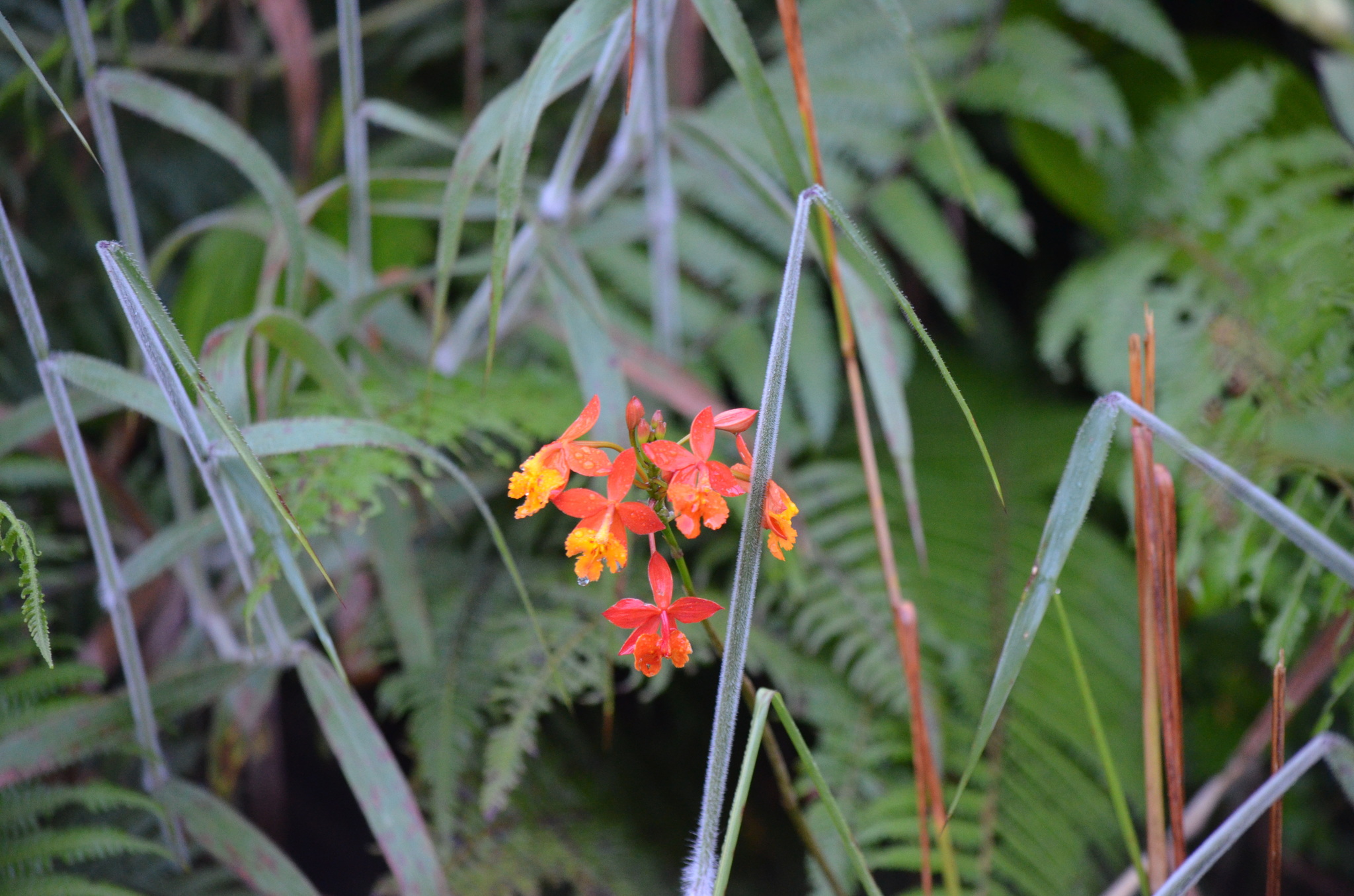
Depending on the species, an epidendrum orchid may stay compact or climb to six feet, growing either up trees as an epiphyte or, less often, straight from the ground or over rock. Growth habit splits into two patterns: monopodial reed types push upward continuously along a central stem, blooming from the top as they go, while sympodial types spread sideways and send up pseudobulbs that each flower once before feeding the next. Flowers arrive in clusters of small blooms, each with three sepals and two petals framing a distinctive lip, and color ranges through yellow, orange, white, red, and purple. Given good conditions, a plant can bloom more than once a year, which is unusual for an orchid.
Source: Epic Gardening
Scale and Aphids
Hard brown scale insects feed on sap and leave sticky honeydew behind, often first noticed as new growth beginning to curl; wiping them off with alcohol on a cotton swab usually clears them. Aphids target tender new growth and flower buds, shriveling new shoots and sometimes preventing blooms altogether, and are most often introduced on already-infected plants, so isolating and treating new arrivals is worthwhile.
Source: Epic Gardening
Rot and Leaf Spotting
Overwatering is the single biggest threat, since roots kept constantly wet turn soft and let bacteria and fungus in, and by the time leaves yellow the root damage is often already done. Fungal issues also show up on foliage and flowers: leaf-spot disease appears as elongated purplish-black marks, black rot as tiny dark spots on new growth, and botrytis as brown spots on flowers and new growth that spread quickly in cool, damp air. Good air circulation, sparing water after any rot is treated, and prompt isolation of affected plants are the standard responses.
Source: Epic Gardening
Light Pruning Only
Epidendrums ask for very little routine maintenance beyond keeping an eye on them regularly for early signs of trouble. Spent pseudobulbs should be left in place until they turn brown and dry, since they continue feeding new growth, at which point they can be cut away with a clean, sharp tool. Faded flower spikes can be trimmed just above the nearest node to redirect energy into fresh growth, though leaving them is also an option since a spike can sometimes rebloom or produce a keiki.
Source: Epic Gardening
Care recipe
The species record — the baseline every cultivar inherits unless it says otherwise.
Care notes are early — not yet verified
- Light
- ai:claude-opus-4-8
- Water
- ai:claude-opus-4-8 (range 5-10d)
- Humidity
- ai:claude-opus-4-8
- Soil
- ai:claude-fable-5
- Care
- ai:claude-fable-5
Bright, indirect
≈ every 10 days
Medium
15–30 °C
Coarse, free-draining orchid or terrestrial mix
Stem cuttings or keiki offsets
Dilute balanced feed every 2 weeks in growth
Moderate
Vivid reddish-orange clusters over long periods in bright light
Not yet documented
This is where toxicity lives — every cultivar of this species inherits it and none can override it.
Reference images
Every image credited. Licenses link to their deeds.
Sources: ai:claude-opus-4-8 · ai:claude-opus-4-8 (range 5-10d) · ai:claude-fable-5
Kept true by its growers
Every fact here carries its source. Grow Fire Star Orchid yourself? What you’ve observed — how it drinks, how it holds its color, a name that’s off — and a clear photo of your plant are exactly what keep this page honest. Contributions are reviewed before anything changes.
Sign in to add what you know →