Species · genus Ensete · Musaceae
Abyssinian Banana
Ensete ventricosum (Welw.) Cheesman
Also known as: Banana Palm · Enset · Ethiopian Banana · False Banana · Banana Tree
Cultivars of E. ventricosum
The named forms growers keep — each with its own page, each honest about how much we know.
No named cultivars catalogued under E. ventricosum yet. When growers document a stable, named form, it earns its own page here.
Guide
The species-level account. Cultivar pages build on this and say where they differ.
The False Banana
Ensete ventricosum, called the Ethiopian or Abyssinian banana, is a tender evergreen perennial in the banana family, grown as a large architectural foliage plant rather than for its fruit. It forms a short trunk topped by a tuft of huge paddle-shaped leaves, and carries the RHS Award of Garden Merit as a conservatory or greenhouse subject.
Source: RHS
Native to East Africa
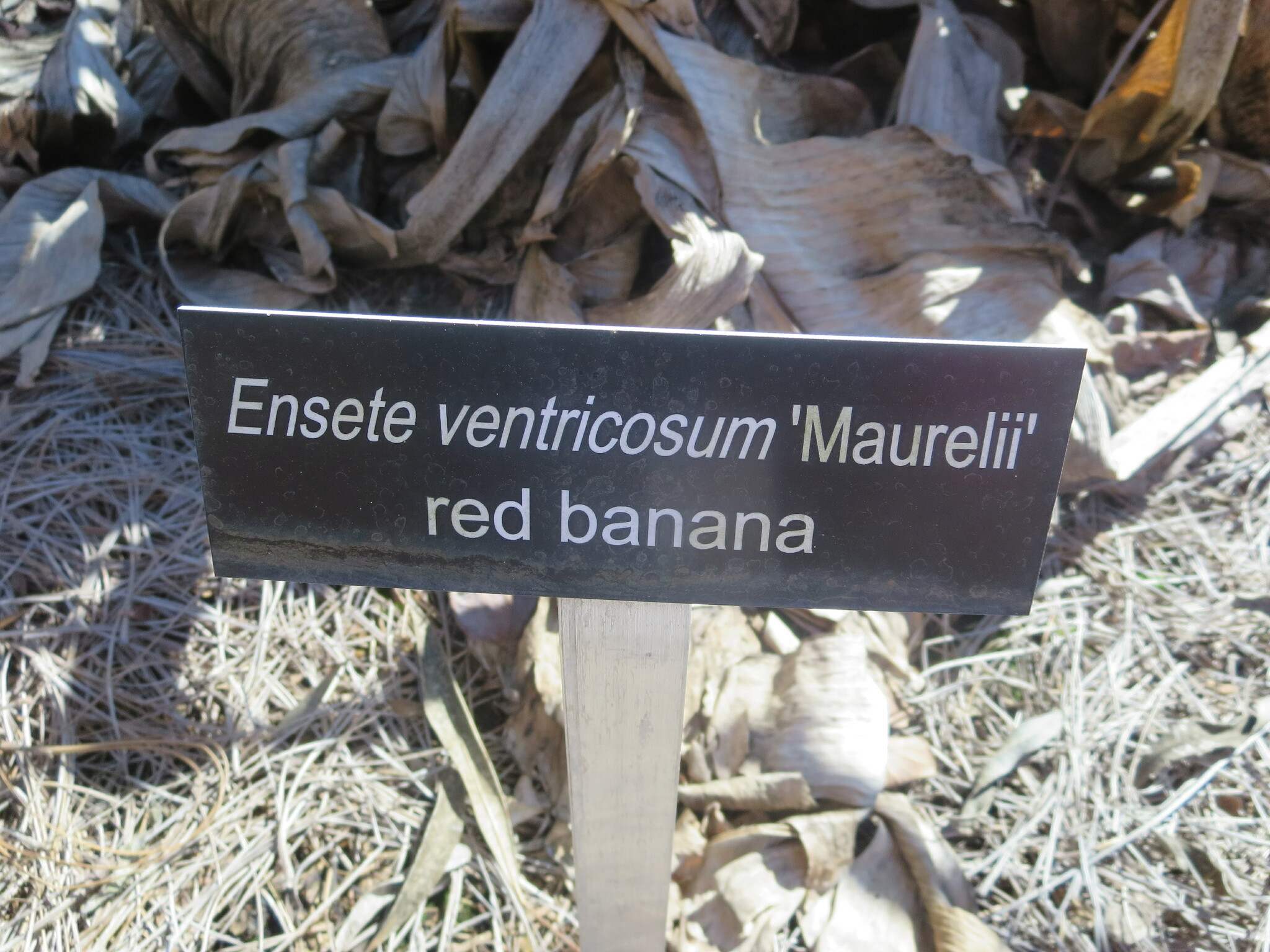
The species and the genus Ensete both trace to eastern tropical Africa, where the plants grow as robust evergreen perennials with a short stem and pendent clusters of cup-shaped flowers followed by dry, banana-like fruits. In cultivation those flowers are rarely seen, whether in the plain species or in the dark-leaved selection known as 'Maurelii'.
Source: RHS
Sun, Shelter, Ventilation
Grown outdoors it wants a frost-free spot in humus-rich, well-drained loam or sandy soil, in full sun or partial shade, ideally on a south- or west-facing aspect with some shelter. Under glass, a peat-free, loam-based compost suits it, with shade from the hottest sun and good ventilation to keep growth steady. It tolerates cool conditions down to around 1–5°C but will not survive being frozen.
Source: RHS
Seed, Slowly
Propagation is by seed, though gardeners should expect germination to be erratic rather than reliable or quick.
Source: RHS
Bold Paddle Leaves
This is a tufted, evergreen plant with erect, narrowly oblong leaves that can reach 3m or more, each with a red midrib beneath. The white flowers sit hidden among deep red bracts, though bloom is a rare event indoors or under glass. Left to grow undisturbed, a plant may take ten to twenty years to reach its full height and spread of 2.5 to 4 metres.
Source: RHS
Mites and Aphids
Watch for glasshouse red spider mite and aphids, the two pests this plant is most often susceptible to. Otherwise it is generally free of disease.
Source: RHS
Tidy As You Go
Maintenance mostly means removing dead leaves as they occur, cutting no lower than the base of each leaf blade so the stem is not damaged. It suits city and courtyard gardens, patios and containers, architectural plantings, and wall-side borders.
Source: RHS
Care recipe
The species record — the baseline every cultivar inherits unless it says otherwise.
Care notes are early — not yet verified
- Light
- ai:claude-opus-4-8
- Water
- ai:claude-opus-4-8 (range 5-10d)
- Humidity
- ai:claude-opus-4-8
- Soil
- ai:claude-fable-5
- Care
- ai:claude-fable-5
Bright, indirect
≈ every 10 days
Medium
13–30 °C
Rich, fertile, well-draining loam
Division of offsets or from seed
Feed generously every 2 weeks in growing season
Fast
Rarely flowers indoors
Not yet documented
This is where toxicity lives — every cultivar of this species inherits it and none can override it.
Reference images
Every image credited. Licenses link to their deeds.
PrimarySources: ai:claude-opus-4-8 · ai:claude-opus-4-8 (range 5-10d) · ai:claude-fable-5
Kept true by its growers
Every fact here carries its source. Grow Abyssinian Banana yourself? What you’ve observed — how it drinks, how it holds its color, a name that’s off — and a clear photo of your plant are exactly what keep this page honest. Contributions are reviewed before anything changes.
Sign in to add what you know →