Species · genus Echinopsis · Cactaceae
Pink Easter-lily Cactus
Echinopsis oxygona (Link) Zucc. ex Pfeiff. & Otto
Also known as: Red Easter-lily Cactus
Cultivars of E. oxygona
The named forms growers keep — each with its own page, each honest about how much we know.
No named cultivars catalogued under E. oxygona yet. When growers document a stable, named form, it earns its own page here.
Guide
The species-level account. Cultivar pages build on this and say where they differ.
A clustering Easter lily cactus
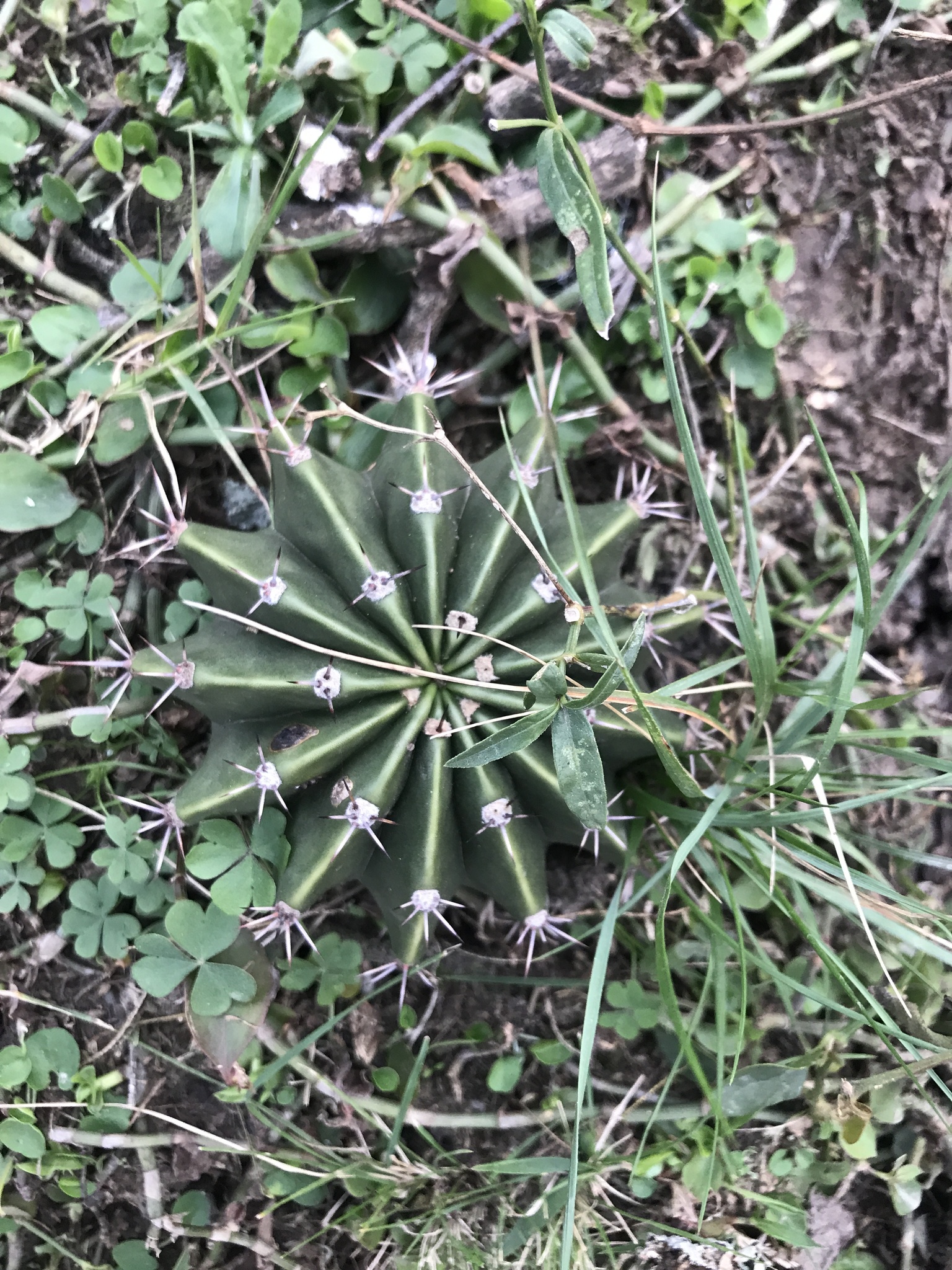
Echinopsis oxygona, known as the pink Easter lily cactus, is a cactus that forms clustered, globose to shortly cylindrical ribbed stems reaching up to 20cm tall. Its short, blackish spines sit along the ribs, and it produces large funnel-shaped white flowers, up to 20cm across, that open in late afternoon. It carries the RHS Award of Garden Merit and is noted as a plant for pollinators.
Source: RHS
South American roots
This species is native to south Brazil, Paraguay, Uruguay and northeast Argentina, where it grows as a succulent subshrub in subtropical conditions. It has also become introduced beyond its native range, turning up in places such as the Galápagos, KwaZulu-Natal, Spain and Tunisia. Its tangled naming history includes dozens of synonyms, among them Cereus multiplex and Echinopsis eyriesii, reflecting how long this cactus has circulated among growers under different names.
Source: Kew
Sun, grit, and restraint
Grow this cactus under glass in a peat-free, loam-based compost with added grit, in full sun and a well-drained loam or sandy mix. Water it moderately while it is actively growing, and cut back sharply to sparing water once it is dormant. A balanced liquid feed two or three times during the growing season is enough; it tolerates low temperatures but will not survive a hard freeze.
Source: RHS
Seed or offsets
Propagation is straightforward, done either by seed or by removing the offsets that cluster around the base of the plant.
Source: RHS
Watch for mealybugs
Mealybugs are the main pest concern for this cactus, though it is otherwise generally free of disease.
Source: RHS
Safe around pets
Under the name Echinopsis multiplex, this Easter lily cactus is listed as non-toxic to dogs, cats and horses, so it poses no poisoning risk if a curious pet takes an interest in it.
Source: ASPCA
Little pruning needed
This is a low-maintenance plant that requires no pruning, suiting it well to life as a patio or container specimen given its modest, slow-growing habit reaching maturity over two to five years.
Source: RHS
Care recipe
The species record — the baseline every cultivar inherits unless it says otherwise.
Care notes are early — not yet verified
- Light
- ai:claude-opus-4-8
- Water
- ai:claude-opus-4-8 (range 10-21d)
- Humidity
- ai:claude-opus-4-8
- Soil
- ai:claude-fable-5
- Care
- ai:claude-fable-5
Direct sun
≈ every 21 days
Low — average room
8–30 °C
Gritty, fast-draining cactus and succulent mix
Readily from offsets around the base, or from seed
Weak cactus feed once or twice in the summer growing season
Moderate
Large fragrant pink trumpets in summer, favored by a cool dry winter rest
Not yet documented
This is where toxicity lives — every cultivar of this species inherits it and none can override it.
Reference images
Every image credited. Licenses link to their deeds.
PrimarySources: ai:claude-opus-4-8 · ai:claude-opus-4-8 (range 10-21d) · ai:claude-fable-5
Kept true by its growers
Every fact here carries its source. Grow Pink Easter-lily Cactus yourself? What you’ve observed — how it drinks, how it holds its color, a name that’s off — and a clear photo of your plant are exactly what keep this page honest. Contributions are reviewed before anything changes.
Sign in to add what you know →