Species · genus Echinocactus · Cactaceae
Candy Barrel Cactus
Echinocactus platyacanthus Link & Otto
Cultivars of E. platyacanthus
The named forms growers keep — each with its own page, each honest about how much we know.
No named cultivars catalogued under E. platyacanthus yet. When growers document a stable, named form, it earns its own page here.
Guide
The species-level account. Cultivar pages build on this and say where they differ.
A barrel of a cactus
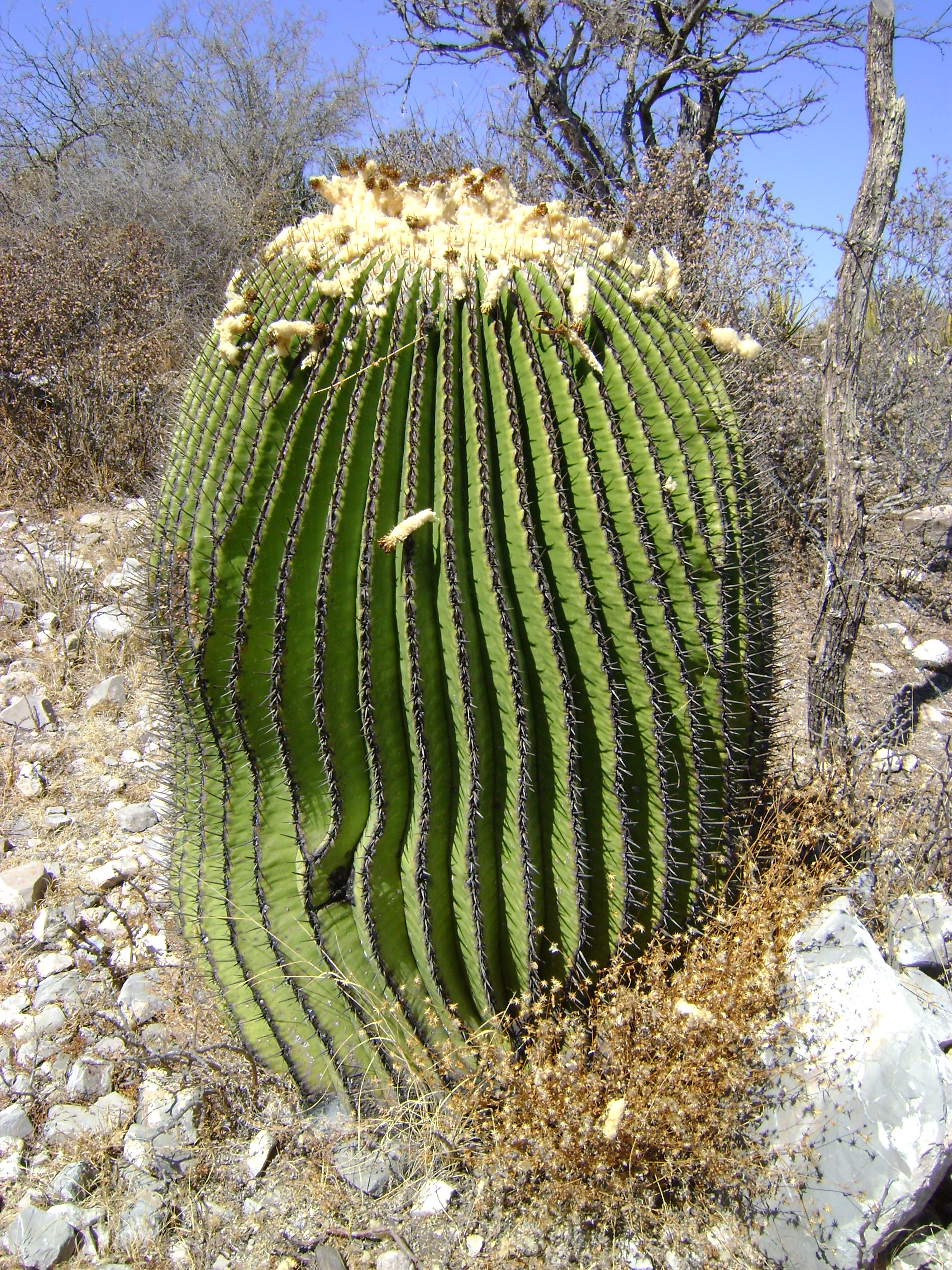
Echinocactus platyacanthus is a species of barrel cactus in the family Cactaceae, one of the slow-growing, deeply ribbed, spine-clad genus Echinocactus. It grows as a succulent shrub or subshrub, built for a life of drought and strong sun.
Source: RHS
Native to Mexico's dry ground
This species comes from Mexico, ranging from Nuevo León down to Oaxaca, where it settles into desert and dry shrubland. It carries a long taxonomic history, first described by Link and Otto in 1827, and has gathered dozens of synonyms over the near two centuries since, a sign of how often botanists have puzzled over the barrel cacti of this region.
Source: Kew
Sun, patience, little water
Like other houseplant cacti, this one wants a warm spot with plenty of direct light and tolerates, even prefers, being left alone with its roots on the dry side. Watering every two or three weeks is usually enough, and erring toward too little rather than too much keeps rot at bay. Feeding is a light touch, perhaps twice a year, or through spring and summer if you use a general houseplant fertiliser at label strength.
Source: Costa Farms
Ribbed, spined, and slow
As an Echinocactus, this plant carries the genus's hallmark shape: a barrel-like or columnar stem, deeply ribbed and armed with strong spines. Left to its own pace, it produces bell-shaped flowers in summer, though growth of the body itself is unhurried.
Source: RHS
Rot from too much care
The chief risk with this cactus is overwatering rather than neglect, since damp soil held too long around the roots invites rot. When watering habits are in doubt, the safer course is to give less rather than more.
Source: Costa Farms
Little pruning needed
Because cacti of this kind grow so slowly, pruning is rarely something to think about. The main seasonal task is adjusting watering and feeding to the calendar, easing off in the cooler months and feeding, if at all, during spring and summer.
Source: Costa Farms
Care recipe
The species record — the baseline every cultivar inherits unless it says otherwise.
Care notes are early — not yet verified
- Light
- ai:claude-opus-4-8
- Water
- ai:claude-opus-4-8 (range 21-45d)
- Humidity
- ai:claude-opus-4-8
- Soil
- ai:claude-fable-5
- Care
- ai:claude-fable-5
Direct sun
≈ every 45 days
Low — average room
10–30 °C
Very gritty mineral cactus mix with extra pumice or grit
From seed; this giant barrel cactus is rarely offset-grown
Weak cactus feed once or twice in the summer growing season
Slow
Yellow crown flowers only on old, large plants; rare indoors
Not yet documented
This is where toxicity lives — every cultivar of this species inherits it and none can override it.
Reference images
Every image credited. Licenses link to their deeds.
Sources: ai:claude-opus-4-8 · ai:claude-opus-4-8 (range 21-45d) · ai:claude-fable-5
Kept true by its growers
Every fact here carries its source. Grow Candy Barrel Cactus yourself? What you’ve observed — how it drinks, how it holds its color, a name that’s off — and a clear photo of your plant are exactly what keep this page honest. Contributions are reviewed before anything changes.
Sign in to add what you know →