Species · genus Echeveria · Crassulaceae
Firecracker Plant
Echeveria setosa Rose & Purpus
Also known as: Mexican Firecracker
Cultivars of E. setosa
The named forms growers keep — each with its own page, each honest about how much we know.
No named cultivars catalogued under E. setosa yet. When growers document a stable, named form, it earns its own page here.
Guide
The species-level account. Cultivar pages build on this and say where they differ.
Mexican Firecracker Echeveria
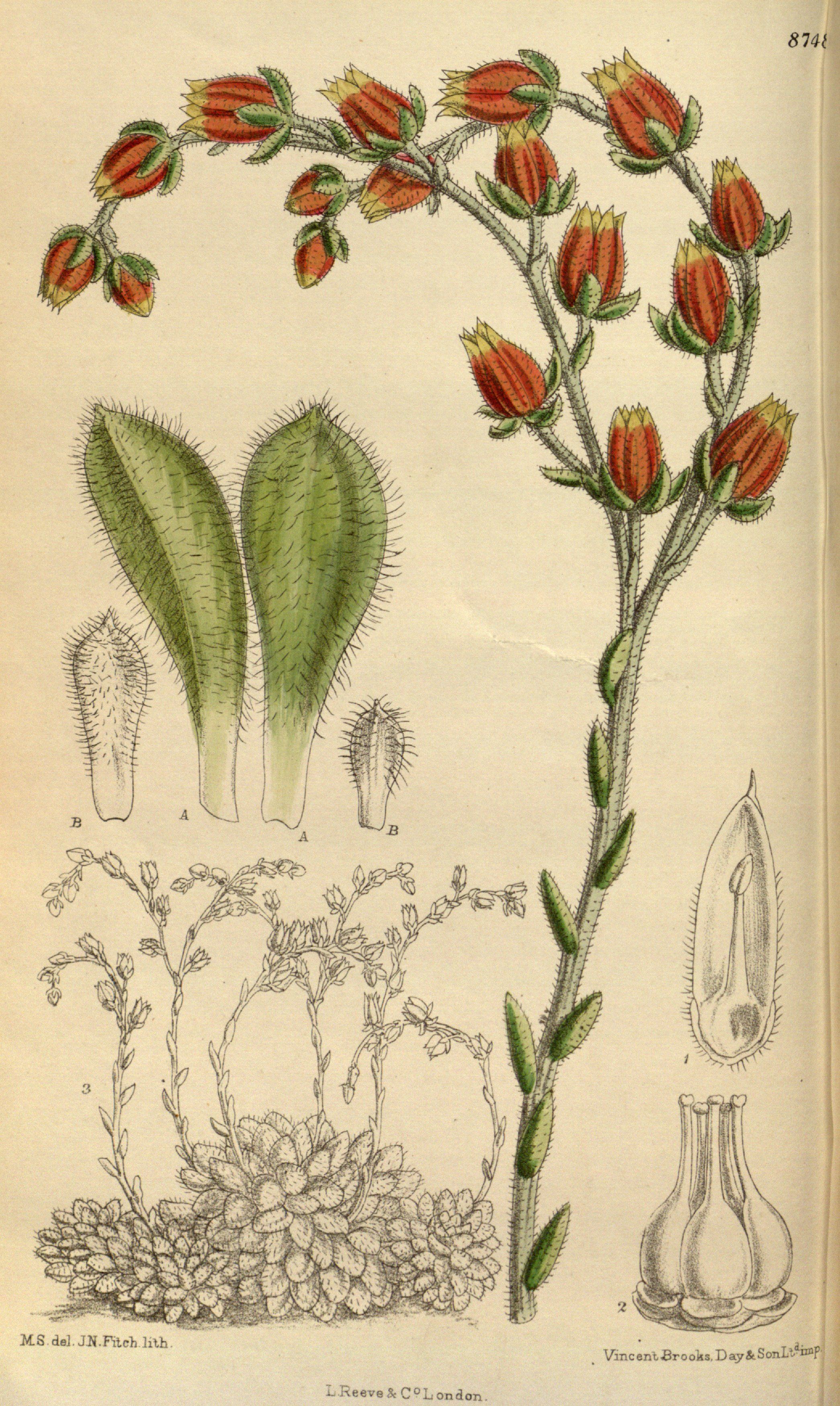
Echeveria setosa, known as the Mexican firecracker, is an evergreen succulent grown for its low rosettes of fleshy, hair-covered leaves. It belongs to the Crassulaceae family and is classed as a cactus-house or conservatory subject in cooler climates.
Source: RHS
A Mexican Native
This species comes from Mexico, part of a genus of succulent perennials and subshrubs prized for their rosette form. It has earned the RHS Award of Garden Merit, a mark of its reliability in cultivation.
Source: RHS
Sun, Grit, Restraint
Grow it under glass in standard cactus compost in full light, with low humidity around it. Water freely while it is in active growth but keep it just moist otherwise, feeding fortnightly with a dilute low-nitrogen fertiliser through late spring and summer, then holding it nearly dry over winter. It appreciates a spell outdoors during the summer months and tolerates full sun, coping in south, north or east-facing sheltered spots.
Source: RHS
Cuttings and Offsets
New plants come readily from stem or leaf cuttings taken in spring or early summer. Offsets can also be separated away from the parent rosette in spring.
Source: RHS
Bristled Rosettes, Firecracker Blooms
The plant forms stemless, spoon-shaped green rosettes densely covered in white hairs, staying mat-forming and low, reaching only up to about 10 cm in height. From late spring it sends up one-sided racemes of urn-shaped flowers in red and yellow, the source of its common name.
Source: RHS
Watch for Mealybugs
Mealybugs, vine weevil and aphids are the pests most likely to trouble this echeveria. Otherwise it is generally free of disease.
Source: RHS
Little Upkeep Needed
No pruning is required for this species. It is best suited to patio and container growing, and given its slow pace it can take five to ten years to reach maturity.
Source: RHS
Care recipe
The species record — the baseline every cultivar inherits unless it says otherwise.
Care notes are early — not yet verified
- Light
- ai:claude-opus-4-8
- Water
- ai:claude-opus-4-8 (range 10-21d)
- Humidity
- ai:claude-opus-4-8
- Soil
- ai:claude-fable-5
- Care
- ai:claude-fable-5
Direct sun
≈ every 21 days
Low — average room
10–27 °C
Gritty, fast-draining cactus and succulent mix
Leaf or offset cuttings; water carefully to protect the hairs
Dilute succulent feed once or twice in spring and summer
Slow
Red-and-yellow bells in spring; leaves are densely white-hairy
Not yet documented
This is where toxicity lives — every cultivar of this species inherits it and none can override it.
Reference images
Every image credited. Licenses link to their deeds.
Sources: ai:claude-opus-4-8 · ai:claude-opus-4-8 (range 10-21d) · ai:claude-fable-5
Kept true by its growers
Every fact here carries its source. Grow Firecracker Plant yourself? What you’ve observed — how it drinks, how it holds its color, a name that’s off — and a clear photo of your plant are exactly what keep this page honest. Contributions are reviewed before anything changes.
Sign in to add what you know →