Species · genus Echeveria · Crassulaceae
Runyon's Echeveria
Echeveria runyonii Rose
Also known as: San Carlos Echeveria · Topsy Turvy
Cultivars of E. runyonii
The named forms growers keep — each with its own page, each honest about how much we know.
No named cultivars catalogued under E. runyonii yet. When growers document a stable, named form, it earns its own page here.
Guide
The species-level account. Cultivar pages build on this and say where they differ.
A Curled Silver Rosette
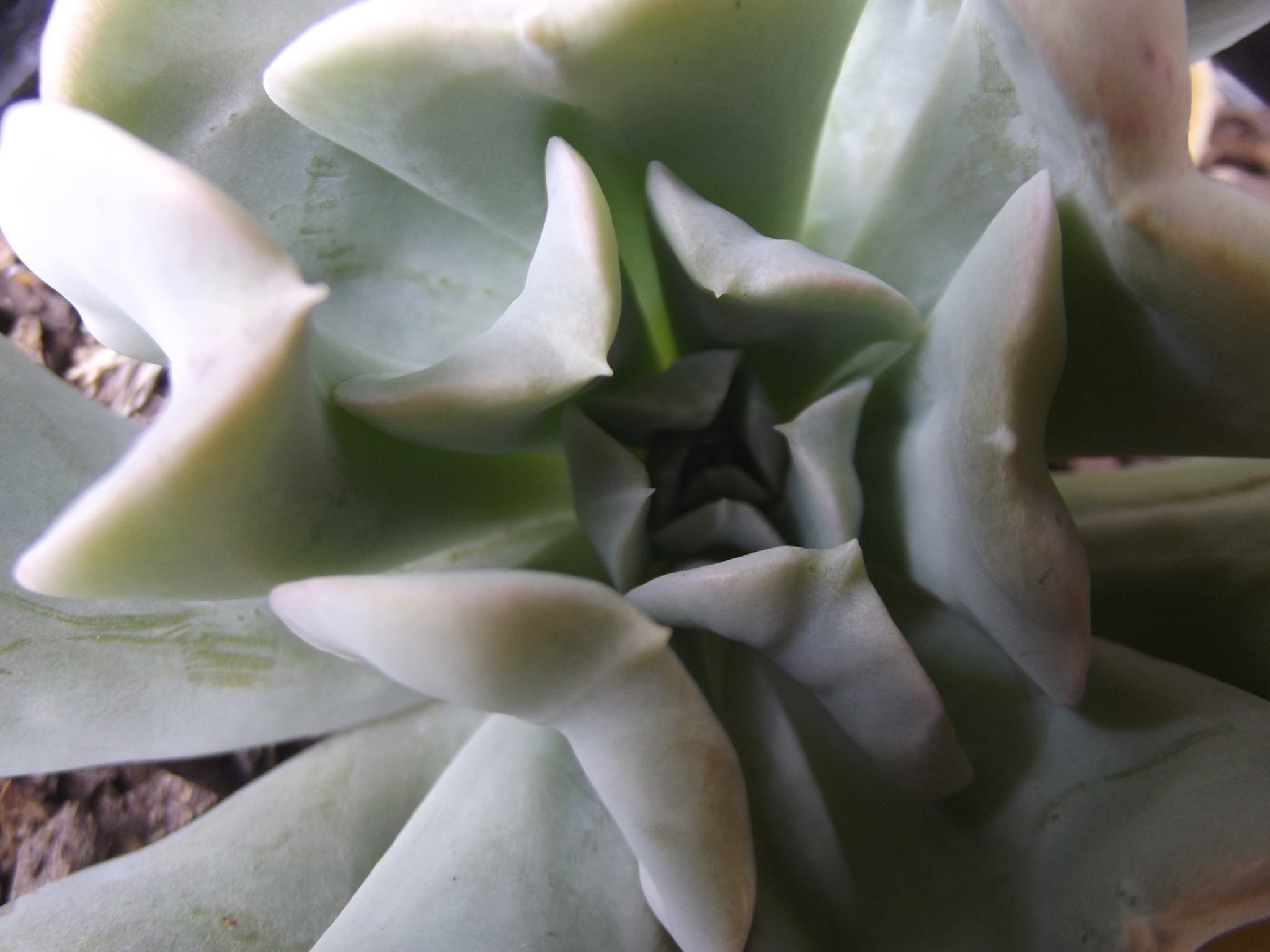
Echeveria runyonii 'Topsy Turvy' is an evergreen succulent grown for its stemless rosette of waxy, silvery grey leaves. It is a Crassulaceae family member, forming neat mats around 10cm across, and carries the RHS Award of Garden Merit.
Source: RHS
A Mexican Species, Selected
The species Echeveria runyonii itself hails from Mexico, part of a genus of evergreen succulent perennials and subshrubs prized for their rosettes of fleshy, colourful leaves. 'Topsy Turvy' is a selected form of that species, distinguished by its curious twisted leaf habit.
Source: RHS
Sun, Dryness, and Restraint
This plant wants full light and a standard cactus compost with sharp drainage, and it tolerates low humidity without complaint. Water it freely while it is in active growth, but keep it just moist otherwise, and let it go nearly dry through winter. A dilute, low-nitrogen feed applied fortnightly in late spring and summer is enough, and it appreciates standing outside for the summer months.
Source: RHS
Offsets in Spring
'Topsy Turvy' is propagated by separating the offsets it produces around the base of the rosette, done in spring.
Source: RHS
Leaves That Curl Inward
What sets 'Topsy Turvy' apart is its spoon-shaped foliage, rolled downwards along its length and curled so the tips point back toward the centre of the rosette, giving the whole plant an inverted, folded look. In summer and autumn it sends up arching flower stems around 20cm tall, carrying star-shaped blooms in pink and orange.
Source: RHS
Mealybugs and Company
Keep an eye out for mealybugs, vine weevil, and aphids, the pests most likely to trouble this echeveria. It is otherwise generally free of disease.
Source: RHS
Little Cutting Needed
No pruning is required for this rosette-forming succulent. It reaches maturity slowly, typically over five to ten years, staying compact at 10 to 50cm in height and spread.
Source: RHS
Care recipe
The species record — the baseline every cultivar inherits unless it says otherwise.
Care notes are early — not yet verified
- Light
- ai:claude-opus-4-8
- Water
- ai:claude-opus-4-8 (range 10-21d)
- Humidity
- ai:claude-opus-4-8
- Soil
- ai:claude-fable-5
- Care
- ai:claude-fable-5
Direct sun
≈ every 21 days
Low — average room
10–27 °C
Gritty, fast-draining cactus and succulent mix
Offsets and leaf cuttings, callused then rooted in dry mix
Dilute succulent feed once or twice in spring and summer
Moderate
Yellow-orange bells on arching stems in autumn
Not yet documented
This is where toxicity lives — every cultivar of this species inherits it and none can override it.
Reference images
Every image credited. Licenses link to their deeds.
PrimarySources: ai:claude-opus-4-8 · ai:claude-opus-4-8 (range 10-21d) · ai:claude-fable-5
Kept true by its growers
Every fact here carries its source. Grow Runyon's Echeveria yourself? What you’ve observed — how it drinks, how it holds its color, a name that’s off — and a clear photo of your plant are exactly what keep this page honest. Contributions are reviewed before anything changes.
Sign in to add what you know →