Species · genus Echeveria · Crassulaceae
Chenilleplant
Echeveria pulvinata Rose
Also known as: Plushplant · Rosy Hens-and-chicks · Chenille Plush Plant
Cultivars of E. pulvinata
The named forms growers keep — each with its own page, each honest about how much we know.
No named cultivars catalogued under E. pulvinata yet. When growers document a stable, named form, it earns its own page here.
Guide
The species-level account. Cultivar pages build on this and say where they differ.
The Plush Plant
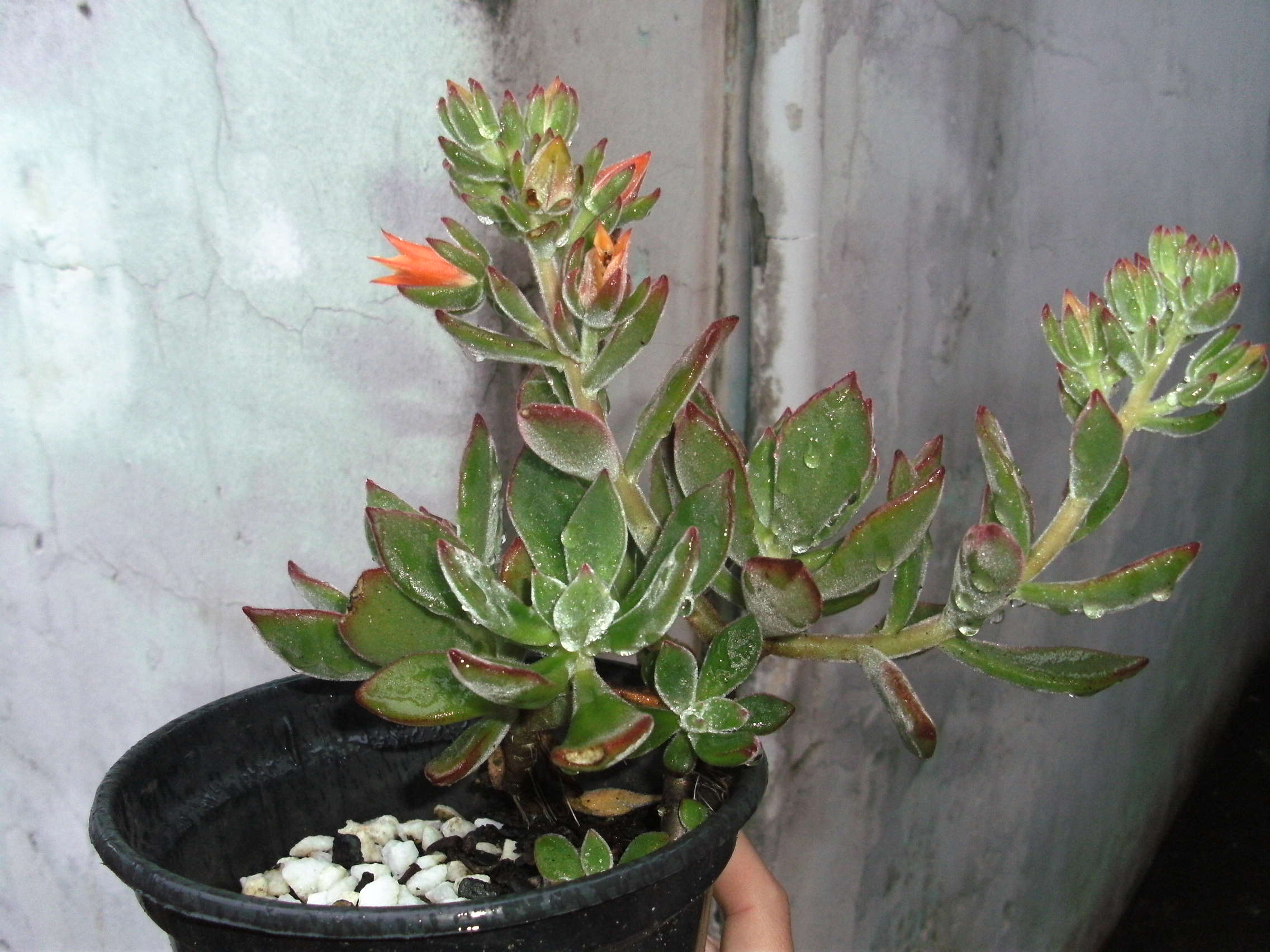
Echeveria pulvinata, known as the plush or chenille plant, is an evergreen succulent perennial in the Crassulaceae family that grows as a bushy rosette-former to around 30cm. Its leaves carry a fine white down and often flush red at the tips, and it sends up open panicles of urn-shaped red and yellow flowers.
Source: RHS
A Mexican Native
This species comes from southern Mexico, where it grows as part of the wider Echeveria genus of succulent perennials and subshrubs. Cultivars have since been selected from it, including the white-leaved 'Frosty' and the burgundy-flushed Devotion, both bred for their foliage colour.
Source: RHS
Sun, Grit, and Restraint
Give this plant full sun, or bright filtered light for the cultivars, and a well-drained loam or sand-based cactus compost, with low humidity suiting it best. Water freely while it is actively growing, feeding fortnightly with a dilute low-nitrogen feed through late spring and summer, then let it run almost dry over winter and keep it just moist the rest of the off-season. It appreciates a spell outdoors over summer, but it is not frost-hardy and needs protection under glass through the colder months.
Source: RHS
Cuttings, Offsets, Seed
Increase this plant from stem or leaf cuttings taken in spring or early summer, or by separating the offsets it produces around the base in spring. Seed can also be sown at 15–18°C in early spring for the species.
Source: RHS
Downy Rosettes, Warm Tones
The defining feature here is texture: obovate leaves covered in a velvety white down, arranged in tidy rosettes on a bushy habit. Depending on the selection, tips can flush red, whole leaves can whiten toward frost-pale, or foliage can deepen to burgundy in strong sun, and the tube-shaped flowers range from red-orange to yellow.
Source: RHS
Watch for Sap-Suckers
Mealybugs, vine weevil, and aphids are the pests most likely to trouble this plant. Beyond that it is generally free of disease.
Source: RHS
Little Fuss Required
No pruning is needed for this plant, making it a genuinely low-maintenance choice for a patio pot or container. Its main seasonal demand is simply the switch to a near-dry regime over winter.
Source: RHS
Care recipe
The species record — the baseline every cultivar inherits unless it says otherwise.
Care notes are early — not yet verified
- Light
- ai:claude-opus-4-8
- Water
- ai:claude-opus-4-8 (range 14-28d)
- Humidity
- ai:claude-opus-4-8
- Soil
- ai:claude-fable-5
- Care
- ai:claude-fable-5
Direct sun
≈ every 28 days
Low — average room
10–27 °C
Gritty, fast-draining cactus and succulent mix
Stem or leaf cuttings, callused then rooted in dry mix
Dilute succulent feed once or twice in spring and summer
Moderate
Orange-red bells in winter; fuzzy leaves prefer to stay dry
Not yet documented
This is where toxicity lives — every cultivar of this species inherits it and none can override it.
Reference images
Every image credited. Licenses link to their deeds.
Sources: ai:claude-opus-4-8 · ai:claude-opus-4-8 (range 14-28d) · ai:claude-fable-5
Kept true by its growers
Every fact here carries its source. Grow Chenilleplant yourself? What you’ve observed — how it drinks, how it holds its color, a name that’s off — and a clear photo of your plant are exactly what keep this page honest. Contributions are reviewed before anything changes.
Sign in to add what you know →