Species · genus Echeveria · Crassulaceae
Ghost Echeveria
Echeveria lilacina Kimnach & Moran
Also known as: Mexican Hens-and-chicks
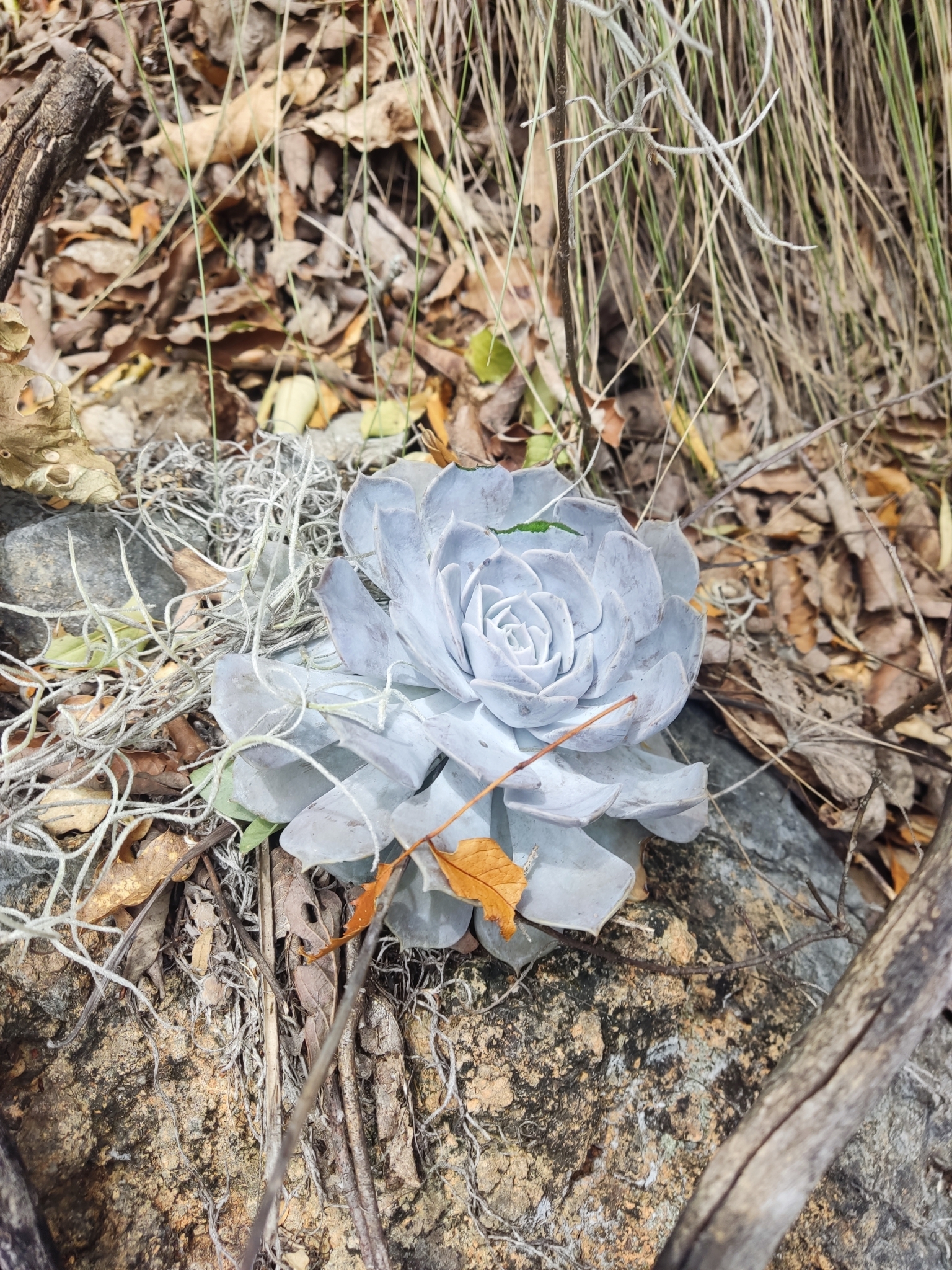
Cultivars of E. lilacina
The named forms growers keep — each with its own page, each honest about how much we know.
No named cultivars catalogued under E. lilacina yet. When growers document a stable, named form, it earns its own page here.
Guide
The species-level account. Cultivar pages build on this and say where they differ.
The ghost echeveria
Echeveria lilacina, known as the ghost echeveria, is a slow-growing evergreen succulent that forms a low rosette of fleshy, silver-grey leaves. In summer it sends up reddish stems topped with coral-coloured flowers. It stays compact, reaching only around 10cm in height.
Source: RHS
A Mexican native
This species comes from Mexico, part of the wide Echeveria genus native to the region. It belongs to the Crassulaceae family, grown for its rosettes of colourful, fleshy leaves and its clusters of urn-shaped flowers.
Source: RHS
Sun, restraint, and drainage
Give this echeveria full sun and a free-draining, gritty mix, whether that is a cactus and succulent compost or standard loam-and-sand blend. Water moderately while it is in growth, letting the soil dry between drinks, and hold off watering almost entirely through winter dormancy. It tolerates cool conditions down to a degree or so above freezing but must be sheltered from frost.
Source: RHS
Seed, leaf, or stem
Propagate this plant from seed sown as soon as it is ripe, or take root, stem, or leaf cuttings in spring. Any of these routes will produce new rosettes in time.
Source: RHS
Watch for mealybugs
The main pests to watch for are mealybugs and vine weevil. Otherwise the plant is generally free of disease.
Source: RHS
Tidy as it grows
Little pruning is needed beyond removing dead leaves from the base of the plant as it matures. This keeps the rosette looking clean and reduces places where pests or rot might settle.
Source: RHS
Care recipe
The species record — the baseline every cultivar inherits unless it says otherwise.
Care notes are early — not yet verified
- Light
- ai:claude-opus-4-8
- Water
- ai:claude-opus-4-8 (range 14-28d)
- Humidity
- ai:claude-opus-4-8
- Soil
- ai:claude-fable-5
- Care
- ai:claude-fable-5
Direct sun
≈ every 28 days
Low — average room
10–27 °C
Gritty, fast-draining cactus and succulent mix
Leaf cuttings, callused then rooted in dry mix; slow to root
Dilute succulent feed once or twice in spring and summer
Slow
Coral bells on curved stalks in winter to spring
Not yet documented
This is where toxicity lives — every cultivar of this species inherits it and none can override it.
Reference images
Every image credited. Licenses link to their deeds.
PrimarySources: ai:claude-opus-4-8 · ai:claude-opus-4-8 (range 14-28d) · ai:claude-fable-5
Kept true by its growers
Every fact here carries its source. Grow Ghost Echeveria yourself? What you’ve observed — how it drinks, how it holds its color, a name that’s off — and a clear photo of your plant are exactly what keep this page honest. Contributions are reviewed before anything changes.
Sign in to add what you know →