Species · genus Echeveria · Crassulaceae
Hens and Chicks
Echeveria gibbiflora DC.
Also known as: Echeveria
Cultivars of E. gibbiflora
The named forms growers keep — each with its own page, each honest about how much we know.
No named cultivars catalogued under E. gibbiflora yet. When growers document a stable, named form, it earns its own page here.
Guide
The species-level account. Cultivar pages build on this and say where they differ.
A metallic-leaved rosette succulent
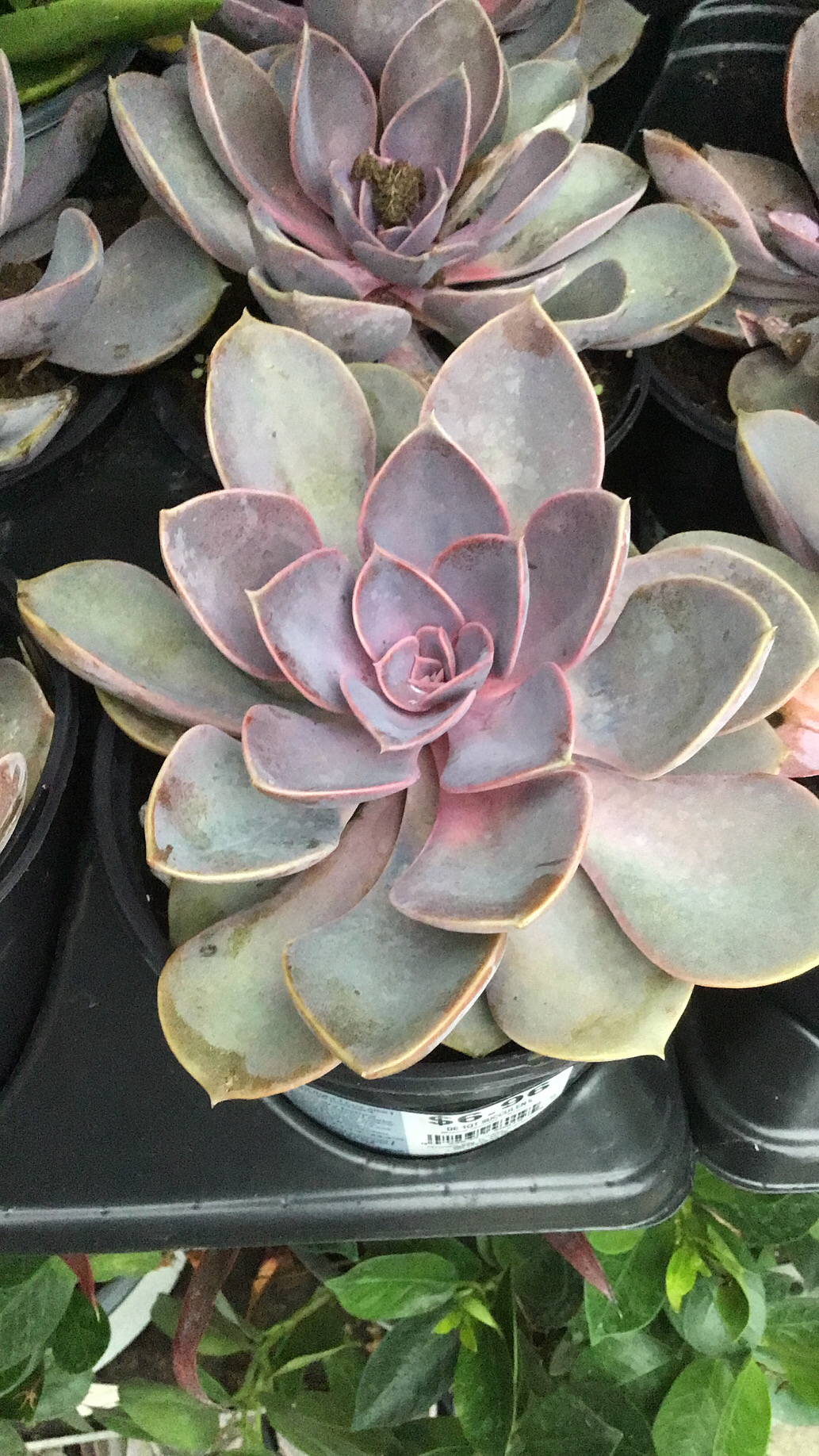
Echeveria gibbiflora 'Metallica' is an evergreen succulent perennial that forms short-stemmed rosettes of spoon-shaped, wavy-edged leaves in a metallic bronze-green. In summer it sends up racemes of bell-shaped reddish flowers, yellow within, above the foliage.
Source: RHS
A parent behind a hybrid
This form belongs to Echeveria gibbiflora, a species in the Crassulaceae family with no wild presence in Britain or Ireland. Its metallic-leaved variety became notable in its own right, but it also has a place in breeding history: in 1930s Germany, Alfred Gräser crossed it with Echeveria elegans to create the well-known hybrid 'Perle von Nürnberg'.
Source: Epic Gardening
Sun, dryness, and a light feed
Grow it under glass in standard cactus compost, in full light with low humidity, and stand it outdoors over summer. Water freely while it is in growth but keep it just moist otherwise, feeding fortnightly with a dilute low-nitrogen fertilizer through late spring and summer. In winter, hold back on water almost entirely, keeping the compost nearly dry.
Source: RHS
Seed, cuttings, or offsets
New plants can be raised from seed sown at 15–18°C in early spring, or from stem or leaf cuttings taken in spring or early summer. Offsets can also be separated away from the parent rosette in spring.
Source: RHS
Bronze rosettes, wavy edges
The hallmark of this plant is its foliage: fleshy, spoon-shaped leaves with wavy margins, reaching up to 20cm long, carried in a bushy, short-stemmed rosette. The colouring leans metallic bronze-green, a striking backdrop to the reddish, bell-shaped flowers with yellow interiors that rise on racemes.
Source: RHS
Mealybugs, weevils, aphids
Keep an eye out for mealybugs, vine weevil, and aphids, the pests most likely to trouble this echeveria. The plant is otherwise generally free of disease.
Source: RHS
Little pruning needed
This is a low-fuss plant in terms of upkeep: no pruning is required. It suits patio and container growing, where its rosette habit and colouring can be appreciated at close range.
Source: RHS
Care recipe
The species record — the baseline every cultivar inherits unless it says otherwise.
Care notes are early — not yet verified
- Light
- ai:claude-opus-4-8
- Water
- ai:claude-opus-4-8 (range 14-28d)
- Humidity
- ai:claude-opus-4-8
- Soil
- ai:claude-fable-5
- Care
- ai:claude-fable-5
Direct sun
≈ every 28 days
Low — average room
10–27 °C
Gritty, fast-draining cactus and succulent mix
Leaf cuttings or offsets, callused then rooted in dry mix
Dilute succulent feed once or twice in spring and summer
Moderate
Tall arching stalks of reddish bells in late summer to autumn
Not yet documented
This is where toxicity lives — every cultivar of this species inherits it and none can override it.
Reference images
Every image credited. Licenses link to their deeds.
PrimarySources: ai:claude-opus-4-8 · ai:claude-opus-4-8 (range 14-28d) · ai:claude-fable-5
Kept true by its growers
Every fact here carries its source. Grow Hens and Chicks yourself? What you’ve observed — how it drinks, how it holds its color, a name that’s off — and a clear photo of your plant are exactly what keep this page honest. Contributions are reviewed before anything changes.
Sign in to add what you know →