Species · genus Dypsis · Arecaceae
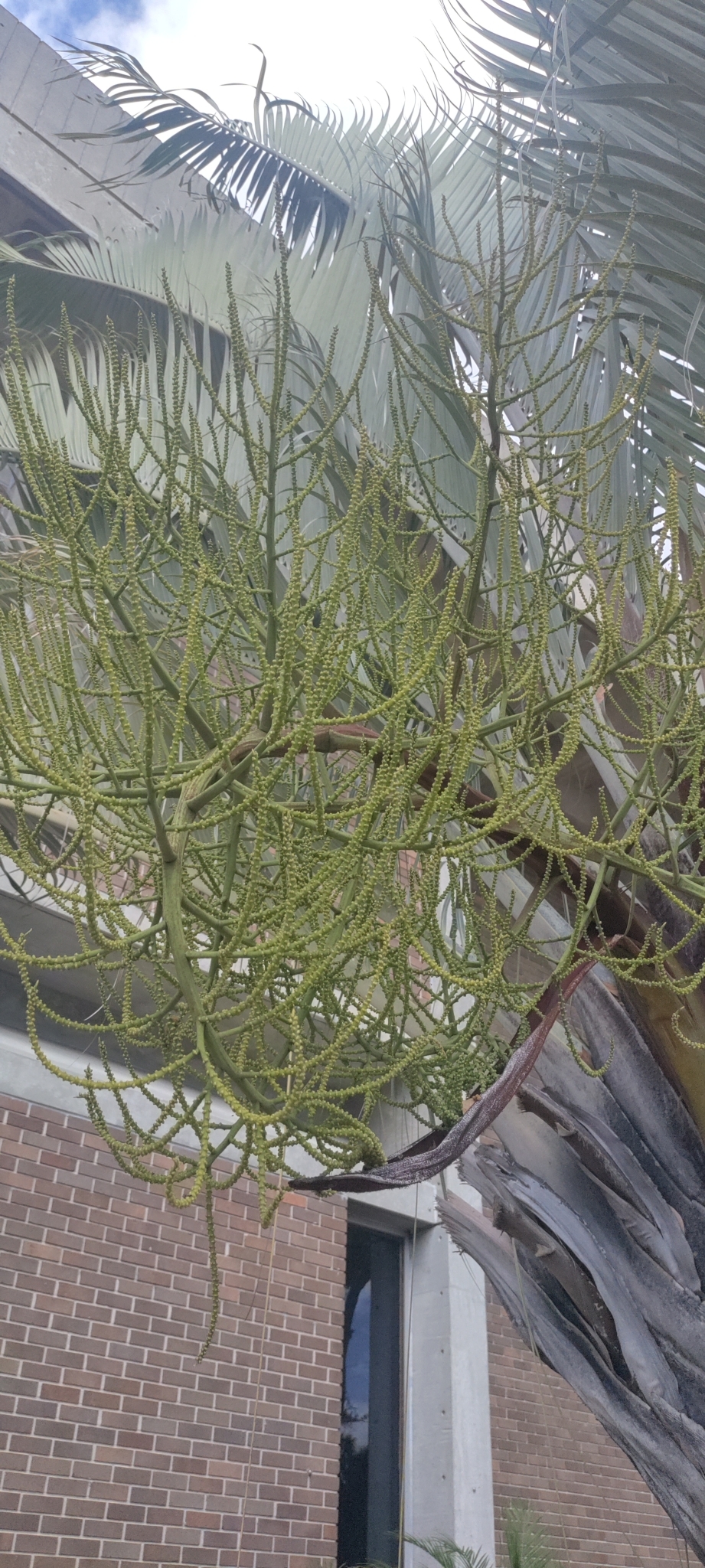
Triangle Palm
Dypsis decaryi (Jum.) Beentje & J.Dransf.
Cultivars of D. decaryi
The named forms growers keep — each with its own page, each honest about how much we know.
No named cultivars catalogued under D. decaryi yet. When growers document a stable, named form, it earns its own page here.
Guide
The species-level account. Cultivar pages build on this and say where they differ.
A Palm By Many Names
This is a palm of the Arecaceae family, now correctly known as Chrysalidocarpus decaryi, though it has long circulated under the name Dypsis decaryi. It is not native to Britain or Ireland, and gardeners will find it catalogued under either name in different sources.
Source: RHS
A Name With History
The plant was first formally published under the name Dypsis decaryi in 1995, in the work Palms of Madagascar, by Beentje and Dransfield. Kew's taxonomic record notes it as a synonym of Chrysalidocarpus decaryi, reflecting a reclassification that has moved this species between genera over time.
Source: Kew
Care recipe
The species record — the baseline every cultivar inherits unless it says otherwise.
Care notes are early — not yet verified
- Light
- ai:claude-opus-4-8
- Water
- ai:claude-opus-4-8 (range 10-18d)
- Humidity
- ai:claude-opus-4-8
- Soil
- ai:claude-fable-5
- Care
- ai:claude-fable-5
Direct sun
≈ every 18 days
Low — average room
13–29 °C
Well-draining sandy loam with grit
Seed only; no vegetative propagation
Balanced palm feed a few times over spring and summer
Slow
Does not flower indoors
Non-toxic to cats & dogs
Areca / golden-cane palm (Dypsis lutescens) — ASPCA non-toxic to cats, dogs, horses. This is where toxicity lives: every cultivar of this species inherits it and none can override it.
Reference images
Every image credited. Licenses link to their deeds.
PrimarySources: ai:claude-opus-4-8 · ai:claude-opus-4-8 (range 10-18d) · ai:claude-fable-5 · ASPCA
Kept true by its growers
Every fact here carries its source. Grow Triangle Palm yourself? What you’ve observed — how it drinks, how it holds its color, a name that’s off — and a clear photo of your plant are exactly what keep this page honest. Contributions are reviewed before anything changes.
Sign in to add what you know →